
Solar-powered ambulance innovation: bringing medical care to isolated areas without the need for electricity
Dutch students have created Stella Juva, a solar-powered mobile clinic, tested in Kenya for communities without reliable access to electricity.
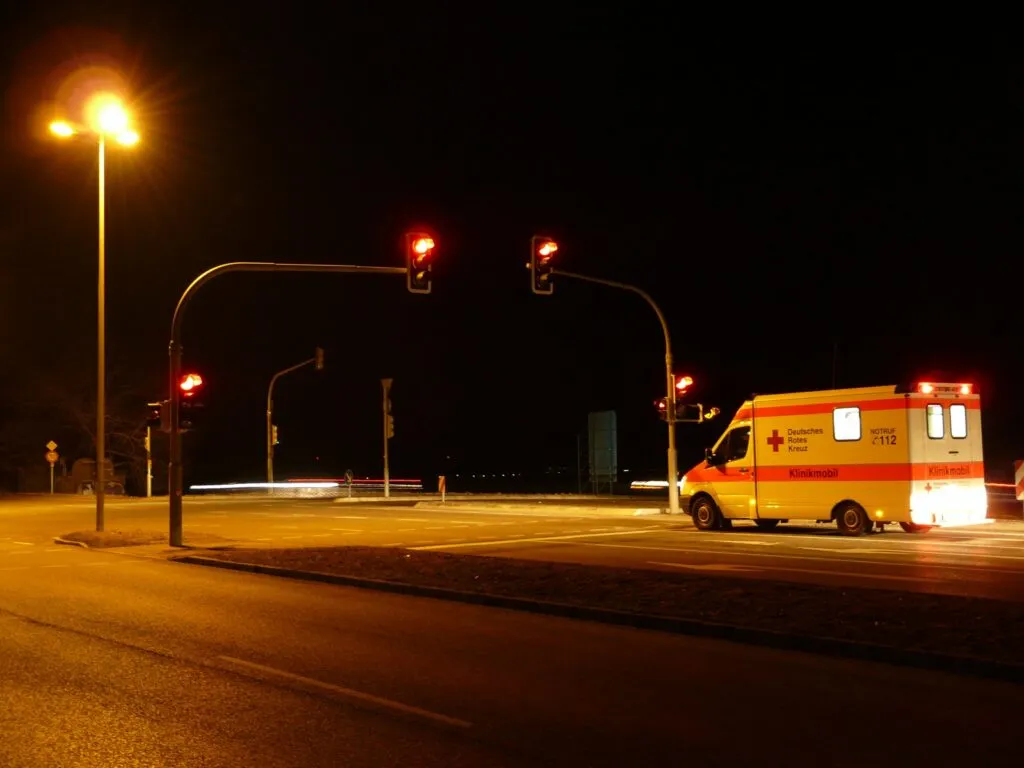
A group of 23 students from Eindhoven University of Technology in the Netherlands has unveiled Stella Juva, a vehicle the team describes as the world's first ambulance powered entirely by solar energy, according to FoxNews. Unlike a conventional ambulance designed to transport patients to hospital, Stella Juva is intended to bring medical care directly to people living far from any medical facility, with the key advantage that it generates all the energy it needs for both travel and the operation of medical equipment.
The project addresses a real problem: according to the World Health Organisation, approximately 1 billion people worldwide are served by medical facilities with unreliable or non-existent electricity supplies. In these areas, poor roads and fuel shortages further hinder access to basic healthcare services.
The vehicle functions essentially as a mobile clinic: medical staff can reach an underserved community and provide care without relying on the local electricity grid or charging points.
How the solar technology works
The roof of Stella Juva is covered with high-efficiency solar cells built using All Back Contact technology. Unlike conventional panels, where electrical contacts occupy part of the front surface of the cell, this design moves the contacts to the rear, leaving a greater surface area exposed to sunlight — an important advantage given the limited roof space on a vehicle.
Energy is stored in a lithium-based battery with a capacity of 50 kWh, which allows the vehicle and its medical equipment to operate even when sunlight is insufficient or after dark. According to the team, under favourable solar conditions, Stella Juva can cover up to 715 kilometres in a single day, with a top speed of around 75 mph (approximately 120 km/h).
Field tests in Kenya
Solar Team Eindhoven will take the vehicle to Kenya in August for real-world testing, in collaboration with the organisation Amref Health Africa. The students expect Stella Juva to cover hundreds of kilometres using solar energy alone. The team will also visit two locations where medical scenarios will be simulated, including one relating to the care of tuberculosis patients, in order to observe how the vehicle performs beyond the controlled environment of a university project.
Content paraphrased and adapted by SeniorHelp from verified public sources.
Original source: Mediafax →Previous article
Robotic Prostatectomy: How the Operation for Prostate Cancer Works
Next article
How Your Posture Can Change Your Mood in Seconds
Similar news

Kineto Consult: medical rehabilitation must be included from the outset in treatment, not at the end
29 September 2026
Ploiești: 72-year-old patient dies after admission to a private care clinic. Police investigating
29 September 2026
 Foto ilustrativă
Bedbugs at Bagdasar-Arseni: the Neuromuscular Recovery ward suspends admissions
17 August 2026
 Foto ilustrativă
Union: ambulance crews should be protected as hazardous occupations, following the attack in Cluj
10 August 2026
 Foto ilustrativă
Ambulance from Bacău Stopped at a Watermelon Stall: Two Children Were in the Vehicle, Without Medical Supervision
8 August 2026
 Foto ilustrativă
Romanian startup for senior telecare, selected for the Orange Fab 2026 programme
3 June 2026