
PET-CT PSMA: the investigation that can change treatment in prostate cancer
PET-CT PSMA precisely localises lesions in prostate cancer, helping to determine the most appropriate treatment option between surgery, radiotherapy, or systemic treatment.
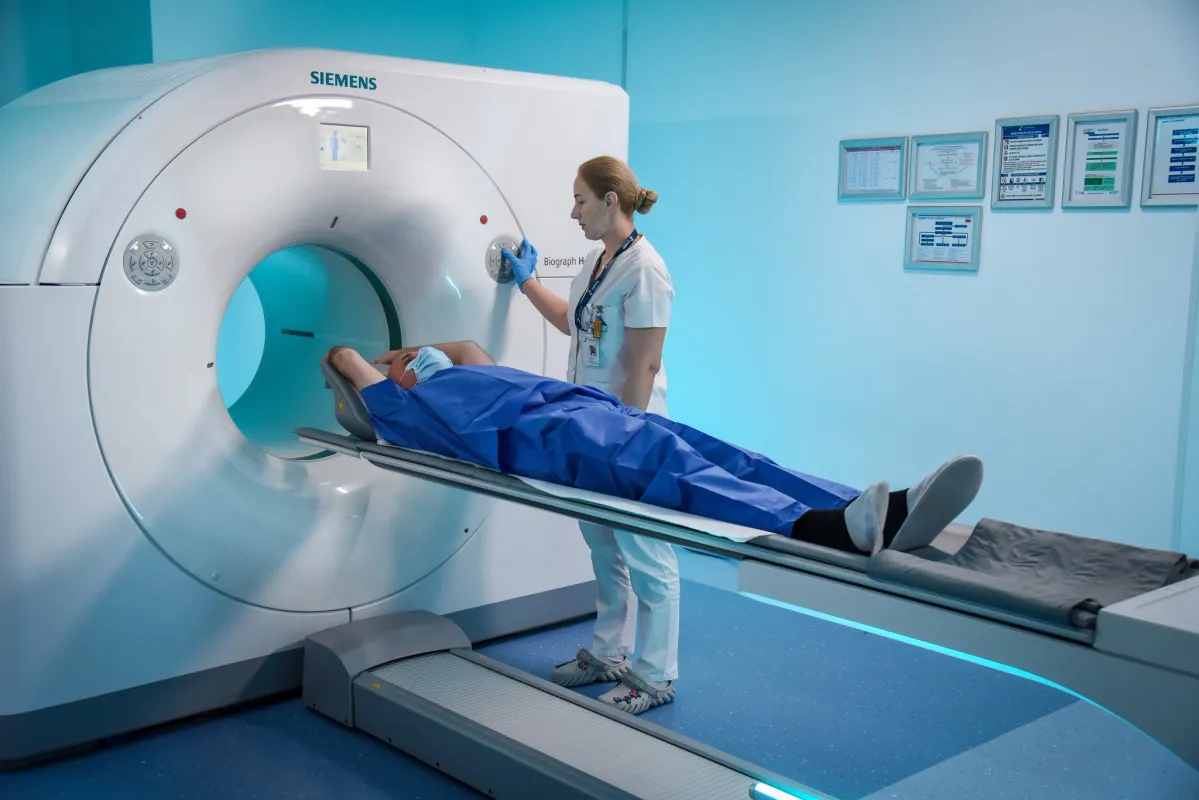
In prostate cancer, pinpointing the exact location of the disease is essential, both at the time of diagnosis and when recurrence is suspected. Some lesions can be detected based on their biological characteristics, not solely on their size.
The PSMA PET-CT scan involves administering a radiotracer that binds to PSMA, a protein found in large quantities on the surface of many prostate cancer cells. The PET component shows where the tracer concentrates in the body, whilst the CT component helps establish the precise anatomical location. In this way, affected areas can be detected within the prostate or the prostatic bed (following surgery), as well as in the lymph nodes, bones, or other organs.
This investigation is recommended particularly for assessing patients at risk of disease spread (metastasis) and for identifying persistent or recurrent disease in situations where PSA levels begin to rise following prior treatment. The results may influence clinicians' decisions regarding the type of treatment selected: surgery, radiotherapy, systemic treatment, or, in advanced cases, therapies targeting the same PSMA target.
Article supported by SANADOR. Further details at www.sanador.ro.
Content paraphrased and adapted by SeniorHelp from verified public sources.
Original source: Realitatea →Previous article
Romania dropped 12 places in the global economic competitiveness rankings, to position 61
Next article
Rogobete warns: hospitals risk running out of emergency supplies
Similar news

Microplastics in tap water can be reduced through boiling and filtering, a study shows
16 October 2026
Over 350,000 doses of flu vaccine to arrive in pharmacies next week
16 October 2026

First influenza-related death of this season confirmed by INSP: unvaccinated man from Cluj
16 October 2026

Partial Nephrectomy: The Operation That Treats Kidney Tumours and Preserves the Kidney
16 October 2026

Time spent in nature could improve one's relationship with food, a British study suggests
16 October 2026

What a liver operation involves: preparation and recovery
15 October 2026