
Parkinson's: why smokers appear to have a lower risk – researchers' new explanation
A study of over 500,000 people links carbon monoxide to a 30% lower risk of Parkinson's disease in non-smokers with higher levels of the gas. Specialists warn: this is not a reason to take up smoking.
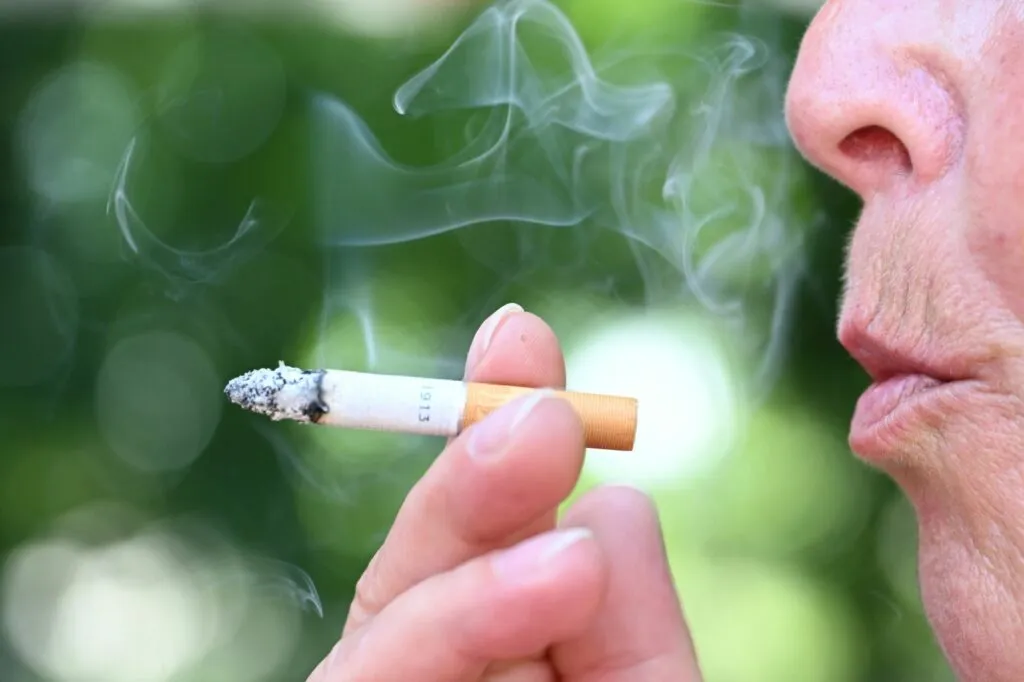
For several years, researchers have been intrigued by a statistical observation: people who smoke appear to have a lower risk of developing Parkinson's disease than those who have never smoked. A new study proposes a possible explanation linked to carbon monoxide, though specialists stress that this does not mean smoking carries any health benefit, according to Newsweek.
A study involving over 500,000 people
Researchers from the United Kingdom and China examined the link between exhaled carbon monoxide levels and the risk of Parkinson's disease in a study published in JAMA Neurology, which included over 500,000 participants.
A notable finding was observed among people who had never smoked: those with exhaled carbon monoxide levels of at least 3 ppm (parts per million) showed a roughly 30% lower risk of Parkinson's disease.
The researchers note that this result does not prove that carbon monoxide prevents the disease, but rather offers a new avenue for investigating the biological mechanisms involved. Carbon monoxide is best known as a toxic gas; however, the human body also produces it in small quantities, and at low concentrations it may act as a signalling molecule, with possible effects on inflammation, oxidative stress, and cell survival.
An association observed for decades
The link between smoking and a lower risk of Parkinson's disease is not new. A study that followed over 30,000 British doctors over a period of 65 years showed a 30–40% lower risk among smokers compared with people who had never smoked.
Researchers have also explored other possible explanations:
- Studies on smokeless tobacco products have identified similar associations, suggesting that certain compounds found in tobacco leaves — rather than smoke itself — may influence neurological mechanisms.
- Nicotine is another hypothesis under investigation, as it interacts with receptors involved in the brain's dopamine circuits and may have effects on inflammation and the functioning of dopamine-producing cells.
Not a reason to smoke
Specialists are clear in their warning that this statistical association does not make cigarettes a means of protection against Parkinson's disease. Smoking remains linked to serious health risks, including cancer, cardiovascular disease, stroke, and lung conditions.
The aim of this research is to identify the precise mechanism behind the observed association and, potentially, to isolate a beneficial biological effect that could be achieved without exposure to the harmful substances in tobacco or to dangerous concentrations of carbon monoxide.
Parkinson's disease is a progressive neurodegenerative condition that primarily affects movement and is caused by the deterioration of nerve cells involved in dopamine production. Researchers hope that a better understanding of this unusual relationship observed in smokers may, in time, open new avenues for preventing or slowing the progression of the disease.
Content paraphrased and adapted by SeniorHelp from verified public sources.
Original source: Mediafax →Previous article
Ambulances in 17 counties left without funds for material expenses in September
Next article
17 Ambulance Services Without Funds to Cover September Expenses
Similar news

Fatty liver detected on ultrasound: what the scan reveals and what it cannot determine
30 October 2026

Calf pain when walking may signal peripheral arterial disease
30 October 2026
Pulmonary Arterial Hypertension: a rare and severe disease with difficult access to treatment in Romania
30 October 2026

Dementia doesn't always manifest through forgetfulness: 10 early warning signs and how the risk can be reduced
30 October 2026

Actor Patrick Stewart, known from "Star Trek" and "X-Men", has died at the age of 86
29 October 2026
 Foto ilustrativă
Rogobete: Bucharest still has no hospital for severe burns patients, 11 years after the Colectiv tragedy
29 October 2026