
Ambulances in 17 counties left without funds for material expenses in September
The Ambulanța Trade Union Federation announces that 17 counties do not have sufficient budget for September. Union members are calling for a budgetary rectification for the fourth quarter, otherwise operations could be affected from October onwards.
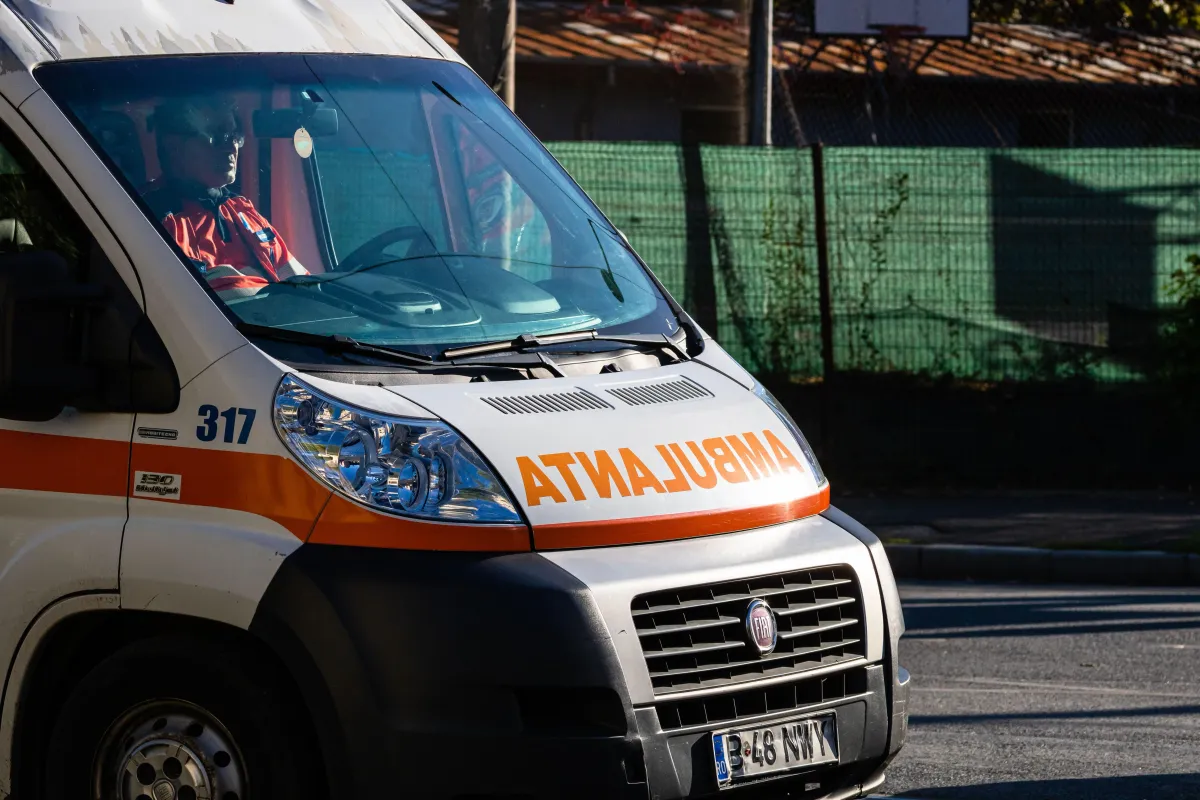
Ambulance services in 17 counties across the country no longer have sufficient funds to cover their September expenses, the National Ambulance Trade Union Federation has warned. The federation's president, Gheorghe Chiș, is calling for an urgent budget rectification for the fourth quarter, warning that emergency services could otherwise be severely affected.
According to Gheorghe Chiș, speaking to News.ro, the counties identified as having funding shortfalls following an analysis are: Argeș, Bacău, Bistrița-Năsăud, Brașov, Brăila, Caraș-Severin, Călărași, Galați, Hunedoara, Ialomița, Teleorman, Timiș, and Tulcea. Chiș does not rule out the possibility that similar difficulties exist in other parts of the country. The financial difficulties relate primarily to operational expenditure – fuel, medicines, medical supplies, and repairs.
The cause: a reduced budget, distributed with restrictions
The union leader explains that the 2026 budget was set from the outset with limitations and cuts, making it significantly smaller than the previous year's. As a result, ambulance services have been forced, throughout the year, to transfer funds from future quarters to whichever quarter was in difficulty, simply to maintain day-to-day operations.
"Unfortunately, at this time ambulance services are going through a critical period in terms of the budget that should have been secured by the government, from the state budget, through the Ministry of Health – at least at last year's levels and allocated across the four quarters," Chiș stated.
Salaries secured until November
The situation differs when it comes to personnel costs: funds to cover the salaries of ambulance service employees are secured through to November, with December set to be covered at a later stage.
The problem lies with operational expenditure – fuel, repairs, servicing, medical equipment, ambulances, medical supplies, and medicines. "This is where we have a serious problem and, as I was saying, our analysis identified 17 ambulance services that do not have a sufficient budget for September," Chiș noted.
The Federation has requested a budget increase from the Ministry of Health, with Gheorghe Chiș estimating the required amount at between 90,000 and 100,000 RON. Ministry representatives confirmed at a quarterly meeting that they are aware of the situation.
September temporarily covered by crisis reserve
To address the September shortfall, the Ministry of Health intends to draw on a reserve set aside for critical situations. "There is a fund strictly for emergencies which we can use, at the moment of crisis, until the budget is rectified, to pull those ambulance services out of their critical situation," the union official explained, adding: "As far as September is concerned, I believe that, with the support of the Ministry of Health, we will get through this difficult period."
Concerns for the fourth quarter
The greater challenge remains funding for the final three months of the year, a period during which ambulance service expenditure rises, according to Chiș, due to the cold season. The Federation is calling for a budget rectification to ensure the necessary funds are available during this period.
"As for what will happen in the fourth quarter, we are hoping to have a government in place and for a budget rectification to take place. Otherwise, the situation won't be particularly good – I'll put it that way – from mid-October onwards," the union leader warned, noting that the federation is attempting to raise awareness of the situation with both the President of Romania and politicians, given the absence of a fully empowered government. The relevant documentation and budget supplement proposals have been submitted to the Ministry of Health.
What could happen without a solution
Gheorghe Chiș warns that, in the event of a complete financial deadlock, ambulance services may be forced to prioritise their responses. Red code emergencies – those involving a risk to life – would remain the priority, whilst other types of callouts, such as patient transport and transfers, could be suspended.
"First and foremost, we must ensure we can respond to grade zero emergencies – red code, to use the technical term – because those involve life and death. The others, transport runs and patient transfers, would, regrettably, not be able to be fulfilled. That is, of course, a short-term strategy for a scenario in which we reach a complete financial standstill," the federation president explained.
Chiș stressed that this prolonged crisis situation, with no immediate guarantee of resolution, is unprecedented: "We have never faced a crisis this severe over such an extended period and without an immediate assurance that it will be resolved." He also drew attention to the fact that ambulance services must operate under normal conditions, given that seemingly minor medical situations can deteriorate rapidly.
Content paraphrased and adapted by SeniorHelp from verified public sources.
Original source: Realitatea →Previous article
Ambulance Services in 17 Counties Without Funding for September. Union Calls for Budget Rectification
Next article
Parkinson's: why smokers appear to have a lower risk – researchers' new explanation
Similar news

Romania, 3rd in the EU for Poverty Risk: 27.4% of the Population Affected
21 September 2026

Little money, long distances: there are Romanians who haven't seen a doctor in over a decade
21 September 2026
Ambulance Services in 17 Counties Without Funding for September. Union Calls for Budget Rectification
16 September 2026
17 Ambulance Services Without Funds to Cover September Expenses
16 September 2026
 Foto ilustrativă
CNAS Apologises After the eSănătateaMea Platform Displayed the Term "Handicapped"
10 September 2026

CNAS Apologises After the eSănătateaMea Platform Displayed the Term "Handicapped"
10 September 2026