
Elderly Women and the Cold: Why Senior Women Are More Sensitive to Low Temperatures
Biological differences mean women feel the cold more intensely — a problem that worsens with age and affects the comfort of older women.
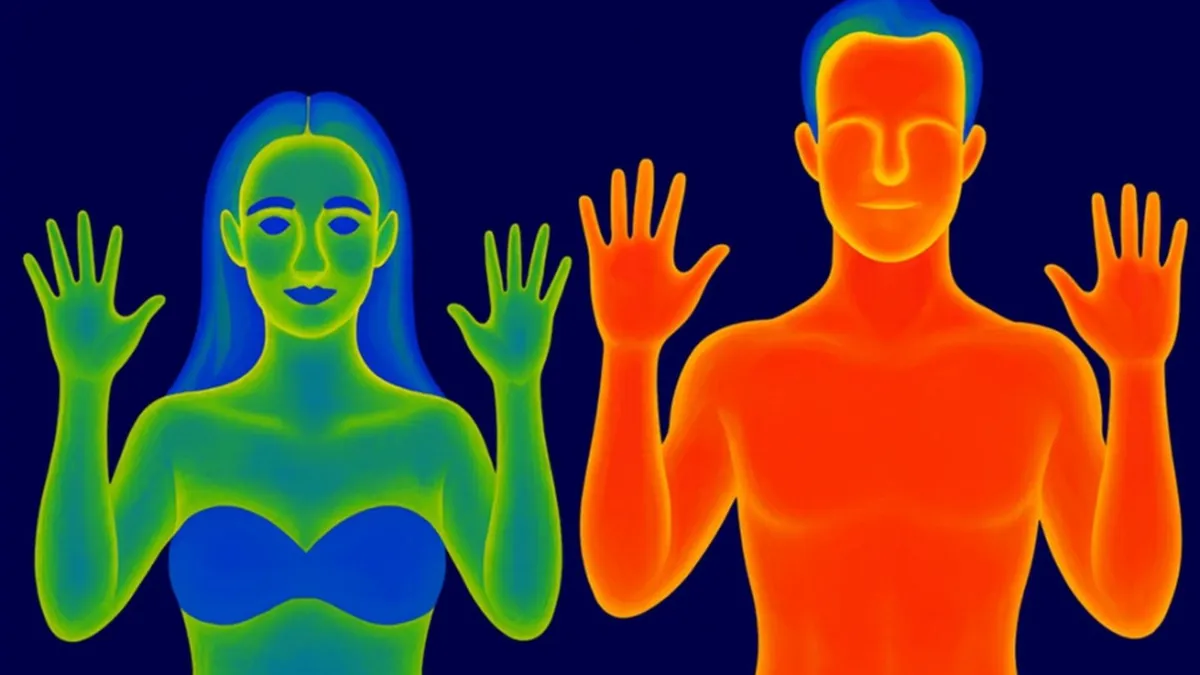
For many older women, sensitivity to cold becomes increasingly pronounced with age. This is not merely a matter of personal "sensitivity" or habit — it has concrete biological explanations that are amplified as the body ages.
Muscle mass is one of the key factors in the body's heat production. Muscles act as natural "thermal engines", generating heat even during periods of rest. For older women, who naturally have a lower proportion of muscle than men, this issue becomes even more complex with age, as muscle mass progressively declines through the process of sarcopenia.
Another important consideration is the distribution of body fat in women. Although women generally have a higher percentage of adipose tissue, its role is to protect the vital internal organs rather than to maintain temperature at the body's surface. As a result, even if the body's core remains well insulated, the extremities — the hands and feet — can become cold far more easily.
Blood circulation and the response to cold
The female circulatory system responds differently to low temperatures. When the body detects cold, it prioritises blood supply to the core, where the organs essential to survival are located, while simultaneously reducing blood flow to the extremities. For older women who may already have circulatory problems, this natural adaptation can become even more pronounced.
Hormonal influence also plays a significant role. Oestrogen can cause a slight constriction of the blood vessels, heightening the sensation of cold in low-temperature conditions. In women who are menopausal or post-menopausal, hormonal fluctuations can amplify this problem further.
The impact of metabolism on thermal comfort
The female metabolism is generally a few percentage points slower than that of men. A slower metabolic rate means less heat is produced at rest, contributing to a more intense sensation of cold. For older women who are also experiencing the natural slowing of metabolism that comes with age, this can become particularly uncomfortable.
All of these biological factors — reduced muscle mass, the particularities of female circulation, a slower metabolism, and hormonal influences — combine to make older women more vulnerable to low temperatures. Understanding these mechanisms helps in adopting appropriate strategies to maintain thermal comfort.
For families caring for older female relatives, it is important to recognise that this sensitivity to cold is not merely a "whim", but a biological reality that warrants special attention when it comes to home heating, appropriate clothing, and the general comfort of older women in their care.
Content paraphrased and adapted by SeniorHelp from verified public sources.
Original source: Realitatea →Previous article
First Case of Leprosy in Romania After 44 Years: What Seniors Need to Know About This Disease
Next article
Vitamin C – Myth or Necessity for the Elderly? A Specialist's Warnings
Similar news
Microplastics in tap water can be reduced through boiling and filtering, a study shows
16 October 2026
Over 350,000 doses of flu vaccine to arrive in pharmacies next week
16 October 2026
First influenza-related death of this season confirmed by INSP: unvaccinated man from Cluj
16 October 2026
Partial Nephrectomy: The Operation That Treats Kidney Tumours and Preserves the Kidney
16 October 2026

Time spent in nature could improve one's relationship with food, a British study suggests
16 October 2026
What a liver operation involves: preparation and recovery
15 October 2026