
Why We Lose Consciousness Under Anaesthesia: What a Japanese Study Has Discovered
A study from Kyoto University shows that anaesthesia does not shut down the brain, but rather disrupts the organised communication between its regions.
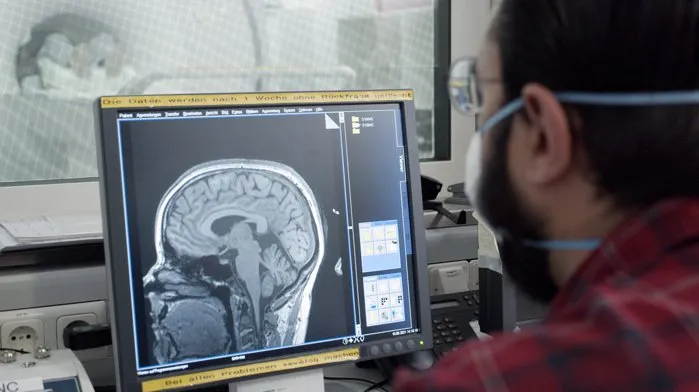
 Foto ilustrativă
A study conducted by researchers at Kyoto University, published in the journal iScience and cited by Earth, shows that general anaesthesia does not "switch off" the brain, as one might assume, but rather disrupts the organised way in which information flows between its various regions.
It is well known that, before an operation, patients are sometimes asked to count, and within just a few seconds they lose consciousness entirely. The researchers point out, however, that the brain's electrical activity does not cease at that moment – neurons continue to transmit signals.
The brain remains active, but communication changes
The research team started from the premise that it is not enough for different areas of the brain to process information independently. For a person to be conscious, information must be transmitted efficiently between regions that are distant from one another.
What experiments on rats revealed
To test this idea, the researchers attached an extremely thin array of electrodes to the surface of rats' brains, enabling activity to be recorded across nearly the entire cerebral hemisphere. The animals were exposed to light stimuli both whilst awake and under isoflurane anaesthesia.
Whilst the rats were awake, electrical signals originated in the visual area and spread towards regions responsible for hearing, touch, and other functions. Under anaesthesia, the same signals remained largely confined to the area in which they arose, failing to reach the rest of the cortex effectively.
The paradox: more signals, but less useful communication
One surprising finding of the study was that, under anaesthesia, the total amount of information transferred could actually be greater than in the waking state. The crucial difference lay in how that information circulated: in the waking state, communication was directed, precise, and organised, whereas under anaesthesia the activity became chaotic, and signals no longer reached the relevant regions coherently.
Yutaka Komura, one of the study's authors, explained: "This unexpected result suggests that, during anaesthesia, the brain is flooded with random, noisy information, whilst the awake brain selectively regulates the communication of information in specific directions." According to the researcher, the conscious brain is distinguished "by the reliability and precision of information communication, not by the raw quantity of signals."
The analogy of a room full of people
The study's authors compare this phenomenon to a room in which 200 people are speaking simultaneously: the noise is loud, but useful messages become difficult to separate and understand. By contrast, in a calm conversation between two people, fewer words are exchanged, yet communication is clear. Similarly, anaesthesia does not necessarily reduce the brain's overall activity, but rather destroys the "conversational organisation" between its regions.
The researchers note that the study does not definitively establish the mechanism of consciousness, and that the experiments were conducted solely on rats, meaning the results must be confirmed through further research, including with other types of anaesthetic. The current conclusion is that loss of consciousness appears to occur when the brain can no longer effectively coordinate the exchange of information between its own regions.
Content paraphrased and adapted by SeniorHelp from verified public sources.
Original source: Realitatea →Previous article
Ambulance attacked in Cluj due to a false rumour on TikTok. The Health Ministry's response
Next article
Daily consumption of chilli peppers linked to increased risk of oesophageal cancer
Similar news

Radiotherapy in the treatment of lung cancer: when and how it is used
24 September 2026

Aerophagia: when bloating and belching come from swallowed air, not from food
23 September 2026
Nearly 300,000 Romanians have dementia, and the number could reach 400,000 by 2050
22 September 2026

Study: REM sleep linked to lower risk for dozens of diseases
22 September 2026
 Foto ilustrativă
Herniated Disc: Causes, Symptoms and Treatment Options, Including Surgical
21 September 2026
 Foto ilustrativă
Physical activity during oncological treatment, supported by doctors
21 September 2026