
Columna-SCOR Federation Calls for Change in Law Following the Viorel Pașca Case
The Columna-SCOR Federation is calling for urgent amendments to legislation on the protection of adults with disabilities, citing a "protection vacuum" being exploited by unauthorised providers, as seen in the Pașca case.
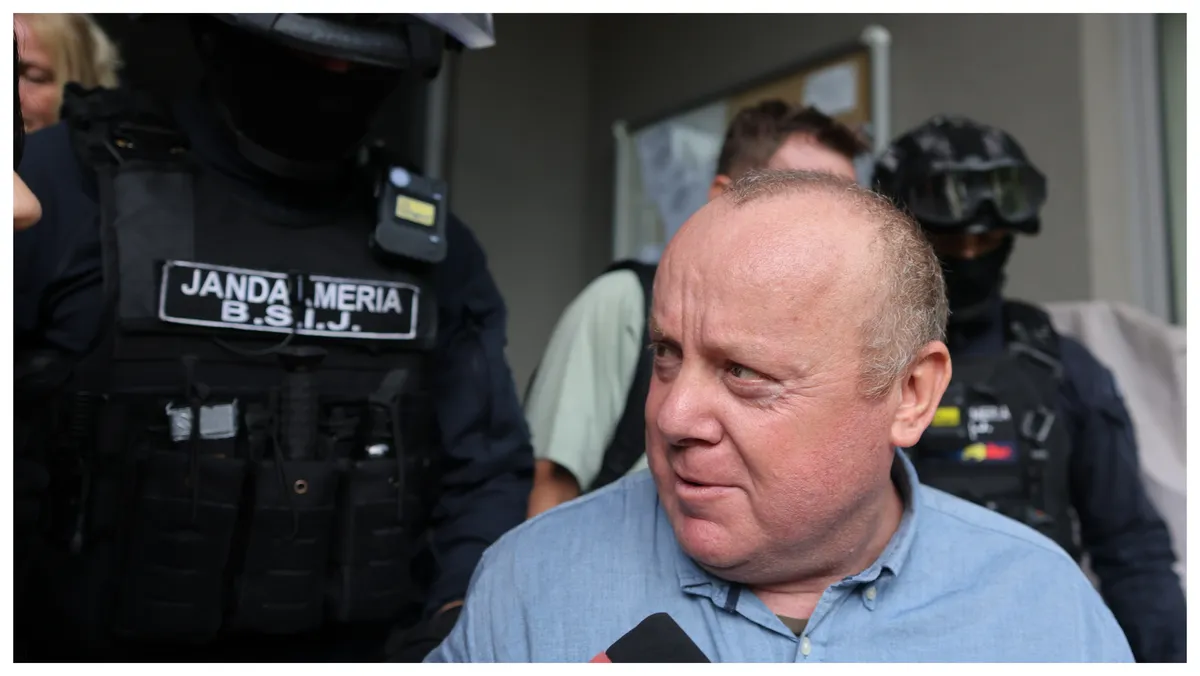
The Columna-SCOR Federation has called for urgent amendments to legislation on the protection of adults with disabilities, in the context of the Viorel Pașca case, which is under investigation by DIICOT and the Romanian Police. The organisation argues that accelerating the deinstitutionalisation process without simultaneously developing community-based services has diminished the state's capacity to protect vulnerable individuals and has created conditions for the emergence of unauthorised social service providers.
The federation's position was formulated after authorities discovered hundreds of vulnerable people being cared for by unauthorised entities outside the legal framework. According to the document submitted by Columna-SCOR, the public social protection system is no longer able to provide adequate measures for a portion of adults with disabilities and complex needs, in the context of commitments undertaken by Romania under the National Recovery and Resilience Plan (PNRR), which require accelerating deinstitutionalisation and integrating these individuals into the community.
"A protection vacuum has been created"
According to the document, the implementation of these objectives has led to the rapid closure of accredited residential services, a reduced capacity to accommodate people with severe disabilities, restricted admissions to centres that remained operational, and increased pressure on communities, whilst alternative services have not been developed at the same pace.
"The state has implicitly conveyed that these individuals must be 'reintegrated', even though there are no community services capable of ensuring their survival in safe conditions. This political pressure has generated a protection vacuum, subsequently exploited by unauthorised providers, such as those involved in the Pașca case," the federation's press release states.
Columna-SCOR states that General Directorates for Social Assistance and Child Protection (DGASPC) across the country are receiving an ever-increasing number of requests for the establishment of protection measures for adults with disabilities, particularly those with high levels of dependency. These institutions are reportedly unable to respond to such requests due to restrictive legislation, the premature closure of certain residential services, the lack of alternative community-based services, and what are considered incoherent public policies.
"The DGASPCs find themselves in the paradoxical situation of receiving urgent requests for protection, yet being unable to implement measures, because the state has prohibited the admission of people with disabilities to residential centres whilst simultaneously dismantling the infrastructure necessary to protect these individuals," the document further states.
"The law did not permit them to intervene"
The federation notes that county social assistance directorates did not have the legal authority to oversee NGOs, private individuals, or other entities providing social services on an informal basis.
"The DGASPCs were unable to prevent or halt the activities of the entities involved in the Pașca case, because the law did not permit them to intervene. In recent years, both the Columna-SCOR Federation and county-level institutions have repeatedly flagged the fact that public policies adopted in the field of disability are not designed to protect vulnerable people. The closure of functional services and the absence of community infrastructure would lead to the risk of unauthorised providers emerging; however, these warnings were not heeded by the responsible ministries. County institutions do not have the power to amend legislation, cannot create services without funding and approvals, and cannot order admissions in the absence of residential capacity, being compelled to operate within an inadequate and unrealistic legal framework," the federation's document further states.
The federation is calling for those deemed responsible for developing and implementing what it describes as "unrealistic" public policies to be held accountable, as well as for urgent amendments to legislation on the protection of adults with disabilities, so that county institutions can implement effective protection measures for individuals in at-risk situations.
"Only through swift, coherent regulation grounded in on-the-ground realities can the state's capacity to protect vulnerable people be restored," the Columna-SCOR Federation's statement concludes.
Content paraphrased and adapted by SeniorHelp from verified public sources.
Original source: Digi24 →Previous article
Nazare: almost half of the state funding for 2026 is already secured
Next article
Analysis: Special pensions are not the problem, but rather the way the state uses taxpayers' money
Similar news
College of Physicians calls for government reforms: on-call duties paid at 2017 salary levels
14 October 2026
 Foto ilustrativă
Patients with chronic illnesses warn they risk running out of treatments. Appeal to authorities
14 October 2026
 Foto ilustrativă
Crisis hits the state budget: 20,000 social care employees risk going without pay
14 October 2026
CNAS Opens Competition for 16 Director General Positions at Health Insurance Houses
14 October 2026
Health sector needs 8 billion RON by year's end, Rogobete warns
13 October 2026
Ministry of Health Requests 800 Million RON: Without Funding, Emergency Services and Ambulance Risk Disruption
13 October 2026