
Health sector needs 8 billion RON by year's end, Rogobete warns
Former minister Alexandru Rogobete says the healthcare system needs around 8 billion RON to cover this year's expenditure and outstanding debts, warning that emergency medical services are at risk if the funds are not provided.
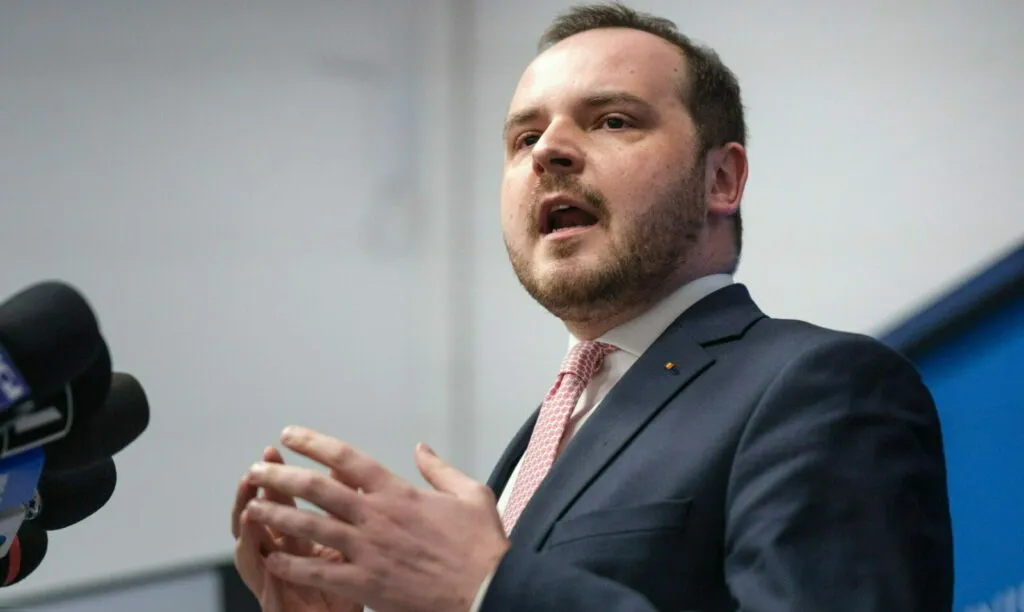
Former Health Minister Alexandru Rogobete has estimated that Romania's healthcare system needs approximately 8 billion RON by the end of the year, a sum required to cover current expenditure and outstanding debts to medical service providers and pharmacies.
Speaking on Antena 3 CNN, Rogobete explained that the rise in fuel prices over the summer had driven up costs for materials, medicines, and their transportation, which hastened the depletion of the healthcare budget.
Emergency services as a funding priority
The former minister stressed that emergency medical services must be given priority when allocating remaining funds. "The most important thing is to ensure funding for emergency systems. Emergency systems meaning ambulance services, A&E, intensive care, that entire area — stroke patients, heart attack, trauma, neonatology, everything considered a medical emergency. Because there you simply cannot pause," said Rogobete.
He warned that financial difficulties could also affect the availability of medicines needed to treat critically ill patients, arguing that the functioning of emergency services is a matter of national security: "This is not something to take lightly, and everyone must understand that the emergency healthcare sector is part of national security."
Risk to disaster response capacity
Rogobete cautioned that in the event of explosions or accidents with multiple casualties, hospitals must be able to immediately mobilise staff, equipment, and medicines, and that a lack of funding could severely limit this response capacity. "I think it's important to fund these services as quickly as possible, because — God forbid — a mass casualty event, an explosion, an accident with multiple victims, and the list goes on," he said, noting that during his tenure there were situations requiring the reallocation of funds in under 24 hours to manage such events. "If we hadn't had a budget, if I hadn't had resources to move in under 24 hours, it would have been a disaster," the former minister added.
Stance on early elections
When asked how the healthcare system would cope if the current political deadlock were to lead to snap elections, Rogobete declared himself firmly opposed to that option, warning that the consequences would be felt across the economy and public administration alike: "For the healthcare system, but not only for the healthcare system — for the economy in general and for the administrative functioning of the country — it would be a disaster."
In his view, early elections could not be held before February–April 2027 at the earliest, depending on when Parliament is dissolved, and in the interim the country would continue to be governed by a caretaker administration without full powers.
"A financial crisis not seen in over 20 years"
Rogobete stated that the country finds itself in an unprecedented political deadlock in recent memory: "This country has reached a standstill the likes of which I cannot recall — not for such a prolonged period of time."
He went on to say: "I believe that right now we all need to sit around the same table and find solutions to pull the country out of the dire situation it has found itself in. And it didn't get there on its own! Unfortunately, it got there through a lack of vision and a lack of dialogue."
According to the former minister, "this financial crisis in the healthcare system has not been seen in over 20 years."
Content paraphrased and adapted by SeniorHelp from verified public sources.
Original source: Mediafax →Previous article
He Survived Colon Cancer Three Times. He Hid the First Sign for Years
Next article
Ministry of Health Requests 800 Million RON: Without Funding, Emergency Services and Ambulance Risk Disruption
Similar news
 Foto ilustrativă
Pharmacies will report medicine stocks in real time through a new electronic platform
27 November 2026
Florin Manole: The 2027 budget must be realistic and cover pensions and all of the state's certain obligations
27 November 2026
Dăianu: "There is no budget deficit, the payments were known". On pensions: "An increase is possible"
27 November 2026
Foto ilustrativăMinister of Labour, Florin Manole: pensions must be indexed in 2027, regardless of deficit figures
27 November 2026
CNAS Addresses Technical Issues with the Health Card System (CEAS)
27 November 2026
Nazare: The decision on pensions and salaries in 2027 will be made in December, alongside the budget
27 November 2026