
Manuka Honey: What Are Its Benefits and When Is It Not Recommended
Psychonutritionist Gina Tăujan explains the benefits, correct consumption and contraindications of Manuka honey, which is rich in the antibacterial compound MGO.
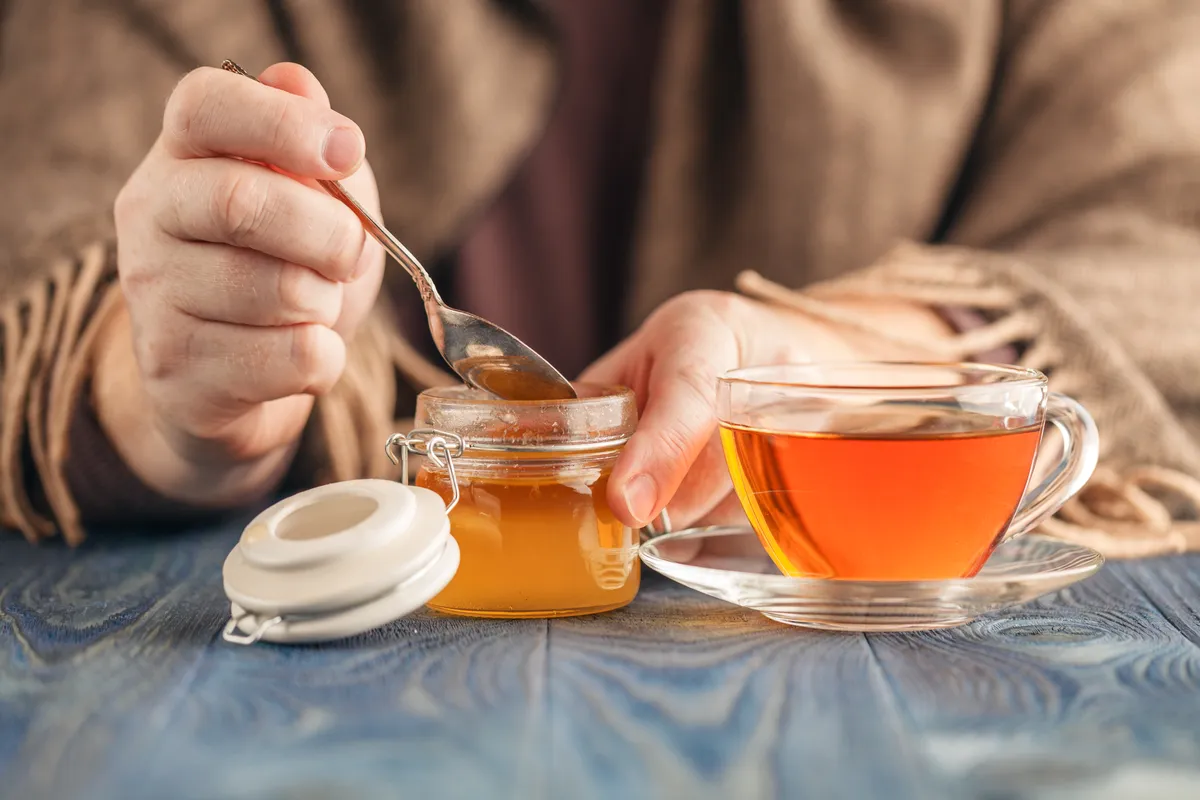
Manuka honey is a monofloral honey variety, produced by bees from the nectar of the Leptospermum scoparium shrub, native to New Zealand and certain parts of Australia. It has a thick texture, a colour ranging from golden to dark brown, and an intense flavour with caramelised notes — characteristics that may vary depending on its floral origin.
What sets it apart from regular honey
Psychonutritionist Gina Tăujan explained to Digi24.ro that the main difference between Manuka honey and regular honey lies in their composition. Manuka honey contains methylglyoxal (MGO), a naturally occurring compound that gives it specific antibacterial activity. Regular honey, by contrast, derives its antibacterial effect primarily from its natural acidity, high sugar concentration, and the presence of hydrogen peroxide.
The specialist emphasises that this difference in composition does not automatically make Manuka honey healthier or more nutritious than regular honey. Both can be included in a balanced diet, provided they are consumed in moderation and with due consideration of their sugar content.
The benefits of Manuka honey
According to the specialist, Manuka honey is valued for its antibacterial and antioxidant properties and is being studied for its potential to support overall health. Among the benefits noted are:
- the ability to inhibit the growth of certain bacteria;
- a contribution to protecting cells against oxidative stress;
- soothing throat irritation;
- temporarily relieving coughs, through its calming effect on the throat's mucous membranes, when consumed in moderation.
Manuka honey is also of interest in skincare — there are specially formulated medical products based on this honey, used for wound care and to support healing.
Regarding immunity, its antimicrobial and antioxidant properties are promising; however, Gina Tăujan cautions that there is insufficient clinical evidence to confirm that Manuka honey directly boosts immunity or prevents colds and infections. The specialist stresses that this product does not replace medical treatments.
How to consume it correctly
Manuka honey can be eaten on its own by the spoonful, or added to teas, yoghurt, porridge, or smoothies. If used to sweeten hot drinks, it is advisable to add it once the drink has cooled slightly, to avoid exposure to high temperatures.
It can be consumed at any time of day — in the morning or between meals — as there is no scientific evidence to suggest that taking it on an empty stomach alters its effects. One teaspoon is considered an appropriate amount for occasional consumption, though the serving size should be tailored to the individual. As it is rich in sugars, it should be incorporated in moderation within the daily free sugar intake.
It should be stored at room temperature, in a dry, cool place away from direct sunlight, and the container should be tightly sealed after each use to prevent moisture from getting in and to avoid absorption of odours. Refrigeration is not necessary, as low temperatures can encourage crystallisation and alter the texture.
Contraindications and precautions
Being rich in sugars, Manuka honey can affect blood glucose levels, which is why people with diabetes should introduce it into their diet carefully, taking their daily carbohydrate intake into account. People who are allergic to honey or other bee products may develop allergic reactions — itching, hives, swelling, or, in severe cases, anaphylaxis.
Honey, regardless of variety or MGO concentration, is contraindicated in children under 12 months of age, due to the risk of infant botulism — a rare but serious condition caused by spores of the bacterium Clostridium botulinum, which may be present in honey.
Gina Tăujan further notes that Manuka honey intended for food consumption should not be used to treat infections and cannot replace antibiotics or other therapies prescribed by a doctor. There are medical products based on Manuka honey — sterilised and specially formulated for wound care — but these differ from food products and should only be used in accordance with medical recommendations.
Content paraphrased and adapted by SeniorHelp from verified public sources.
Original source: Digi24 →Previous article
Recreational exercise reduces the risk of dementia, but demanding physical labour increases it, a study shows
Next article
Study: generations born after 2000 are ageing earlier than their parents
Similar news

Sleep of over 9 hours after the age of 50 linked to a shorter working life, study shows
28 November 2026

Recreational exercise reduces the risk of dementia, but demanding physical labour increases it, a study shows
28 November 2026

Study: generations born after 2000 are ageing earlier than their parents
28 November 2026

COPD: The Romanian Society of Pneumology launches a new guide for physicians, aligned with the GOLD 2026 recommendations
27 November 2026
 Foto ilustrativă
Why prolonged sitting remains a health risk, even if you exercise
27 November 2026

What Happens to Your Body When You Skip Breakfast, as Explained by Nutritionists
27 November 2026