
Senate wants recalculation of loans affected by ROBOR, based on IRCC
The Senate has adopted a bill regarding the recalculation of loans indexed to ROBOR and the compensation of affected customers, should a definitive breach of competition law be confirmed.

On Wednesday, 14 October, the Senate adopted a bill providing for the recalculation of loans linked to the ROBOR index and the compensation of affected customers, should a final ruling confirm that banks violated competition law. Under the bill, banks would be required to recalculate payment obligations using the IRCC rate and to reimburse any proven losses. The law is not yet final – the bill now proceeds to the Chamber of Deputies, which is the decision-making body.
The bill is connected to the ROBOR case, opened by the Competition Council in 2022. In June 2026, the authority announced that it had fined ten banks a combined total of 3.73 billion RON, accusing them of coordinating their behaviour in the process of setting the ROBOR index and exchanging confidential and strategic information. Several banks have challenged the findings of the investigation and announced their intention to contest the decision in court. The fines imposed do not automatically mean that borrowers will receive money back: the bill makes compensation conditional upon the existence of a final ruling and upon effective proof of the loss incurred.
Which loans could be recalculated
The measures would apply to loans still in progress, including those granted before 2 May 2019, where the variable interest rate was calculated, wholly or in part, on the basis of ROBOR. Contracts concluded after that date could also fall within the scope of the law, subject to the general limitation period set out in the Civil Code.
The bill states clearly that the law does not reopen the right to restitution in cases where the limitation period had already expired before the law came into force.
For the loans concerned, interest would be recalculated using the IRCC rate, starting from 2 May 2019 and covering the entire period during which the variable rate was linked to ROBOR.
Once the loss has been established following an investigation by a competent authority, through an administrative document, the customer would have 45 days to request that the bank review the contract. From the moment the request is submitted, the variable interest rate clause would be suspended until the matter is resolved, either amicably or through the courts.
The bank would be required to submit a written revision proposal, with a full breakdown of the recalculation and the total loss. The bill provides for a maximum of 45 days for the recalculation of obligations and a further period of no more than 30 days for processing the request, completing the recalculation, and sending the proposal to the customer. During this time, the customer may request additional clarification.
If the customer accepts the bank's proposal in writing, they should receive the amounts owed within no more than 15 days. If the parties fail to reach an agreement, the compensation procedure would be suspended, and the customer could apply to the court for recalculation of obligations and recovery of the loss. Throughout the proceedings, the variable interest rate clause would remain suspended.
Fines of up to 100,000 RON
The bill sets out penalties for banks that fail to meet their obligations: fines of between 10,000 and 50,000 RON for failure to fulfil obligations, between 20,000 and 100,000 RON for failing to process requests within the prescribed timeframe or for failing to provide the necessary documentation, and between 50,000 and 100,000 RON for delays in paying amounts already accepted in writing by the customer.
The penalties would be applied by authorised representatives of the National Authority for Consumer Protection, who could set a remediation deadline of no more than 30 days alongside the fine. In determining the amount of the fine, account would be taken of the seriousness and duration of the breach, the number of customers affected, the amounts unpaid, and the measures taken by the bank to address the consequences.
The Senate adopted the bill in its capacity as the first chamber to consider it. Until it is adopted by the Chamber of Deputies and formally enters into force, bank customers cannot seek compensation on the basis of these provisions.
Content paraphrased and adapted by SeniorHelp from verified public sources.
Original source: Digi24 →Previous article
The Senate has voted on the ROBOR credit recalculation law. Romanians could receive money back from banks
Next article
Bușoi: The Next Government Must Quickly Decide Whether to Extend the Gas Support Scheme
Similar news

France hit twice: economy enters recession as S&P warns on sovereign credit rating
28 November 2026

Siegfried Mureșan: Romania could receive 66 billion euros from the EU in the next budget
26 November 2026

Minister Ghigiu: Romania risks losing 3.4 billion euros from the NRRP, with almost 1 billion being unrecoverable
25 November 2026
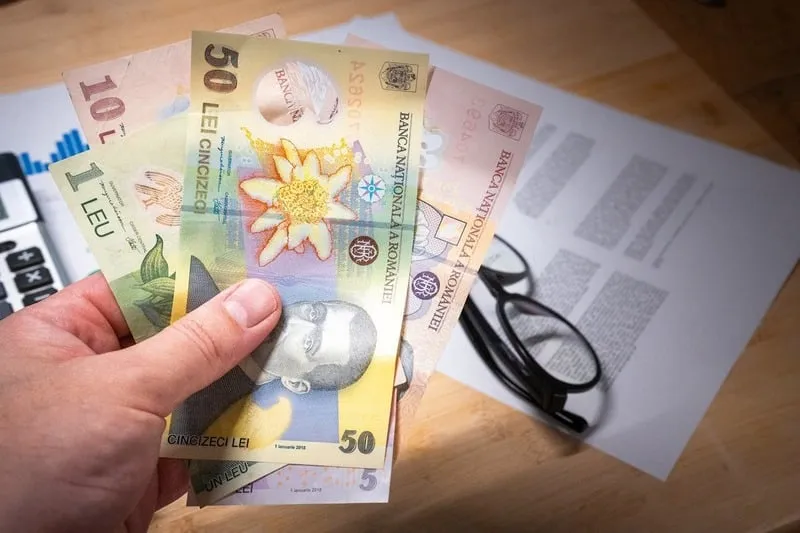
European Commission: Romania Has Exceeded Alert Thresholds for 4 Economic Indicators in 2025
24 November 2026
Minister of Energy: gas bills could drop by 10% from April 2027
24 November 2026

Gas prices explode in Europe: storage facilities are only 69% full, below the 80% average
23 November 2026