
Crisis of medicines in Bucharest hospitals: zero stocks at Emergency units for essential supplies
Bagdasar-Arseni, Pantelimon, and Floreasca hospitals have critically low or zero stocks of medical supplies. Hospital managers are urgently requesting funds to prevent serious disruptions.

Several emergency departments in Bucharest are facing critically low or completely depleted stocks of medicines and medical supplies due to a lack of funding. The situation has been reported at Bagdasar-Arseni, Pantelimon, and Floreasca hospitals, but the financial pressures are also weighing on the children's hospitals Marie Curie and Grigore Alexandrescu, which could face difficulties if they do not receive additional funds.
At Bagdasar-Arseni Hospital, the situation is considered particularly serious: the emergency department has run out of contrast medium for the CT scanner, which is essential for assessing polytrauma patients (level 0 emergencies). The hospital's manager, Andi Nodiț, explained that current needs can only be met by redistributing small quantities of supplies from other wards within the hospital.
"We are also in a critical situation — a very, very serious one. Everything related to the procurement of medical supplies, the contrast medium for the CT scanner, which is required for polytrauma patients — that is, level 0 emergencies, who must go to the scanner immediately and undergo the contrast-enhanced investigation — we are at zero stock," said Andi Nodiț.
The manager warned that the existing reserves elsewhere in the hospital cannot sustain the emergency department's operations for much longer: "If, at this very moment whilst we are speaking, a polytrauma patient comes in, we can still supplement with the very, very limited stock we have in the hospital. That means we can hold out for a maximum of a few more days, depending on the number of patients."
Gloves to last at most one week
The shortages do not stop at contrast medium. According to Andi Nodiț, stocks in the emergency department have also reached zero for basic medical supplies such as cotton wool, gauze swabs, and plasters. "As regards other essential supplies — cotton wool, gauze swabs, plasters — stock is at zero in the emergency department, and the hospital is supplementing as best it can, given that the hospital itself does not have the funds to meet the requirements for ward activities," said the manager.
The emergency department treats approximately 200 patients per day, and existing reserves will last only for short periods: sterile gloves will hold out for a maximum of one week, IV infusion sets for around eight days, and ECG paper for approximately seven days. "We are in a critical to very serious situation," Nodiț warned.
Hospitals await additional funding
Hospital managers say that swift intervention is needed to allow emergency departments to procure the necessary medicines and supplies. Solutions under discussion include the allocation of funds from the emergency reserve or a budget rectification. However, Andi Nodiț noted that a budget rectification can only be carried out by a government with full powers.
The interim Health Minister, Cseke Attila, also drew attention to the financial difficulties within the system, stating that ambulance services and emergency departments do not currently have all their expenditure covered through to the end of the year. "It is the 9th of September and we have no budget rectification, which normally takes place during the summer months or at the latest in September. We need a government with full powers to carry out this rectification. There needs to be a rebalancing of state expenditure," he said.
Rogobete: "The worst deadlock in the last 15 years"
Former Health Minister Alexandru Rogobete spoke of a "major imbalance" in the healthcare system and warned that budget cuts could result in one of the most severe crises seen in recent years.
"On the other hand, the health budget is one of the most volatile and dynamic. You do not know the number of patients; you cannot estimate to the decimal point the number of patients transported by ambulance, the number presenting to emergency departments, the number in intensive care or how long they remain there. There is enormous volatility, and flexibility is always required," said Rogobete.
According to the former minister, the lack of funding is also affecting national priority action programmes for the most serious medical cases, including intensive care, stroke, neonatology, and acute myocardial infarction. "We are talking about those national programmes, funded directly by the Ministry of Health, which finance the most critical wards in a hospital. This game of playing at being reformers — slashing the budget at any cost, cutting indiscriminately from top to bottom — will lead us into the most dangerous and worst deadlock of the last 15 years," warned Alexandru Rogobete.
Content paraphrased and adapted by SeniorHelp from verified public sources.
Original source: Adevărul →Previous article
EU Funds of 6 Million EUR for IT Companies Creating Digital Health Solutions
Next article
Rogobete calls on CNAS to publish accurate figures on funding for treatments and hospitals
Similar news

Ultra-processed foods linked to hidden damage to blood vessels in the brain
25 October 2026
Neighbourhoods with green spaces associated with lower dementia risk, Swedish study shows
25 October 2026

Study on 460,000 people: not all ultra-processed foods increase the risk of colon cancer
25 October 2026
Grapefruit can dangerously interfere with blood pressure and cholesterol medications
25 October 2026
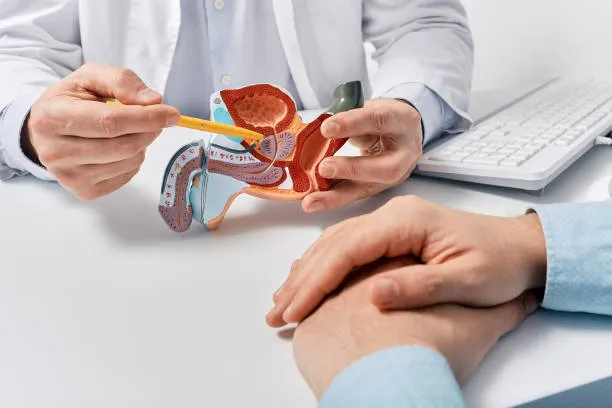
Enlarged prostate: researchers have discovered a cell type that could explain the phenomenon
25 October 2026
Thyroid Scintigraphy: the investigation that shows how active the thyroid gland is
23 October 2026