
Active Social Life in Later Years: A Family Guide for 2026
How do we help seniors maintain rich social connections and combat isolation? Discover practical strategies, warning signs, and useful resources for families who want the best for their loved ones.
Contents
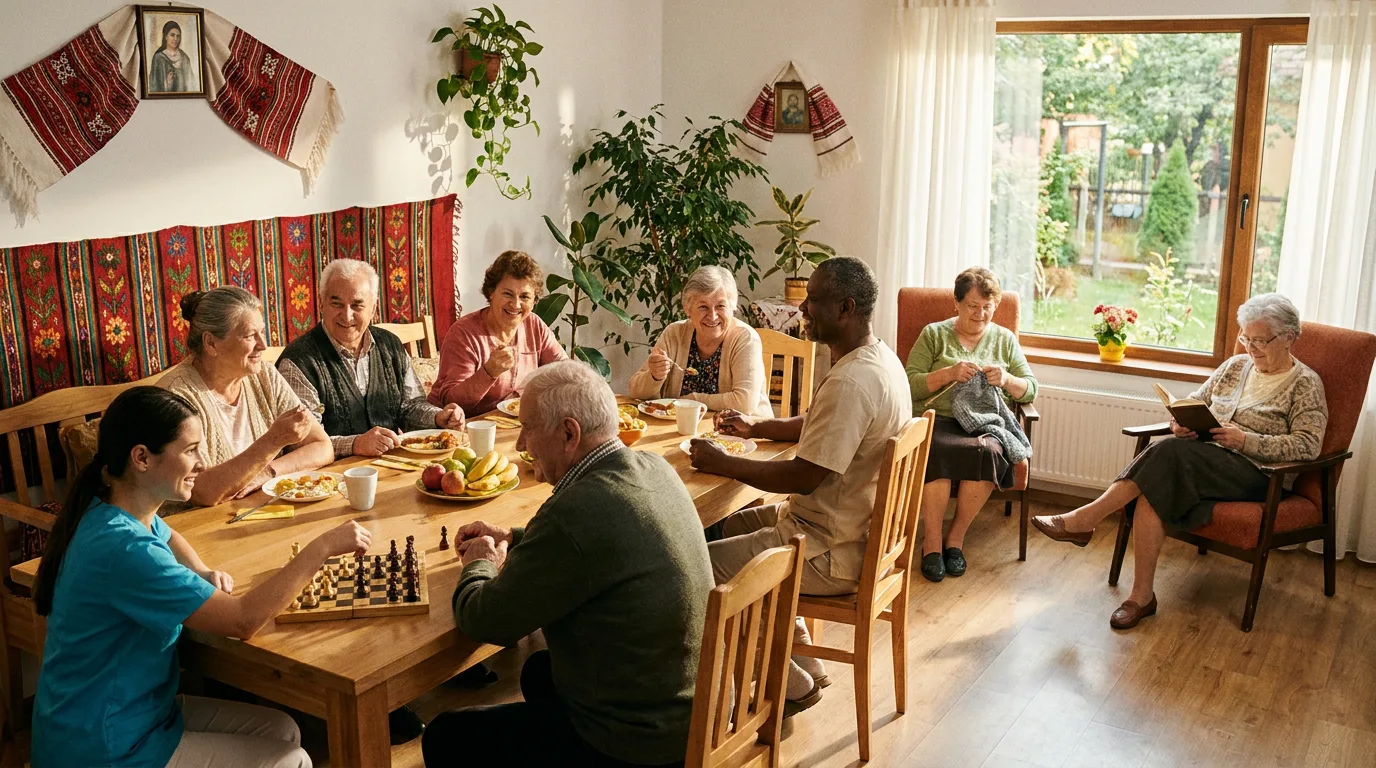
Maria, a 78-year-old lady from Otopeni, used to spend her mornings at the market, play rummy with her neighbours in the afternoons, and attend her local book club meetings. Over the past two years, however, following the death of her husband and her daughter's move to another city for work, Maria's calendar has emptied dramatically. Today, in 2026, her story reflects the reality facing millions of seniors across Romania: social isolation does not appear suddenly, but sets in gradually and imperceptibly, until the connections that keep us anchored in our community become increasingly fragile.
For families caring for an elderly parent or grandparent, maintaining their active social life can seem like a secondary concern compared to immediate medical or physical needs. Yet research from recent years consistently shows that social isolation has effects on overall health comparable to smoking or obesity. Loneliness increases the risk of depression, dementia, cardiovascular disease, and even premature death. Beyond the statistics, however, there is a simpler and more profound truth: people, regardless of age, need connection, meaning, and a sense of belonging to a community.
This guide is intended for all families who wish to offer their loved ones not only quality medical care, but also a rich life filled with meaningful interactions and everyday joys. We will explore practical strategies, warning signs of social isolation, resources available in 2026, and concrete ways in which you can support seniors in maintaining active and fulfilling social relationships.
Contents
- Why social life matters for seniors
- Signs that your loved one is becoming socially isolated
- Barriers to socialising
- Practical strategies for maintaining connections
- Community activities and programmes for seniors
- Technology as a bridge
- The family's role in supporting social life
- When professional services can help
- Frequently asked questions
Why social life matters for seniors
Social relationships are not a luxury or a mere "bonus" for quality of life – they represent a fundamental pillar of physical and mental health, especially in later years. Research from recent years consistently demonstrates that seniors with rich social relationships show better cognitive function, a more robust immune system, and a greater capacity to cope with stress and chronic illness.
The impact of social isolation is profound and multidimensional. On an emotional level, a lack of regular interactions leads to feelings of loneliness, anxiety, and depression. On a cognitive level, the absence of the mental stimulation that comes from conversations, debates, and group activities accelerates the decline of brain function. On a physical level, social isolation is associated with chronic inflammation, elevated blood pressure, and increased cardiovascular risk.
The concrete benefits of an active social life
When we speak of the importance of social connections, we are referring to measurable and tangible benefits:
- Cognitive stimulation: conversations, board games, and group activities keep the mind sharp and reduce the risk of dementia
- Motivation for self-care: seniors with an active social schedule pay greater attention to personal hygiene, nutrition, and their medication regimen
- Emotional support: friends and groups provide support during difficult times and reduce the sense of isolation
- Meaning and purpose: involvement in social activities provides daily structure and the feeling that life still has value and direction
- Physical activity: social gatherings often involve getting out and about, which encourages movement and combats a sedentary lifestyle
The human cost of loneliness
In 2026, researchers consider chronic loneliness a genuine public health epidemic. For seniors, this phenomenon is amplified by accumulated losses: the death of a life partner, children moving away, retirement removing workplace colleagues, and mobility problems limiting the ability to get around. Each loss shrinks the social circle, and without active intervention, that circle continues to contract until the person becomes almost completely isolated.
Signs that your loved one is becoming socially isolated
Social isolation often sets in gradually, which means families may not notice the change until it has become severe. Recognising the early signs is essential for effective intervention. Many families realise too late that their parent or grandparent is no longer keeping in touch with friends, no longer leaving the house, or has given up entirely on the hobbies that once brought them joy.
Behavioural indicators
Pay close attention to the following changes in your loved one's behaviour:
- Declining invitations to social events or constantly finding excuses not to take part in activities
- No longer mentioning friends in conversation, or saying that "everyone is busy"
- The phone no longer rings – days pass without calls or visits from other people
- Neglecting personal appearance – losing interest in clothing or hygiene, signalling a loss of motivation linked to the absence of social interaction
- An unstructured daily routine – no longer having planned activities and spending most of the time alone, in front of the television
- Mood changes – becoming sadder, more irritable, or more apathetic than before
Physical and cognitive signs
Prolonged isolation also leaves its mark physically and cognitively. Be alert if you notice a decline in short-term memory, increasing difficulty following conversations, unexplained weight loss, or neglect of medical treatments. These signs may indicate both social isolation and the need for a specialist medical assessment to rule out other causes.
Barriers to socialising
In order to effectively support seniors in maintaining an active social life, it is essential to understand the obstacles they face. These barriers are often multiple and interconnected, meaning that addressing them requires strategies on several fronts.
Physical and mobility barriers
Health problems are one of the most common causes of social isolation. Arthritis, cardiovascular problems, difficulties with vision or hearing, and incontinence can all make leaving the house a major challenge. The fear of falling is particularly restrictive: many seniors give up social activities out of fear of falling and injuring themselves.
Transport is another significant barrier. Many seniors can no longer drive, and public transport becomes increasingly difficult to use with age. In 2026, although adapted transport services have expanded, they remain insufficient in many areas. For example, Clinica Medicală AmbuMED in Otopeni offers private ambulance medical transport services around the clock, which can facilitate the safe travel of seniors to important medical or social events, giving families a reliable option when mobility becomes an issue.
Psychological and emotional barriers
Not all obstacles are physical. Many seniors struggle with:
- Loss of self-confidence – after retirement, some feel they no longer have anything interesting to contribute to conversations
- Social anxiety – fear of being a burden to others, or of not being "up to date" with current topics
- Depression – which eliminates the energy and motivation needed for socialising
- Complicated grief – after losing a partner, many seniors withdraw completely from the social activities they used to share
- Fear of rejection – worry about being seen as "old" or not fitting in with new groups
Economic and practical barriers
Many social activities involve costs – from the café where they used to meet friends to membership fees for clubs or groups. For seniors on small pensions, these costs can become prohibitive. Additionally, a lack of digital skills limits access to many modern socialising opportunities, from video communication platforms to online groups dedicated to older adults.
Practical strategies for maintaining connections
The good news is that, regardless of age or state of health, there are always ways to maintain and even build new social connections. The key lies in tailoring strategies to individual circumstances and finding the right balance between family support and personal autonomy.
Preserving and strengthening existing relationships
The simplest and most effective first step is maintaining contact with the people who are already part of the senior's life:
- Establish regular rituals – a weekly phone call with an old friend, a monthly visit, a walk in the park every Tuesday
- Facilitate meetings – offer transport, arrange gatherings at home if getting out is difficult, and create natural opportunities for interaction
- Encourage correspondence – letters, postcards, messages – for some seniors, written communication is more comfortable than phone calls
- Connect them with other seniors in the area – neighbours, former colleagues, members of the religious community
Building new relationships and interests
It is never too late to develop new friendships or discover new passions. Seniors who diversify their social network report higher levels of satisfaction and a stronger sense of purpose:
- Interest-based groups – book clubs, chess clubs, discussion groups about films or history
- Volunteering – provides meaning, structure, and opportunities to meet new people; many organisations value the wisdom and experience that seniors bring
- Courses and workshops – from painting to computer use, lifelong learning keeps the mind active and creates natural contexts for socialising
- Intergenerational activities – programmes that connect seniors with children or young people, offering mutual benefits
Adapting the environment to facilitate socialising
Sometimes small adjustments to the physical environment or daily routine can make an enormous difference. Ensure the home has welcoming spaces for guests, comfortable seating, and that background noise does not impede conversation. For seniors with hearing loss, investing in a quality hearing aid can completely transform their ability to participate in social interactions.
Community activities and programmes for seniors
In 2026, Romania benefits from an increasingly diverse network of programmes and initiatives dedicated to seniors. Although development remains uneven between urban and rural areas, the available options have expanded considerably compared to previous years.
Day centres for seniors
These centres offer a safe space where seniors can spend time during the day, benefiting from the supervision of qualified staff and opportunities for socialising. Programmes typically include communal meals, recreational activities, adapted physical exercise, and organised outings. For families who work, day centres provide the reassurance that their loved one is not alone at home all day, but in a stimulating and social environment.
Programmes offered by local authorities and NGOs
Many local communities organise free or low-cost activities for seniors:
- Pensioners' clubs – with regular social activities, excursions, and celebrations
- Educational programmes – community colleges, foreign language courses, digital literacy classes
- Adapted sports activities – seniors' exercise classes, chair yoga, organised walks
- Cultural events – shows, concerts, museum visits with reduced admission for pensioners
- Community gardens – spaces where seniors can grow vegetables and flowers and socialise with fellow gardeners
Religious and spiritual communities
For many seniors, the religious community is their primary social anchor. Churches, synagogues, mosques, and other spiritual centres not only offer regular services but frequently organise study groups, charitable activities, and social gatherings that create a strong sense of belonging and mutual support.
Technology as a bridge
Although many associate seniors with a reluctance towards technology, the reality in 2026 is far more nuanced. An ever-growing proportion of older people use smartphones, tablets, and computers to stay in touch with family and friends. The key lies in providing the right support to overcome the initial barrier.
Senior-friendly platforms and applications
Modern technology offers extraordinary opportunities for combating social isolation:
- Video calls – allow face-to-face contact with family and friends at a distance, which is essential for seniors with limited mobility
- Online groups and forums – virtual communities dedicated to seniors, where they can discuss shared interests, seek advice, or simply socialise
- Multiplayer online games – from chess to rummy, online games allow social traditions to be maintained even across distances
- Learning platforms – online courses tailored to seniors' pace, covering everything from history to painting
- Health applications – which facilitate communication with doctors and the management of treatments, reducing health-related anxiety
How to introduce technology successfully
The adoption of technology by seniors requires patience, simplicity, and a clear purpose. Start with a simple device, set it up fully before handing it over, and focus on a single essential function – for example, video calls with grandchildren. Once the person gains confidence with one function, they can gradually explore others. Create simple, illustrated guides with clear steps, and be available for technical support frequently, especially in the first few weeks.
The family's role in supporting social life
The family plays a crucial role in maintaining seniors' social lives, but this responsibility comes with its own challenges. Many adults face the dilemma of balancing care for parents or grandparents with their own professional and family responsibilities. Understanding this role and finding sustainable ways to fulfil it is essential for the wellbeing of everyone involved.
Balancing support and autonomy
One of the most delicate aspects of caring for seniors is finding the right balance between providing the necessary support and preserving their autonomy. Seniors need to feel that they still have control over their own lives and that they can make independent decisions. Excessive support, however well-intentioned, can become patronising and erode self-esteem.
Important principles for a healthy balance:
- Consult, don't decide – involve the person in planning social activities and respect their preferences
- Facilitate, don't force – create opportunities and provide resources, but leave the final choice in the senior's hands
- Encourage independence – even if it would be quicker to do everything for them, allow them to do what they can for themselves
- Recognise your own limits – you cannot and should not be the sole source of socialising for your parent or grandparent
Creating a family support system
Caring for seniors should not fall on the shoulders of a single person. Distribute responsibilities among siblings, grandchildren, and other relatives. Create a shared calendar where everyone can contribute – one person offers transport to activities, another visits regularly, another manages the medical aspects. Open communication and clear organisation prevent the primary carer from burning out and ensure that the elderly person benefits from contact with several family members.
Managing guilt and expectations
Many adults feel overwhelmed by guilt – that they are not doing enough, not visiting often enough, that their parent is lonely. It is important to understand that you cannot be everything to your loved one, and that this expectation is neither realistic nor healthy. The quality of interactions matters more than their quantity, and building a diverse support network is more beneficial than exclusive reliance on the family.
When professional services can help
There are times when, despite all the family's efforts, the need for professional support becomes apparent. Recognising this moment and accessing the right resources is not a failure, but a responsible decision that can significantly improve the quality of life for both the senior and the family.
Indicators that it is time to seek specialist services
Consider professional support when you observe the following:
- Severe isolation – your loved one has virtually no social interaction outside the family
- Depression or anxiety – conditions that require specialist therapeutic intervention
- Complex medical problems – which limit mobility and require coordinated care
- Carer burnout – when the family can no longer cope alone without compromising their own health
- Needs for constant supervision – to prevent accidents or manage medical conditions
Types of professional services available
The landscape of services for seniors has diversified considerably in Romania in recent years. In 2026, families have a wide range of options at their disposal, from one-off services to continuous care. Home care allows seniors to remain in their familiar environment whilst still benefiting from professional assistance – from help with daily activities to specialist medical services.
For situations requiring medical intervention or safe transport, services such as those offered by Clinica Medicală AmbuMED in Otopeni can make all the difference. With private ambulance transport and home medical care available around the clock throughout Romania, such providers ensure that seniors can access the medical services they need without the stress and risks associated with unsuitable transport, whilst also enabling them to maintain an active social life by attending important events or regular medical appointments.
Criteria for choosing the right provider
When selecting a service provider for your loved one, carefully evaluate the following aspects:
- Accreditations and licences – verify that the provider operates legally and meets quality standards
- Staff experience – ask about the training and experience of carers or medical personnel
- Flexibility of services – look for providers who can adapt their services to the family's changing needs
- Availability – especially for emergencies or unforeseen situations, round-the-clock availability may be essential
- Recommendations and reviews – speak with other families who have used the services and read online reviews
- Transparent costs – ensure you fully understand the fee structure and what is included in the services
Integrating professional services with social life
Professional services should not isolate the person, but rather facilitate their social participation. For example, a home carer can accompany the senior to community activities, a day centre provides structured socialising, and medical transport services ensure that health problems do not become barriers to attending events that are important to family or community.
Frequently asked questions
How do I persuade a parent who refuses to take part in social activities?
Approach the subject with empathy, without criticising or forcing. Ask what is making them hesitate – is it fear, fatigue, or a lack of interest? Suggest small, incremental activities: a short walk together, a visit to an old friend, an activity linked to an existing interest. Sometimes, the participation of another person (a sibling, a friend) makes the first steps easier. If the refusal persists and is accompanied by sadness or withdrawal, consult a specialist to rule out depression.
How often should I visit my parent to prevent isolation?
There is no universal frequency – it depends on individual needs, geographical proximity, and the existing social network. What matters is that visits are regular and predictable, not necessarily frequent. A daily phone call or a consistent weekly visit is more valuable than rare but intensive visits. The quality of the interaction matters more than its duration: 30 minutes of engaged conversation is more valuable than two hours spent with everyone on their phone.
What should I do if my parent lives in a rural area with few socialising options?
Rural areas present specific challenges, but also unique opportunities. Encourage participation in church, in women's or men's groups in the village, and at local fairs. Explore the possibility of volunteering – for example, helping to look after neighbours' children. Technology becomes even more important in these cases: video calls, online groups, and communication platforms can connect the person with friends and family anywhere. Consider longer visits from relatives, so that time spent together is more substantial.
How much do professional care services for seniors cost?
Costs vary significantly depending on the type of service, location, and level of specialisation. Home care can range from a few hundred to several thousand RON per month, depending on the number of hours and qualifications required. Day centres have monthly or daily rates. Specialist medical services, medical transport, and overnight care are generally more expensive. Many families combine resources – for example, a few hours of professional care per week supplemented by family support. Check whether there are local subsidies or social assistance programmes for which the person might be eligible.
My mother has hearing problems and avoids socialising because of them. What can I do?
Hearing problems are a major but often overlooked cause of social isolation. The first step is an ENT consultation for a professional hearing assessment and, if appropriate, a referral for a quality hearing aid. Investing in good hearing technology can completely transform the ability to participate in social life. At the same time, learn effective communication techniques together: speaking clearly and slowly without shouting, maintaining eye contact, and reducing background noise. Inform friends and family about the needs, so that social gatherings can be adapted accordingly.
Is it normal for my parent to prefer staying at home alone rather than socialising?
A preference for time spent alone is not necessarily problematic – some people are naturally introverted and recharge their energy in solitude. The key is to distinguish between a healthy choice and a worrying withdrawal. If the person is content, maintains their hobbies, has good energy, and occasionally takes part in social activities, their balance is probably healthy. Warning signs appear when solitude is accompanied by sadness, self-neglect, a loss of interest in previously enjoyable activities, or when a pattern of total isolation sets in.
An active social life is not a luxury for seniors – it is an essential component of their overall health and wellbeing. As a family, you have the power to make a difference by recognising the importance of social connections, identifying specific barriers, and implementing strategies tailored to your loved one's needs. Whether it is facilitating transport to activities, introducing technology for communication, connecting with community resources, or calling on professional services when the situation demands it, every step taken to combat social isolation is an investment in the quality of life of those who raised and cared for us.
You do not have to navigate this path alone. If you have concerns about the health or safety of your loved one, or if you need support in facilitating their social participation, do not hesitate to speak with a specialist. Medical and care service providers can offer personalised solutions that respect the senior's autonomy whilst giving you the reassurance that your loved one is receiving the care they need.
This article is for informational purposes only and does not replace medical advice. For specific situations, please consult a specialist.
Previous
Caregiver Burnout: Warning Signs and Practical Strategies
Next
Proper Hydration in Old Age: Complete Guide 2026
Similar articles
Polypharmacy in the Elderly: What Families Need to Know
16 October 2026
Caregiver Burnout: Signs to Recognise and How to Ask for Help
15 October 2026
Foot Care for the Elderly: Warning Signs and Prevention
14 October 2026
Sleep Disorders in Seniors: When and How to Seek Help
13 October 2026
Osteoporosis and Bone Health — An Essential Guide for Carers
13 October 2026
Validation Therapy for Elderly People with Dementia: A Guide for Families
13 October 2026