
How to Manage Food Refusal in the Elderly: Causes and Solutions
Complete guide for families: why elderly people refuse to eat, when to seek medical advice, and practical strategies for managing the situation with care and understanding.

Contents
When grandmother refuses her favourite dish or father no longer wants to eat with the family, worry sets in immediately. Refusal to eat is a common situation among elderly people, but one that should never be ignored — behind it may lie medical or psychological causes, or simply the natural changes that come with ageing. For families, this moment becomes a test of patience, empathy, and understanding: how do you tell the difference between a bad day and a warning sign? When should you consult a specialist, and what can you do at home to help your loved one maintain their appetite?
Caring for a parent or grandparent often means navigating unfamiliar territory, and nutrition is one of the most delicate areas. Refusal to eat is not always a matter of stubbornness — often, the elderly person simply can no longer eat, or no longer feels the need to. In this article, we explore the most common causes of food refusal, the signs that the situation requires medical attention, and the practical strategies families can apply at home, with care and without pressure.
Contents
- Why elderly people refuse to eat
- Warning signs and when to consult a doctor
- Practical strategies for families
- The difference between temporary refusal and deterioration
- What options exist when refusal persists
- The role of the professional carer in managing nutrition
- Frequently asked questions
Why elderly people refuse to eat
Loss of appetite in elderly people rarely has a single cause. Most often, physical, psychological, and environmental factors combine to turn mealtimes from a pleasant occasion into a chore or even a source of discomfort. Understanding these causes is the first step towards finding the right solutions.
Common medical causes
Ageing brings physiological changes that directly affect eating. A diminished sense of taste and smell makes food seem bland. Dental problems — missing teeth, ill-fitting dentures, or gum pain — can make every bite a challenge. Medications for chronic conditions (antihypertensives, antidepressants, analgesics) often have reduced appetite or altered taste as a side effect.
Chronic illnesses also play an important role. Diabetes, heart failure, Parkinson's disease, and dementia all directly affect one's relationship with food. Dysphagia — difficulty swallowing — is a major cause of food refusal, as well as a source of fear around choking or aspiration. Urinary or respiratory infections, chronic constipation, or gastro-oesophageal reflux can reduce appetite without the elderly person being able to express exactly what is bothering them.
- Reduced sense of taste and smell — food seems flavourless
- Dental problems or ill-fitting dentures — pain when chewing
- Medication side effects — dry mouth, metallic taste
- Dysphagia — fear of choking or difficulty swallowing
- Chronic constipation — persistent feeling of fullness
- Neurodegenerative diseases — forgetting to eat or loss of interest in food
Psychological and emotional factors
Depression in elderly people is often unrecognised and manifests as a loss of interest in pleasurable activities, including mealtimes. Loneliness, the loss of a life partner, or social isolation can transform mealtimes from a social occasion into a painful reminder. Health-related anxiety or fear of choking can create real barriers around eating.
Sometimes, refusal to eat becomes a form of control in an environment where the elderly person feels they have lost their autonomy. It is important to recognise these signs and to address the emotional dimension of the problem, not just the physical one.
Environment and functional dependence
If an elderly person can no longer make their way to the table independently, hold utensils, or open packaging, they will gradually give up on eating. Lack of adequate assistance at mealtimes, a noisy or rushed environment, eating alone — all of these can contribute to food refusal. Room temperature, insufficient lighting, or lack of privacy can make the difference between a successful meal and a refused one.
Warning signs and when to consult a doctor
Not every refusal to eat is an emergency, but there are situations where delaying medical consultation can rapidly worsen the person's health. Dehydration and malnutrition in elderly people progress much more quickly than in younger adults and can lead to serious complications: falls, confusion, infections, and pressure injuries.
Signs that the situation requires immediate medical attention
- Refusal to drink fluids for more than 12–24 hours
- Rapid weight loss — more than 2–3 kg in a week
- Increased mental confusion or excessive drowsiness
- Signs of dehydration: dry lips, very concentrated urine, loss of skin elasticity
- Severe difficulty swallowing with coughing or choking on every bite
- Complete refusal of food for more than 48 hours
- Extreme weakness, inability to get out of bed
If you notice any of these signs, do not wait and hope they pass on their own. Contact the GP, the home care team, or go to the emergency department. In the case of elderly people with advanced dementia or terminal illness, discuss with the medical team about a clear action plan for crisis situations.
When to seek a geriatric assessment or speech and language therapy
If refusal persists for more than a week without an obvious cause, or if the elderly person coughs at mealtimes, has a hoarse voice after eating, or avoids certain textures, it is time to request a specialist assessment. A geriatrician can investigate complex causes and adjust medication. Speech and language therapy assesses dysphagia and recommends adapted food textures, seating positions, and safe swallowing techniques.
Practical strategies for families
When food refusal is not a medical emergency, families can do a great deal to improve the situation. The strategies below are grounded in respect for autonomy, patience, and careful observation of the needs of your loved one.
Adapting food texture and consistency
If chewing or swallowing is difficult, transform foods into textures that are easy to manage: purées, creamed soups, smoothies. Add eggs, cheese, butter, or oil to increase caloric intake without increasing volume. Avoid dry, crumbly, or sticky foods that increase the risk of choking. Liquids can be thickened with specialist products to reduce the risk of aspiration.
- Mashed potato, vegetable, or fruit purées rich in nutrients
- Finely minced or puréed meat, boneless fish
- Yoghurt, puddings, cream cheese — easy to swallow
- Smoothies made with fruit, milk, and protein powder
- Creamed soups enriched with cream or butter
Meal scheduling and a favourable environment
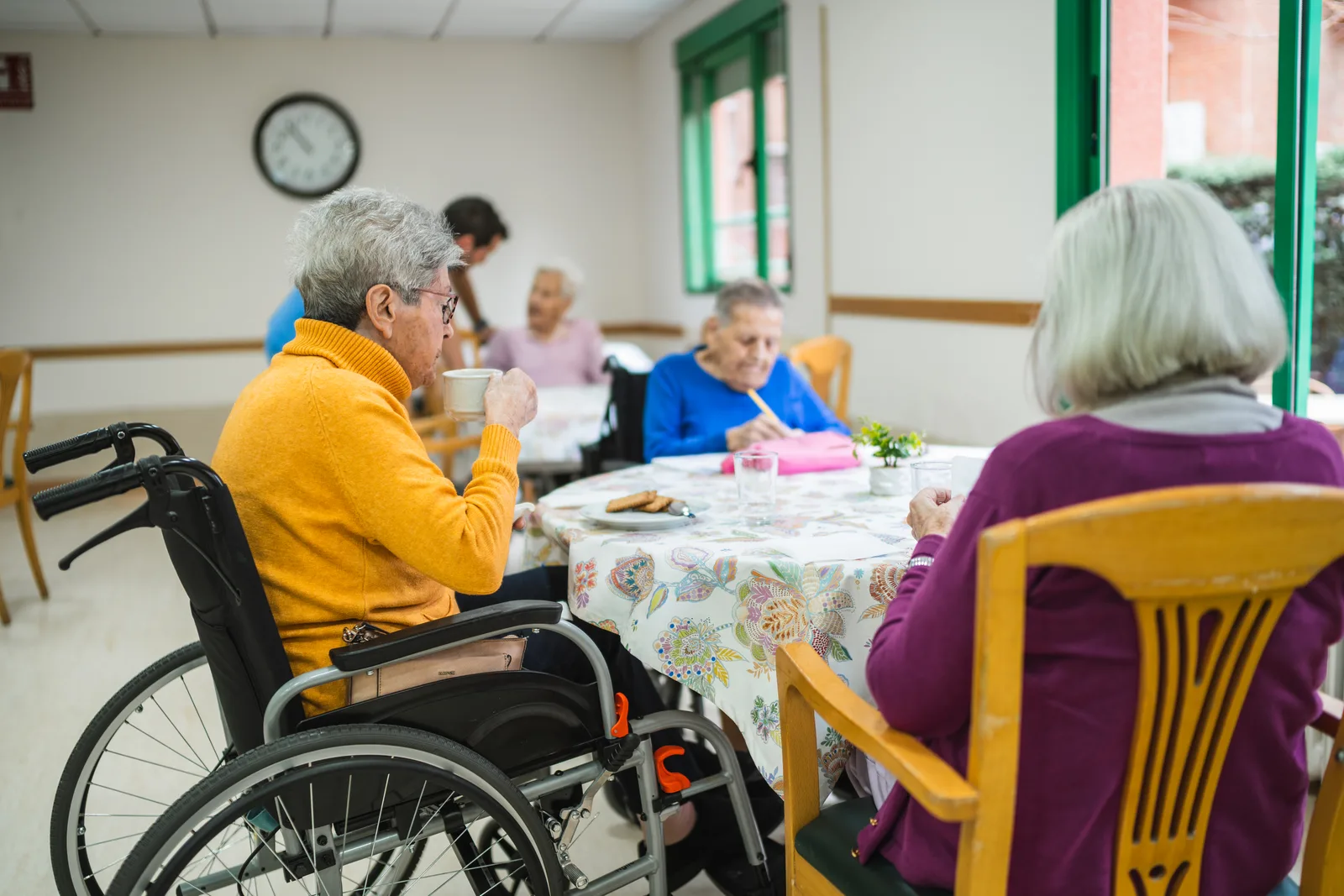
Maintain a daily routine — meals at the same times each day help the body to anticipate food intake. Opt for 5–6 small meals rather than three large ones. Create a calm environment, free from a noisy television or tense conversations. Eat together with the elderly person — mealtimes become a social occasion, not merely a feeding exercise. Allow them to choose what they would like to eat from a few simple options; do not overwhelm them with complicated menus.
Ensure the elderly person is comfortable: correct seated posture (at 90 degrees), the table at the right height, adapted utensils if they have tremors or weakness. Good lighting and plates with colour contrast against the food can help those with poor eyesight.
Assisted feeding with respect and dignity
If the elderly person needs help at mealtimes, be patient. Allow them the time to chew and swallow at their own pace. Do not rush them or force them. Offer small sips or spoonfuls, not overfilled. Check that they have swallowed before offering the next portion. Respect refusal — if they say "I don't want any more," do not insist too much. You can try again in an hour with something different.
The difference between temporary refusal and deterioration
Not every decrease in appetite signals a serious problem. Elderly people, like everyone, have better and worse days. A urinary infection, a period of fatigue, or a bout of low mood can temporarily reduce appetite. But how do you distinguish between a temporary refusal and one that signals a deterioration in overall health?
Temporary refusal — characteristics
- Lasts 1–3 days and resolves spontaneously
- The elderly person remains hydrated and drinks fluids
- There is no significant weight loss
- Disappears once the underlying cause is treated (e.g., antibiotics for an infection)
- The elderly person clearly expresses that they are not hungry, but accepts preferred foods
Signs of progressive deterioration
If refusal persists for more than a week, accompanied by consistent weight loss, increasing weakness, total disinterest in food, or reduced alertness, this is more than just a bad day. Cognitive decline can cause the elderly person to forget to eat or to no longer recognise food. The progression of chronic illnesses can reduce metabolism and the biological need for nourishment.
In these cases, a comprehensive geriatric assessment is essential. The medical team will review medication, investigate treatable causes, and establish a personalised plan — which may include nutritional supplements, treatment adjustments, or the involvement of a nutritionist.
What options exist when refusal persists
There are situations in which, despite every effort, the elderly person cannot or no longer wishes to eat orally. These moments are particularly difficult for families and require honest conversations with the medical team about the goals of care and quality of life.
Oral nutritional supplements
Before considering artificial nutrition, the doctor may recommend high-calorie, high-protein supplements in the form of drinks, creams, or puddings. These provide many calories and nutrients in a small volume, and are useful when the elderly person eats little but is still able to swallow.
Enteral nutrition — what it involves and when it is recommended
Enteral nutrition via a nasogastric tube (short-term) or gastrostomy (long-term) is a medical option for people who cannot swallow safely or who refuse food entirely but have a functioning digestive tract. It is indicated particularly in cases of severe dysphagia, prolonged unconsciousness, or certain progressive neurological conditions.
However, it is essential that families understand: enteral nutrition is not a miraculous solution. In cases of advanced dementia or terminal illness, studies show that it does not significantly extend life and may cause discomfort, restricted mobility, or complications. The discussion must include the elderly person's own wishes (if previously expressed), a realistic medical prognosis, and the goals of comfort versus life prolongation.
Palliative support and comfort-centred care
When refusal to eat occurs in the context of an advanced, irreversible illness, the palliative care team can provide essential support. The priority becomes comfort, not forced feeding. The family receives emotional support and learns how to provide dignified care: moistening the lips, offering small sips of water, and being a warm presence. Accepting that the elderly person is approaching the end of their life, and that refusal to eat is part of this natural process, is difficult — but sometimes necessary.
Working with the medical team
Regardless of the option chosen, ongoing communication with the GP, geriatrician, nutritionist, and professional carers is essential. Regular reassessments allow the care plan to be adjusted as the elderly person's condition evolves.
The role of the professional carer in managing nutrition
Families do everything they can, but sometimes professional help becomes indispensable. A carer experienced in geriatric care brings not only physical assistance at mealtimes, but also careful observation, proven techniques, and boundless patience — resources that are often depleted when the carer is a tired and emotionally affected family member.
What a professional carer can do
- Monitors daily food and fluid intake
- Prepares meals adapted in texture and nutritional content
- Assists patiently with feeding, respecting the elderly person's pace
- Recognises early signs of dysphagia or other complications
- Communicates with the family and doctor about important changes
- Establishes routine and a calm environment at mealtimes
- Provides the family with much-needed respite, reducing carer burnout
Trained carers are familiar with techniques for stimulating appetite, correct positioning to prevent aspiration, and warning signs that require medical attention. Their consistent presence ensures continuity of care and prevents crisis situations caused by unintentional oversight.
Frequently asked questions
How long can an elderly person survive without eating?
Without food but with hydration, an elderly person may survive for several weeks, but without water, only a few days. However, quality of life deteriorates rapidly — weakness, confusion, and serious complications set in quickly. Never allow the situation to reach this point; intervene early with medical support and adapted strategies.
Can I force an elderly person to eat if they refuse?
You should not and must not force someone to eat. Forced feeding can cause aspiration, emotional distress, and a complete breakdown of trust. Instead, try to understand the reason for the refusal, offer alternatives, and seek specialist help. Respecting autonomy remains essential, even in illness.
What do I do if the elderly person only eats sweets or unhealthy foods?
In certain situations, particularly when the risk of malnutrition is high, it is better to accept that they eat something than nothing at all. Offer healthier sweet-tasting alternatives (fruit, yoghurt with honey, smoothies), but be flexible. Consult a nutritionist for strategies to balance their diet without conflict.
When should I consider tube feeding?
Enteral nutrition is discussed when severe dysphagia poses a life-threatening risk, when the elderly person has a treatable condition but is temporarily unable to swallow, or when malnutrition is advancing rapidly despite all other measures. It is a complex decision, made jointly with the medical team and taking into account the patient's wishes and prognosis.
How do I persuade an elderly person to accept help at mealtimes?
A gentle, respectful approach is key. Explain that accepting help does not mean losing independence, but rather gaining more comfort and safety. Introduce it gradually — perhaps beginning with just the preparation of a meal or setting out the plate. Involve professional carers who know how to preserve dignity and build relationships of trust.
Is it normal for an elderly person with dementia to refuse food?
Yes, refusal to eat is common in advanced dementia. Causes include forgetting how to chew or swallow, not recognising food, loss of the sensation of hunger, or behavioural disturbances. The medical team and carers can adapt feeding strategies to the stage of the illness, prioritising comfort and dignity.
Refusal to eat in elderly people is a complex challenge that demands patience, understanding, and sometimes courage — the courage to accept limitations and to ask for help. If you are facing this situation, you are not alone. Speak openly with the doctor, the care team, and your family. Every situation is unique, and solutions must be tailored with care and empathy. If you feel you need additional support, do not hesitate to turn to professional home care services — sometimes, a qualified carer makes all the difference between exhaustion and peace of mind.
This article is intended for informational purposes only and does not replace medical advice. For specific situations, please consult a specialist.
Previous
How to Talk to Your GP About the Needs of a Dependent Elderly Person
Next
How to Organise the Transfer of an Elderly Person's Medical Records Between Doctors and Care Homes
Similar articles

Recommended Vaccines for the Elderly: What Families Need to Know
23 September 2026

Myths and Facts About Adapting Your Home for Elderly Care
22 September 2026

What You Need to Know About Arthrosis and Joint Pain in Old Age
22 September 2026

Skin Care for the Elderly at Home: Prevention and Recognition
22 September 2026
Practical Guide to Parkinson's Disease: What Families Need to Know
21 September 2026
Hyperthermia and Heat Stroke in the Elderly: Signs, First Aid and Prevention
21 September 2026