
Activities for the Elderly: A Guide for Carers
Discover how recreational activities improve seniors' quality of life and which options are right for your loved one. Practical advice for families who want the best for their parents.
Contents
When we talk about senior care, we often focus on the medical and hygiene aspects, sometimes forgetting that the wellbeing of elderly people depends greatly on how they spend their leisure time. Recreational activities are not simply ways to fill the hours of the day — they represent a bridge to maintaining autonomy, cognitive health, and the joy of living.
For many family members, finding the right balance between medical supervision and recreational stimulation can feel overwhelming. Whether your loved one lives at home, receives home care, or resides in a specialist facility, understanding the importance and variety of recreational activities is an essential step towards providing a truly fulfilling life.
This article is here to support families who wish to offer their seniors not just care, but also normality, joy, and purpose. Let us explore together what recreational activities adapted for older adults truly mean, and how we can integrate these valuable moments into the daily routine.
Contents
- Why recreational activities matter for seniors
- Types of recreational activities adapted for older adults
- Benefits for physical and mental health
- How to choose the right activities for your loved one
- Common challenges and practical solutions
- The role of carers in facilitating activities
- When to seek specialist help
- Frequently asked questions
Why recreational activities matter for seniors
Social isolation and lack of mental stimulation are major risk factors for cognitive decline in elderly people. Recent studies show that seniors who regularly participate in recreational activities have significantly lower rates of depression and anxiety compared to those who lead sedentary and monotonous lives.
Recreational activities offer far more than simple entertainment. They keep neural connections active, stimulate memory, improve coordination, and provide a sense of purpose. For many older adults, these moments represent an opportunity to reaffirm their identity beyond the role of patient or dependent person.
Impact on quality of life
Quality of life is not measured solely in years lived, but also in the joy and meaning of those years. Recreational activities contribute to:
- Maintaining a sense of independence and dignity
- Creating predictable routines that provide emotional security
- Facilitating social interaction and reducing loneliness
- Stimulating appetite and improving sleep
- Providing topics for conversation and positive memories
The emotional dimension for families
For family members, seeing their loved one smiling and engaged in an enjoyable activity brings enormous relief. These moments ease the guilt that many feel when they cannot be present constantly, and provide reassurance that their loved one is not merely surviving, but truly living.
Types of recreational activities adapted for older adults
The variety of recreational activities available to seniors is impressive, and the choice depends on physical abilities, personal preferences, and each person's history. There is no universal formula, but there is certainty that every senior can find something that brings them joy.
Cognitive and creative activities
Keeping the mind stimulated remains essential at any age. Cognitive activities help maintain mental agility and can slow the age-related cognitive decline process:
- Traditional board games: chess, backgammon, rummy, jigsaw puzzles
- Artistic activities: painting, drawing, modelling, origami
- Music: listening to favourite melodies, singing, simple instruments
- Reading and discussions about books, magazines, or newspapers
- Memory activities: reminiscing, organising photo albums
Adapted physical activities
Movement remains vital for maintaining mobility and cardiovascular health, even in advanced age. Intensity must be adapted to individual capabilities:
- Short walks outdoors or around the home, with support if needed
- Light chair-based gymnastics or stretching exercises
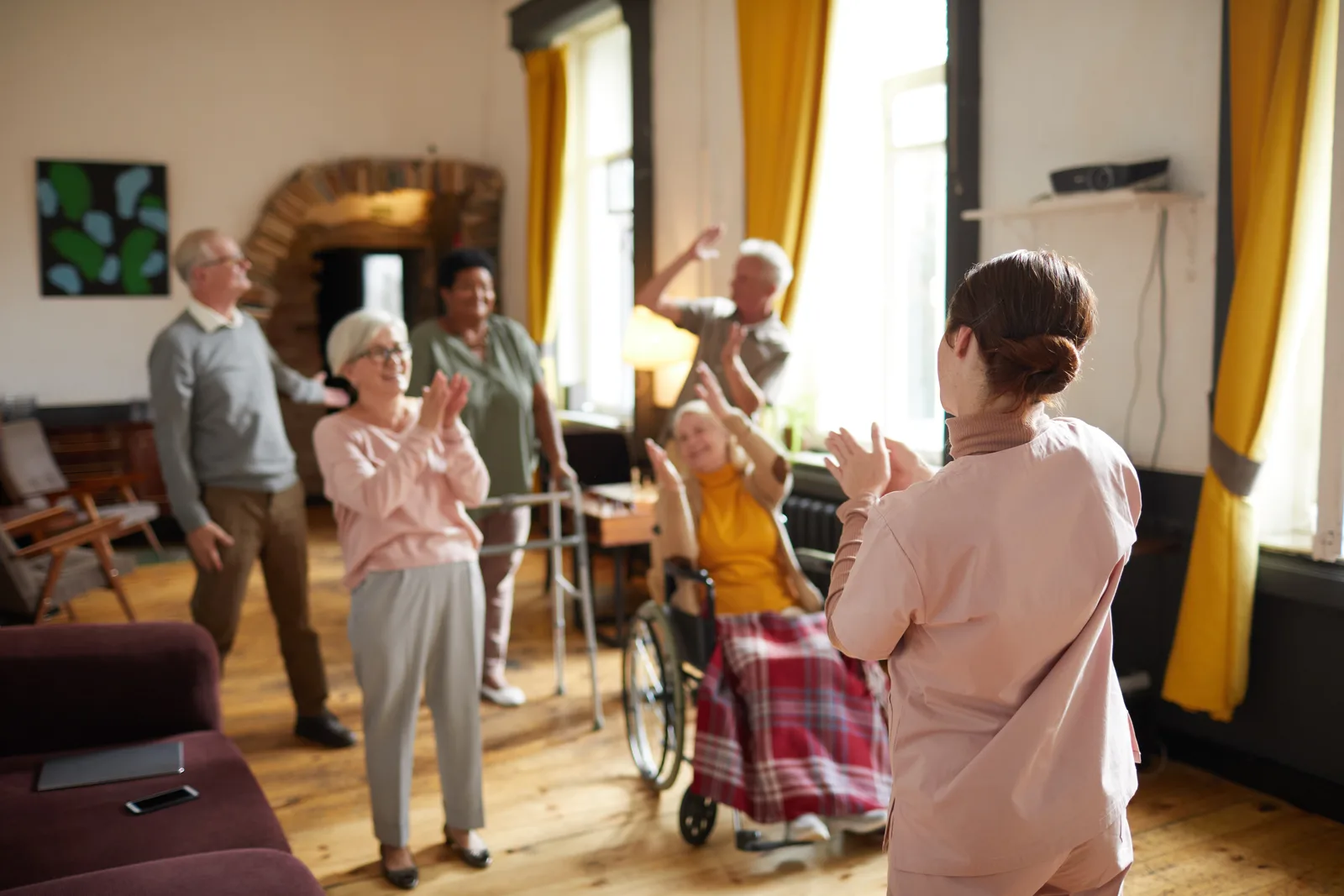
- Adapted dancing or movement to music
- Potted plant gardening or simple plant care activities
- Hydrotherapy or aquatic exercises, where facilities permit
Social and group activities
Human interaction remains one of the most valuable forms of recreation. Even for seniors with limited mobility, modern technology offers solutions:
- Regular video calls with family and friends
- Participation in discussion groups or interest circles
- Intergenerational activities with children or young volunteers
- Celebrating special occasions and traditions
Benefits for physical and mental health
The benefits of recreational activities go far beyond momentary pleasure. Research in the field of gerontology consistently demonstrates that recreationally active seniors achieve superior medical outcomes across multiple areas.
Physically, regular activities help maintain joint flexibility, strengthen muscles, improve balance, and reduce the risk of falls. Even seemingly simple activities, such as modelling with clay or arranging flowers, contribute to maintaining fine dexterity and hand-eye coordination.
Cognitive health
The impact on cognitive function is perhaps the most remarkable benefit of structured recreational activities. Constant stimulation of the brain through varied activities can:
- Delay the onset of dementia symptoms or slow their progression
- Improve short-term memory and concentration
- Maintain problem-solving skills and logical thinking
- Stimulate creativity and personal expression
Emotional balance
Depression in older adults is often underdiagnosed and undertreated. Recreational activities act as a natural antidote to depressive states, providing concrete reasons to look forward to each day. The sense of achievement after completing a jigsaw puzzle, the joy of recognising a beloved melody, or the satisfaction of creating something with one's own hands are medicines without side effects.
How to choose the right activities for your loved one
Personalisation is the key to successfully implementing an effective recreational programme. Not all activities are suitable for all seniors, and forcing participation can have the opposite effect to that intended.
The starting point is a deep knowledge of the person: what they enjoyed doing in their youth, what professional skills they developed, what hobbies they had, and what values and traditions are important to them. This information provides valuable clues about what types of activities might resonate in the present.
Evaluation criteria
When considering a new recreational activity, assess the following aspects:
- Current physical capacity — the activity must be feasible without causing pain, exhaustion, or frustration
- Cognitive level — the complexity of the activity must be adapted to mental abilities to avoid anxiety or a sense of failure
- Personal preferences — even the most therapeutic activity will fail if the person finds it boring or unpleasant
- Resources required — time, materials, equipment, specialist assistance
- Safety considerations — risk of injury, allergies, medical contraindications
Gradual introduction
Sudden changes can be difficult for older adults. Introduce new activities gradually, starting with short sessions of 15–20 minutes and extending the duration as the person becomes more comfortable. Always allow the possibility to stop the activity without judgement if it becomes tiring.
Common challenges and practical solutions
Implementing a consistent recreational programme is not without its obstacles. Every family faces specific challenges, but many of these have practical and accessible solutions.
Resistance to change
Many seniors show reluctance towards new activities, whether from fear of failure or natural conservatism. This resistance can be overcome by:
- Presenting the activity as something familiar or connected to the past
- Participating alongside your loved one in the first sessions
- Avoiding pressure and respecting the individual's own pace
- Celebrating any participation, regardless of the outcome
Physical or cognitive limitations
Declining abilities do not mean recreational activities become impossible — they simply require creative adaptation. For seniors with visual impairments, tactile and auditory activities take priority. For those with limited mobility, activities in bed or in a chair are perfectly viable.
Lack of time on the part of family members
Caring for an elderly parent alongside one's own professional and family life can be overwhelming. In such situations, professional home care services can make all the difference. For example, Trimedical - Îngrijiri medicale la domiciliu from Dobroești offers not only medical assistance, but also trained staff who can facilitate and supervise recreational activities adapted to each senior's needs, ensuring continuity of stimulation even when family members cannot be present.
The role of carers in facilitating activities
Professional carers, or family members who take on this role, play a crucial part in the success of a recreational programme. It is not enough to provide materials or plan activities — active presence, encouragement, and adaptability make the real difference.
An effective carer observes the senior's reactions, identifies the times of day when they are most receptive, and adjusts activities according to their mood and available energy. Flexibility is essential: what works excellently one day may be entirely unsuitable the next.
Valuable skills and attitudes
Carers who successfully facilitate recreational activities share certain common characteristics:
- Patience and empathy — understanding that the older adult's pace is different and respecting it
- Creativity — adapting activities to varying circumstances and resources
- Careful observation — identifying signs of fatigue, frustration, or discomfort
- Positive communication — using encouragement and avoiding criticism
- Basic medical knowledge — to monitor safety and recognise situations requiring intervention
Continuing professional development
The field of senior care is constantly evolving, with new research and methods being developed regularly. Dedicated carers attend training courses, read specialist materials, and remain open to new approaches. Organisations such as Trimedical - Îngrijiri medicale la domiciliu invest in training their teams, ensuring that staff are up to date with best practices in therapeutic recreational activities.
When to seek specialist help
Although many recreational activities can be organised and facilitated by the family, there are situations where professional expertise becomes necessary. Recognising these moments and seeking specialist help is not a sign of failure, but of responsibility and genuine care.
Certain signs indicate the need for a professional assessment and possibly specialist services:
- Persistent refusal to participate in any activity, accompanied by severe social withdrawal
- Sudden changes in behaviour or aggressive outbursts during activities
- Rapid cognitive decline requiring structured therapeutic programmes
- Complex medical needs that must be managed alongside recreational activities
- Exhaustion of family members and their inability to ensure constant stimulation
Integrated care services
Professional home care services have evolved significantly, now offering comprehensive packages that combine medical supervision with recreational programmes. Trimedical - Îngrijiri medicale la domiciliu exemplifies this holistic approach, providing teams that can ensure both the administration of treatments and monitoring of vital signs, as well as the implementation of personalised recreational activities — all within the comfort and familiarity of the home.
This continuity of care eliminates the fragmentation of services and ensures that recreational aspects are naturally integrated into the daily routine, rather than being treated as mere optional additions.
Frequently asked questions
How much time each day should a senior dedicate to recreational activities?
There is no universal duration, but most specialists recommend between 2–4 hours distributed throughout the day, depending on energy and interest. It is preferable to have short, frequent sessions rather than one long and tiring one.
What should I do if my parent refuses every activity I suggest?
Resistance may indicate various issues: depression, undisclosed physical pain, fear of failure, or simply a lack of interest in that particular activity. Try to identify the cause through empathetic conversation and begin with very simple or familiar activities. Consult a specialist if the refusal persists.
Are recreational activities suitable for people with advanced dementia?
Absolutely. Even in the advanced stages of dementia, simple sensory activities — listening to music, touching different textures, looking at photographs — can provide moments of calm and connection. Cognitive adaptation is essential, avoiding activities that cause frustration.
How important are social activities for introverted seniors?
Even introverts need human connection, just in smaller doses and more intimate formats. For them, one-on-one conversations, activities alongside a single person, or attending events as an observer can be just as beneficial as intense socialising is for extroverts.
Can recreational activities replace medication for mild anxiety or depression?
Recreational activities can have remarkable therapeutic effects, but they should not replace prescribed treatment without consulting the doctor first. They work excellently as complementary therapy, and over time the doctor may decide to adjust dosages or even gradually discontinue medication if the improvement is significant.
How do I measure whether the chosen activities are truly beneficial?
Observe indicators such as general mood, sleep quality, appetite, the frequency of complaints related to pain or discomfort, and the level of engagement and anticipation towards the activity. A simple journal in which you record these parameters daily can reveal valuable patterns and help you adjust the programme accordingly.
Providing a rich and stimulating recreational environment for elderly loved ones is one of the most valuable expressions of love and respect. Every moment of joy, every smile sparked by a pleasant activity, contributes to a dignified and fulfilling old age. If you feel you need support in implementing these activities, or if your loved one's medical situation requires constant professional supervision, do not hesitate to speak with specialists who can provide comprehensive care, harmoniously integrating medical and recreational aspects.
This article is for informational purposes only and does not replace medical advice. For specific situations, please consult a specialist.
Previous
Recovery After a Hip Fracture: What's Next for Your Elderly Loved Ones
Next
Recommended Vaccines for the Elderly: What Families Need to Know
Similar articles
Cursurile de formare pentru îngrijitori: ce trebuie să știe orice familie
7 November 2026
Frequently Asked Questions About Alzheimer's Disease: Answers for Families
6 November 2026
Hearing Loss in the Elderly: A Practical Guide to Hearing Aids
5 November 2026
Immobility Syndrome in the Elderly: Risks and Home-Based Solutions
4 November 2026
Documents for the care home: the complete family guide
2 November 2026
Technology Made Simple for Seniors: Answers to Frequently Asked Questions
1 November 2026