
Proper Hydration in Old Age: Complete Guide 2026
Discover why hydration is vital for seniors and how you can prevent serious complications through simple yet consistent habits. Practical advice for families and carers.
Contents
In the spring of 2026, 78-year-old Maria arrived at the emergency department with symptoms of confusion and severe weakness. The diagnosis? Advanced dehydration. Her case is far from unique – medical statistics show that more than half of elderly patients admitted to hospital present with varying degrees of dehydration, and many of these situations could have been prevented with proper attention and accurate information.
Hydration in later life is not simply a matter of drinking a few glasses of water each day. It is a complex process, influenced by the physiological changes that occur in the body with age, by long-term medication, and by the diminished sensation of thirst. For families caring for an elderly parent or grandparent, understanding these aspects becomes essential to the quality of life of their loved one.
This comprehensive guide has been created to support families and carers with practical information, warning signs, and concrete solutions for ensuring optimal hydration in elderly people, thereby preventing serious complications and significantly improving their overall health.
Contents
- Why hydration is critical in later life
- Physiological changes affecting hydration
- Signs and symptoms of dehydration in elderly people
- Daily fluid requirements: How much and what elderly people should drink
- Practical strategies for encouraging hydration
- Risks and medical complications of dehydration
- Special circumstances: Chronic illness and medication
- When professional care makes the difference
- Frequently asked questions
Why hydration is critical in later life
Water makes up approximately 60% of body weight in young adults, but this proportion falls to 50% or even lower in older people. This natural reduction means that the body's water reserves are more limited and its capacity to compensate for fluid losses is diminished. Every cell, tissue, and organ in the body depends on water to function properly, and this dependence becomes even more pronounced in later life.
Adequate hydration in elderly people has a direct bearing on a range of vital functions: regulation of body temperature, transport of nutrients to cells, elimination of toxins, cognitive function, and cardiovascular health. Recent studies from 2026 confirm that well-hydrated elderly people show lower rates of urinary tract infections, constipation, mental confusion, and accidental falls.
Impact on quality of life
Beyond the strictly medical aspects, proper hydration significantly improves day-to-day quality of life. Well-hydrated elderly people report higher energy levels, fewer joint pains, healthier skin, and an overall sense of wellbeing. The ability to concentrate and short-term memory are also directly influenced by hydration levels.
- Maintaining cognitive function and mental clarity
- Prevention of urinary tract infections, which are very common in later life
- Reduction of the risk of falls caused by weakness and dizziness
- Support of kidney function and efficient elimination of toxins
- Improved digestion and prevention of chronic constipation
Physiological changes affecting hydration
The natural ageing process brings with it a series of changes in the way the body manages water and electrolytes. Understanding these changes is essential for adapting hydration strategies to the real needs of elderly people.
One of the most significant changes is the diminishment or even complete loss of the sensation of thirst. Whereas in young adults thirst serves as an early warning signal, this mechanism becomes unreliable in later life. Many elderly people simply do not feel the need to drink water, even when their body is already dehydrated. This particular characteristic means that staying hydrated must become a conscious responsibility, rather than simply a response to a natural impulse.
Reduced kidney capacity
The kidneys age along with the rest of the body, and their capacity to concentrate urine and conserve water declines progressively. This means that elderly people lose more water through urine compared with younger people, even under normal conditions. This is compounded by the frequent use of diuretics for various chronic conditions, which further increases fluid losses.
- A decrease in total body water content of 10–15%
- A reduction in the sensation of thirst of up to 40% compared with younger adults
- Reduced kidney capacity to conserve water
- Changes in electrolyte balance, particularly sodium and potassium
- A slower response by the body to changes in hydration levels
Signs and symptoms of dehydration in elderly people
Early recognition of the signs of dehydration can prevent serious complications. In elderly people, symptoms may be subtle at first and can be confused with other conditions or with the natural ageing process. This is why vigilance on the part of carers and family members is crucial.
The first observable sign is often mental confusion or changes in the level of consciousness. An elderly person who suddenly becomes disorientated, irritable, or has difficulty concentrating may be suffering from dehydration rather than a neurological problem. This symptom is frequently overlooked or wrongly attributed to other causes.
Visible physical signs
Skin loses its elasticity with age, but the "skin pinch" test can still be relevant. In a well-hydrated elderly person, the skin on the back of the hand returns quickly to its original position after being gently pinched. In the case of dehydration, the skin remains pinched for several seconds. Other physical signs include dry mouth, cracked lips, sunken eyes, and dark, strong-smelling urine.
- Confusion, disorientation, or changes in usual behaviour
- Extreme fatigue and muscle weakness
- Dizziness and an increased risk of falls
- Dark, concentrated urine in reduced quantities
- Dryness of the mouth, tongue, and lips
- Dry skin with reduced elasticity
- Heart palpitations or a rapid heart rate
Daily fluid requirements: How much and what elderly people should drink
General recommendations suggest that elderly people should consume between 1.5 and 2 litres of fluid per day, but this figure must be adapted to the individual. Body weight, level of physical activity, ambient temperature, state of health, and long-term medication all significantly influence actual fluid requirements.
A practical rule frequently used by specialists in 2026 is 30 ml of fluid per kilogram of body weight. This means that a person weighing 70 kg would need approximately 2.1 litres per day. This amount includes not only plain water but also fluids from teas, soups, fruit, and water-rich vegetables.
Variety matters
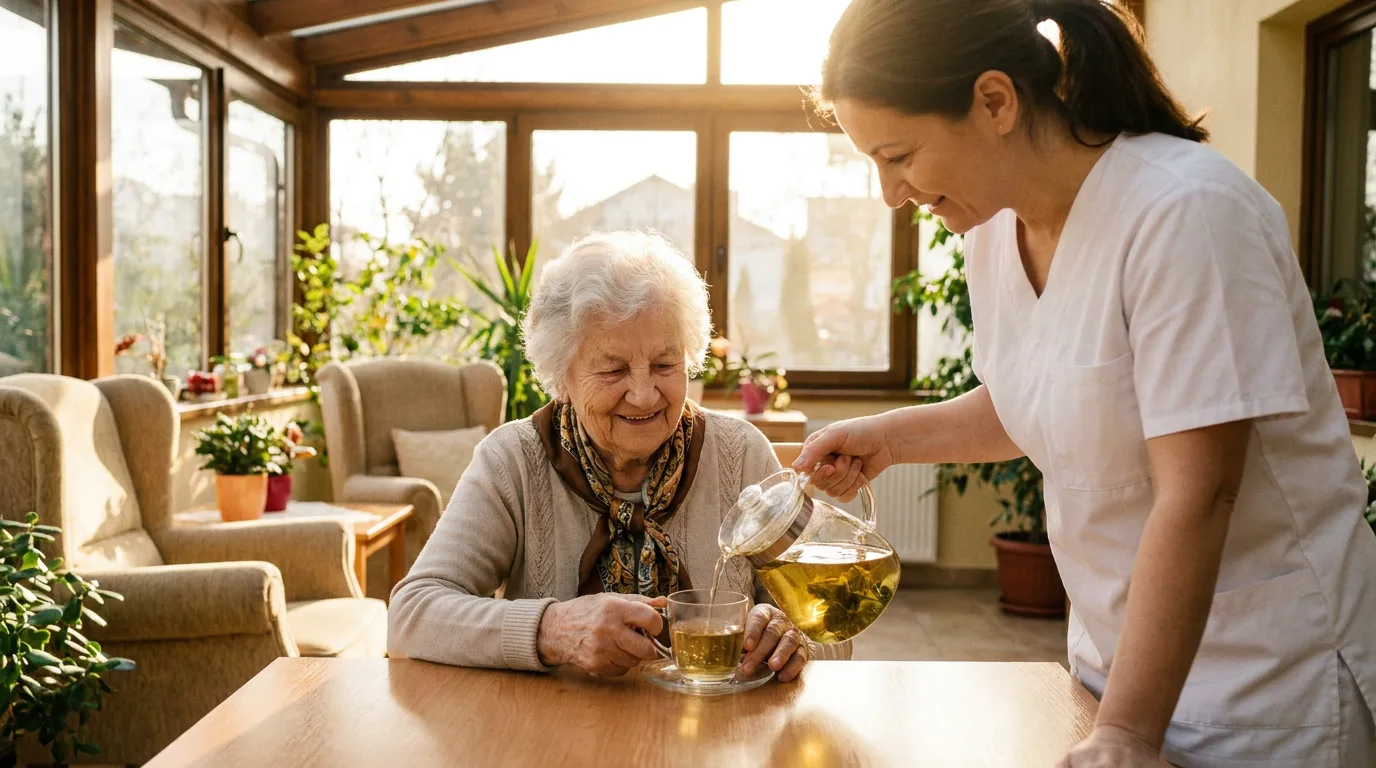
Hydration does not mean consuming only plain water. Many elderly people find plain water bland and refuse to drink it in sufficient quantities. Fortunately, there are numerous healthy alternatives that contribute to hydration: herbal teas (caffeine-free), naturally fruit-flavoured waters, soups and broths, smoothies, diluted natural juices, and foods with a high water content.
- Plain water – the primary source, at least 1 litre per day
- Caffeine-free herbal teas – 2–3 cups per day
- Soups and broths – excellent for hydration and nutrition
- Water-rich fruits: watermelon, strawberries, oranges, grapes
- Vegetables: cucumbers, tomatoes, lettuce, celery
- Milk and dairy products, if tolerated
- Diluted natural juices, with no added sugar
Practical strategies for encouraging hydration
Turning hydration into a pleasant and consistent routine requires creativity and perseverance. At the TST care home in Abrud, qualified staff use a variety of strategies tailored to each resident, observing individual preferences and adapting the fluid offering accordingly. This individualised approach produces remarkable results in maintaining optimal hydration.
One of the most effective methods is establishing a fixed routine. Setting specific times during the day dedicated to fluid intake helps form a habit. For example: a glass of water upon waking, one before each meal, one at midday, and one in the evening before bed. This structure simplifies monitoring and removes reliance on the sensation of thirst alone.
Making fluids easily accessible
Easy access to drinks is essential. Always keep a bottle or cup of water within reach, in visible and easily accessible places. For elderly people with limited mobility, place drinks in several locations around the home. Use lidded cups with straws for those with tremors or coordination difficulties.
- Set alarms or phone reminders as prompts to drink water
- Use bottles marked with times to track daily progress
- Offer drinks at the preferred temperature – many elderly people prefer warm liquids
- Make drinking a social moment; drink together
- Personalise drinks according to preference: add lemon, mint, or fruit
- Use colourful or attractive cups to stimulate interest
Risks and medical complications of dehydration
Dehydration in later life is not merely a temporary inconvenience – it can have serious and even fatal consequences if not promptly addressed. Complications can develop rapidly, within a matter of hours or days, particularly during heatwaves or during acute illness.
Urinary tract infections are one of the most common complications of chronic dehydration in elderly people. Concentrated urine encourages bacterial growth, and recurrent infections can lead to serious kidney problems. Dehydration also increases blood viscosity, raising the risk of deep vein thrombosis and stroke.
Impact on cognitive function
Studies from 2026 show that even mild dehydration can significantly impair cognitive function in older people. A reduction in cerebral blood volume leads to confusion, attention deficit, memory disturbances, and in severe cases, delirium. These symptoms are often confused with dementia or other neurological conditions, delaying appropriate treatment.
- Recurrent urinary tract infections and kidney complications
- Mental confusion and risk of delirium
- Severe constipation and digestive problems
- Orthostatic hypotension and increased risk of falls
- Acute kidney injury and renal failure
- Increased risk of stroke
- Worsening of pre-existing cardiac conditions
Special circumstances: Chronic illness and medication
Elderly people with chronic illnesses have special hydration needs that must be adjusted in consultation with their treating physician. Diabetes mellitus, for example, can cause dehydration through increased urinary losses when blood glucose is poorly controlled. Chronic kidney disease may, conversely, require fluid restriction, whilst congestive heart failure requires careful monitoring of daily fluid intake.
Long-term medication plays a major role in fluid balance. Diuretics, frequently prescribed for high blood pressure or heart failure, significantly increase losses of fluids and electrolytes. Laxatives, certain antidepressants, and medications for the treatment of dementia can also affect hydration. It is essential that family members and carers are aware of these effects and adapt fluid intake accordingly.
Monitoring and adjustment
For elderly people with complex conditions, daily monitoring of body weight can serve as a useful indicator of hydration status. Rapid weight fluctuations – losing more than one kilogram per day – may signal dehydration or, conversely, fluid retention. Both situations require medical attention.
- Consult a doctor for specific hydration recommendations adapted to chronic conditions
- Monitor the effects of medications on fluid requirements
- Adjust fluid intake based on symptoms and laboratory results
- Keep a hydration diary to identify patterns and issues
- Pay extra attention during heatwaves or periods of acute illness
When professional care makes the difference
There are situations in which home care becomes difficult or insufficient to ensure the hydration and overall wellbeing of an elderly person. Recognising these moments and seeking professional help is not a failure, but rather an act of responsibility and love towards one's loved one.
At the TST care home in Abrud, a multidisciplinary team – comprising nurses, nutritionists, and specialist carers – ensures the constant monitoring of each resident's hydration. The warm, homely atmosphere, combined with personalised care, guarantees that every elderly resident receives an adequate amount of fluid tailored to their specific needs. Qualified staff quickly identify signs of dehydration and intervene promptly, preventing complications.
The benefits of specialist care
In professional care settings, hydration becomes part of an integrated care plan that includes balanced nutrition, correct medication administration, and adapted physical and social activities. This holistic approach significantly improves quality of life and dramatically reduces the risks associated with dehydration.
- Constant monitoring by qualified staff
- Personalised hydration plans for each resident
- Rapid identification of signs of dehydration
- Adaptation of fluids to individual preferences
- Collaboration with physicians for adjustments based on health status
- An environment that encourages social interaction at mealtimes and during breaks
The decision to seek professional care services becomes relevant when: the elderly person consistently refuses to consume fluids, experiences repeated episodes of dehydration, has multiple chronic conditions that complicate hydration management, the primary carer is exhausted, or home care can no longer ensure the necessary safety and comfort.
Frequently asked questions
How quickly can dehydration develop in an elderly person?
Dehydration can develop surprisingly quickly in later life, sometimes within just 24–48 hours, particularly in extreme heat, during acute illness with fever or vomiting, or in elderly people taking diuretics. Constant vigilance is essential, especially during periods of heightened risk.
Can coffee and tea contribute to hydration?
Yes, in moderate amounts, coffee and tea can contribute to hydration, although caffeine has a mild diuretic effect. Recent studies show that regular consumers develop a degree of tolerance to this diuretic effect. Nevertheless, it is preferable for the majority of fluids consumed to be caffeine-free, particularly in the evening.
What should I do if my elderly parent refuses to drink water?
Try appealing alternatives: flavoured teas, fruit-infused water, soups, smoothies, or water-rich foods such as watermelon or yoghurt. Create an enjoyable routine around fluid intake and try to turn hydration into a social occasion. If the refusal persists and dehydration sets in, consult a doctor for personalised solutions.
How can I tell whether my grandparent is sufficiently well hydrated?
Check the colour of their urine – it should be pale yellow, not concentrated and dark. Observe their general condition: adequate energy levels, mental clarity, skin with normal elasticity, and moist mouth and lips. Monitor the frequency of urination – they should be going to the toilet at least 4–6 times per day. If in doubt, consult their GP.
Are there risks associated with drinking too much water in later life?
Yes, although less common, overhydration can occur, particularly in elderly people with kidney or heart problems, or those taking certain medications. Drinking very large amounts of water can dilute the electrolytes in the blood, leading to hyponatraemia (low sodium). For this reason, it is important for elderly people with complex conditions to follow their doctor's recommendations regarding the optimal amount of fluid to consume.
How often should hydration be monitored in an elderly person with dementia?
People with dementia require constant daily monitoring, as they may forget to drink, may be unable to communicate thirst, or may refuse fluids out of confusion. Carers should offer fluids at regular intervals, 4–6 times per day, monitor actual consumption, and watch for physical signs of dehydration. In advanced cases of dementia, professional care often becomes necessary.
Proper hydration in later life is a fundamental pillar of the health and wellbeing of our elderly loved ones. With understanding, constant attention, and individually tailored strategies, we can prevent most complications related to dehydration and provide our loved ones with the comfort and quality of life they deserve. If you are experiencing difficulties in ensuring adequate hydration, or if the situation becomes overwhelming, do not hesitate to seek help from specialists in elderly care. An open conversation with a GP or a visit to a specialist centre can provide you with the solutions and support you need to manage this challenge effectively.
This article is for informational purposes only and does not replace medical advice. For specific situations, please consult a geriatric specialist or the elderly person's GP.
Previous
Active Social Life in Later Years: A Family Guide for 2026
Next
Early Signs of Alzheimer's: The Complete Guide for Families in 2026
Similar articles

Reminiscence Therapy for Elderly People with Dementia: A Practical Guide
27 September 2026
The Role of the Family in Adapting to a Care Centre
26 September 2026

How to Handle Sibling Conflicts Over Decisions About a Parent's Care
26 September 2026

Dehydration in the Elderly: When and How to Seek Specialist Help
25 September 2026

How to Manage Post-Stroke Recovery at Home
25 September 2026
Recovery After a Hip Fracture: What's Next for Your Elderly Loved Ones
24 September 2026