
The Role of the Family in Helping Seniors Adapt to a Care Centre
Transitioning to a care centre is a delicate time for the whole family. Find out how you can turn this change into a positive experience for your loved one.
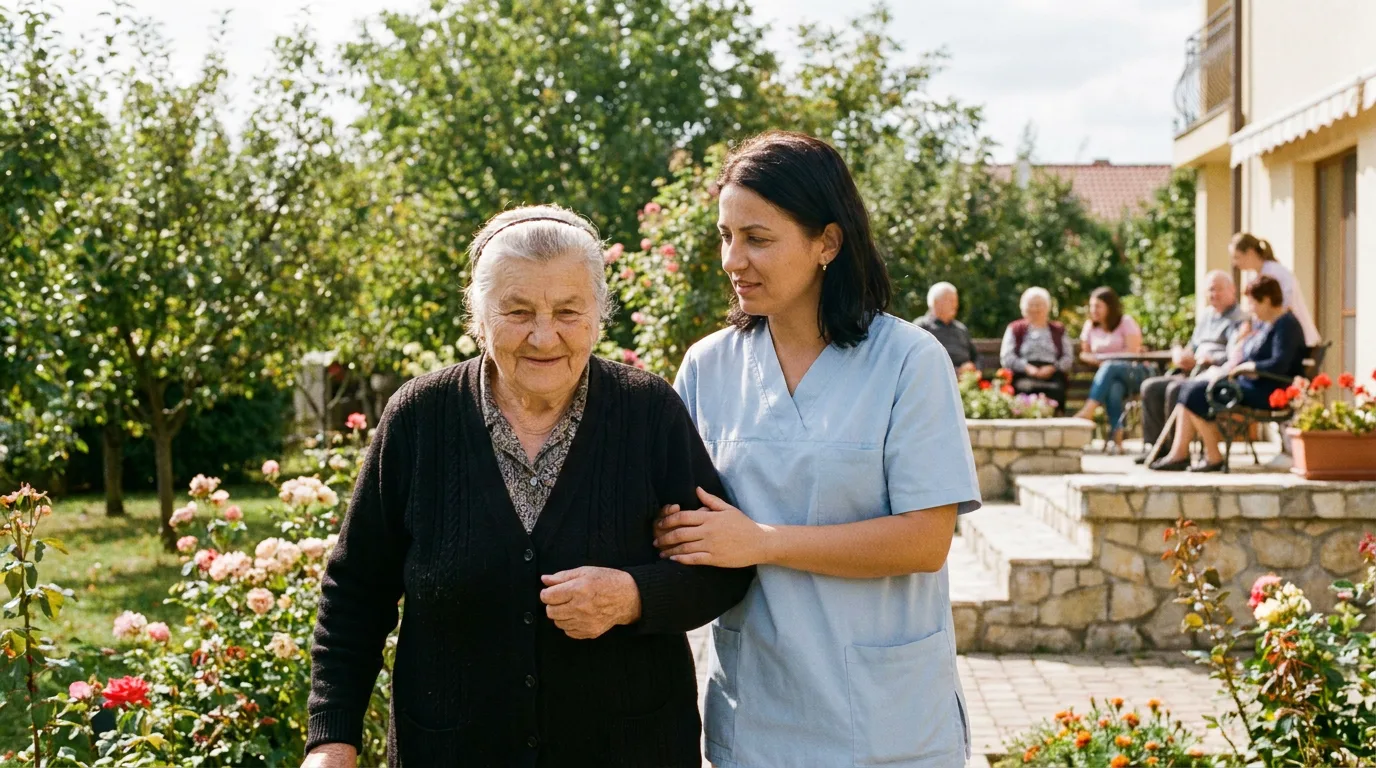
Contents
The decision to move a parent or grandparent into a care home is, without doubt, one of the most difficult choices a family will ever face. Feelings of guilt, uncertainty, and fear become intertwined with the desire to provide the best possible care. But the truth is that this transition does not represent the end of family involvement – on the contrary, it marks the beginning of a new chapter in which your role becomes essential to your loved one's wellbeing.
Adjusting to a new environment is a challenge at any age, but for elderly people leaving behind a home in which they may have lived for decades, this change can be overwhelming. Recent studies show that older adults whose loved ones remain actively involved in the adjustment process integrate far more easily into their new environment and exhibit significantly lower levels of anxiety and depression. Family is not a bystander at this stage – it is the most important partner in the transition process.
In the following pages, we will explore together how you can turn this major change into a positive experience, how to maintain your emotional connection with your loved one, and how to collaborate effectively with the care team to ensure your senior's comfort and happiness.
Contents
- Emotional preparation for the whole family
- The first weeks: the critical adjustment period
- Communicating effectively with your loved one
- Working with the care home staff
- Regular visits: quality versus quantity
- Personalising the living space
- Signs of successful or problematic adjustment
- Emotional wellbeing for family members
- Frequently asked questions
Emotional preparation for the whole family
Before your elderly relative makes the transition to a care home, it is crucial that the entire family goes through a process of emotional preparation. This stage is often overlooked, yet it forms the foundation of a successful adjustment. When family members have not worked through their own emotions – the guilt, sadness, and fear – these feelings will inevitably be transmitted to the elderly person as well, making the transition all the more difficult.
Honest conversations within the family are essential. Every member must have the opportunity to voice their concerns and understand the reasons why this decision is the right one. It is important that the elderly person be actively included in these conversations, to the extent that their cognitive condition allows. The decision should not feel like something that is "happening to them", but rather a choice made together, for everyone's benefit.
Concrete steps for emotional preparation
- Organise family meetings where everyone can freely express their fears and expectations about this change
- Visit the care home together before the move, join in at mealtimes or activities to familiarise yourselves with the atmosphere
- Talk about the positive aspects without dismissing the elderly person's legitimate concerns
- Create a visiting plan from the very beginning, so that your loved one knows they will not be forgotten
- Accept that it is normal to feel sadness or guilt – these feelings do not mean the decision was wrong
Managing resistance and fear
Many older adults initially resist the idea of moving into a care home. This is a natural reaction – it represents a loss of independence and familiarity. Rather than countering this resistance with logical arguments, validate your loved one's emotions. Acknowledge that the change is difficult and that their fears are legitimate, then offer concrete reassurances about how you will remain involved and present.
At căminul de bătrâni Cici in Balotești, Argeș County, the team works closely with families from the pre-admission stage, providing counselling and support to facilitate this emotional transition. The warm environment and dedicated staff help to build a bridge between home life and the new reality.
The first weeks: the critical adjustment period
The first two to six weeks are decisive for the elderly person's integration into their new environment. During this period, the consistent presence of family makes the difference between a smooth adjustment and a traumatic one. This does not necessarily mean spending hours every day at the care home, but rather being present strategically, at the moments when your loved one needs support most.
In the first few days, short daily visits are preferable to infrequent but lengthy ones. This pattern helps the elderly person understand that the family has not abandoned them, whilst also giving them the opportunity to gradually build relationships with staff and other residents. Paradoxically, prolonged constant presence can actually slow down the adjustment process, as the elderly person does not have the chance to explore their new environment independently and develop new routines.
What to do during your first visits
- Join in at communal mealtimes to help your loved one settle into the routine and get to know other residents
- Accompany them to activities organised by the care home, but allow them to interact independently with others
- Get to know the staff and establish a trusting relationship with the direct carers
- Create familiar anchors by arranging personal belongings and establishing small rituals
- Be alert to signs of severe discomfort, but distinguish between the normal difficulty of adjustment and genuine problems
Common difficulties and how to manage them
It is entirely normal for an elderly person to show sadness, confusion, or even anger in the first few days. Some may persistently ask to be taken home or refuse to take part in activities. These behaviours do not automatically mean the decision was wrong. Most elderly people go through this adjustment phase and, with adequate support, begin to feel more comfortable after a few weeks.
Maintaining an open dialogue with the care team is essential. Experienced staff can offer valuable insights into how your loved one behaves in the family's absence and can suggest effective adjustment strategies. Do not hesitate to ask questions or request regular updates on how your loved one is getting on.
Communicating effectively with your loved one
Once your loved one has moved into a care home, the nature of your conversations may change. It is important to maintain authentic communication that goes beyond routine questions about food or sleep. Your loved one needs to feel that they remain a vital part of your family, not merely someone you enquire after out of a sense of duty.
Effective communication means listening actively, validating emotions, and including your elderly relative in the day-to-day life of the family. Share what you have been up to, ask for their advice based on their life experience, talk about current events or shared memories. These things build bridges between the two worlds and help your loved one feel connected and valued.
Practical communication techniques
- Avoid closed questions such as "Are you all right?" which only invite a "yes" or "no" – opt instead for "What interesting things did you get up to today?" or "Have you made any new friends?"
- Share photos and videos from family events to keep them included in your life
- Maintain traditions – if you used to discuss a particular topic, keep that habit going
- Be honest when they ask about home, but balance the truth with sensitivity
- Stay in touch regularly between visits, whether by phone or video call if technology allows
When communication becomes difficult
For elderly people with dementia or cognitive conditions, communication can become a challenge. In these situations, non-verbal communication becomes essential – a gentle touch, tone of voice, and physical presence convey safety and love even when words no longer carry meaning. Do not be disheartened if your loved one no longer remembers details from the past or asks the same questions repeatedly – every moment of connection, however brief, has value.
Working with the care home staff
The relationship between the family and the care team is an essential partnership for the elderly person's wellbeing. Staff can provide insights into your loved one's physical and emotional state that you are simply unable to observe during short visits. At the same time, you know your loved one's history, preferences, and individual characteristics better than anyone else.
Open, respectful, and regular dialogue with the staff creates a solid support network around your elderly relative. You should not think of the care team as strangers "doing a job", but as partners who look after your loved one when you cannot be there. Acknowledging and appreciating their work builds a positive relationship that ultimately benefits the elderly person.
How to build a productive relationship with staff
- Introduce yourself and learn the names of the carers who work directly with your loved one
- Share relevant information about the elderly person's routines, preferences, and individual characteristics
- Establish clear lines of communication – who to contact and when in the event of an emergency or changes
- Attend care planning meetings and offer constructive feedback
- Respect the care home's protocol and rules, understanding that these exist for everyone's safety
- Raise concerns respectfully and proactively, before small issues become larger ones
Managing conflicts and concerns
Inevitably, there may be times when you are unhappy with some aspect of the care provided. It is important to approach these concerns constructively rather than accusatorially. Begin by assuming good intent and seek to understand the context before drawing conclusions. If you notice something concerning, document the situation and speak to the staff calmly, asking for clarification and solutions.
In the rare cases where problems persist, do not hesitate to escalate your concerns to the care home coordinator or management. A quality care home will take family feedback seriously and work towards continuous improvement. At căminul de bătrâni Cici, an open-door policy encourages families to raise any concerns, and the multidisciplinary team works in collaboration with family members to adjust care plans as needed.
Regular visits: quality versus quantity
One of the most common questions family members ask is: how often should I visit? The truth is that there is no universal answer – it depends on distance, your schedule, the elderly person's condition, and the stage of adjustment. What is certain is that consistency matters more than duration. Regular visits, even short ones, are more valuable than infrequent visits that last for hours.
Regular visits create a reassuring routine for your elderly relative and demonstrate a consistent commitment. When they know you come every Wednesday afternoon or every weekend, they have something to look forward to and feel less forgotten. In contrast, sporadic and unpredictable visits can generate anxiety and the feeling that the family only comes out of obligation.
Making the most of your visits
- Plan activities together – walks in the garden, card games, looking through photo albums, or simply having a conversation
- Avoid just sitting in silence staring at your phone – be present both mentally and emotionally
- Bring grandchildren along occasionally – intergenerational interactions bring enormous joy to elderly people
- Respect how they are feeling in the moment – if your loved one is tired or unwell, a shorter visit may be more appropriate
- Create new memories rather than focusing exclusively on old ones
- Notice and report any changes in physical or emotional condition to the staff
When your schedule does not allow for frequent visits
The modern reality is that many families live far away or have busy schedules that make very frequent visits difficult. In these situations, staying in regular contact by phone or video call becomes vital. You can also involve other family members or close friends in a "visiting network", so that your elderly relative receives regular visitors, even if not always the same people.
Do not be overwhelmed by guilt if you cannot visit as often as you would like. The quality of a relationship is not measured in the number of hours spent physically together. What matters is that your loved one feels they hold an important place in your life and in your thoughts.
Personalising the living space
A care home bedroom does not have to be a sterile, impersonal space. Personalising this space plays an enormous psychological role in the adjustment process, transforming "a room in an institution" into "my new home". Familiar objects provide emotional comfort and help to maintain identity and a sense of connection with the past.
Involve your elderly relative in decisions about which items to bring and how the room should be arranged. This process gives them a sense of control during a period when many aspects of their life are no longer in their own hands. Even if some choices seem impractical, honouring their preferences in this area is important for their self-esteem and their acceptance of the new environment.
Essential items for personalisation
- Family photographs in frames on the bedside table or on the walls, updated periodically with new images
- Personal blankets or cushions that carry the familiar smell of home
- A favourite chair or armchair if space permits and the care home's rules allow
- Books, magazines, or hobby-related items that provide familiar activities
- A wall clock or large calendar to help maintain time orientation
- Decorative items with personal significance – souvenirs, handcrafted pieces, religious icons
- Plants (if permitted) that bring life and a sense of responsibility to the space
Balancing personalisation and safety
It is important to observe the care home's rules regarding which items are permitted in bedrooms. These rules generally exist for safety reasons – preventing falls, fire hazards, or other risks. Work with the staff to find creative solutions that allow personalisation within safe parameters. For example, photographs can be attached to walls rather than displayed in heavy frames, and any additional furniture must not obstruct access routes.
Signs of successful or problematic adjustment
How can you tell whether your loved one is adjusting healthily to their new environment, or whether there is genuine cause for concern? Making this distinction is crucial, as a certain degree of initial difficulty is normal and does not necessarily indicate a serious problem. At the same time, persistent signs of distress or withdrawal require prompt intervention.
A successful adjustment does not necessarily mean constant happiness or a complete absence of complaints. It means that the elderly person is gradually developing routines, forming social connections, taking part in activities, and showing an interest in their surroundings. It is normal to have better days and more difficult ones, but the general trend should be towards stabilisation and acceptance.
Positive indicators of adjustment
- They begin to talk about staff or fellow residents by name and with familiarity
- They show interest in activities organised by the care home or develop their own routines
- Their appetite and sleep normalise after the initial disruption
- They personalise their space and show care for how their room looks
- They make plans for the future, even short-term ones ("Next week at the art session...")
- They laugh or show a sense of humour in conversation, even occasionally
- They do not persistently ask to be taken home in every conversation
Warning signs that require attention
On the other hand, there are behaviours that suggest adjustment is not proceeding normally and that require intervention from the family and the care team. If you notice the following signs persisting beyond the first few weeks, speak to the care home coordinator and, if appropriate, a geriatric psychologist:
- Complete withdrawal and refusal to take part in any activity or to interact with others
- Significant weight loss or consistent refusal of meals
- Severe sleep disturbances – chronic insomnia or excessive drowsiness
- Frequent crying, agitation, or panic when family members leave after visits
- Neglect of personal hygiene when they previously paid attention to it
- Expressions of hopelessness or suicidal statements
- Increased confusion or rapid cognitive decline without a medical explanation
Do not dismiss these signs with the thought that "they will sort themselves out", or out of fear of being seen as an anxious family member. It is far better to raise a concern that turns out to be unfounded than to allow a real problem to worsen.
Emotional wellbeing for family members
In all the discussion about the elderly person's adjustment, it is easy to forget those who carry their own emotional burden – the family members themselves. Guilt is perhaps the most frequent and most corrosive feeling that may accompany you after you have made the decision to move your loved one into a care home. It is essential to recognise that you too need support and care during this period.
Caring for a parent or grandparent has likely been an important part of your life, and "handing over" this responsibility can leave a void. You may feel that you have failed, even if you know rationally that you made the best possible decision. These feelings are normal and do not make you a bad parent, child, or grandchild. On the contrary, they are proof of the profound love you carry.
Strategies for managing guilt and stress
- Acknowledge that you could not have provided on your own the level of medical and social care that a specialist care home offers
- Speak openly with family members or friends about your feelings rather than suppressing them
- Consider counselling or support groups for family members in similar situations
- Give yourself permission to rebuild your own life – hobbies, relationships, rest – without feeling that you are betraying anyone
- Redirect your energy from "round-the-clock physical caring" to "quality presence and advocacy"
- Celebrate the small victories in your loved one's adjustment process
Redefining your role
Your relationship with your loved one does not end when they move into a care home – it transforms. Rather than being a constant physical carer, you become their advocate, their friend, their child or grandchild who provides love and emotional connection. This role is no less important, simply different. Allow yourself to enjoy the time you spend together, free from the pressure of constant physical caring, and you may find that your relationship becomes deeper and more emotionally connected than before.
Frequently asked questions
How long does the adjustment period to a care home usually take?
Most elderly people need between two weeks and three months to fully adjust to their new environment. The first two weeks are generally the most difficult, with gradual improvements thereafter. However, the duration varies considerably depending on personality, state of health, and family support.
Is it normal for my parent to cry and ask to be taken home at every visit?
Yes, this is entirely normal in the first few weeks. Most elderly people display these behaviours initially, even if they rationally understand the need for the move. This reaction tends to diminish in intensity as new routines and relationships develop. If it persists beyond six to eight weeks, speak to the care team about additional support strategies.
How do I know whether the care home we have chosen is the right one, or whether I should look for another?
Give it time – at least two to three months – before making this decision. Evaluate on the basis of objective criteria: is the medical care adequate? Is your loved one treated with respect? Are there opportunities for socialising? If the answers are yes, and the only source of dissatisfaction is that your loved one "wants to go home", the care home is probably suitable and the adjustment process simply needs more time and support.
Do I need to attend every activity or event organised by the care home?
It is neither required nor necessary. Occasional participation in special events is appreciated and strengthens your connection with the care home community, but your constant presence at all activities may actually hinder your loved one's integration. Allow them to develop independent relationships and enjoy activities without feeling that they need to "entertain" you.
What do I do if other family members criticise me for moving my parent into a care home?
Invite them to become actively involved in finding viable alternatives and in taking on caring responsibilities themselves. Criticism often comes from those who do not understand the full extent of the care needs involved, or who have never taken on this responsibility. Stand firm in your decision if you know it is the best one for your loved one's health and safety, and seek support from professionals or other families in similar situations.
How can I help if my parent has dementia and does not understand why they are in a care home?
Focus on immediate emotional comfort rather than logical explanations that may quickly be forgotten. Use gentle redirection techniques when they become agitated, maintain familiar routines, and bring items that provide comfort. Work closely with staff who specialise in dementia care, as they have experience in managing these complex situations and can tailor their approach to your loved one's specific needs.
A story that continues together
The transition to a care home is not the end of a family story – it is a new chapter that calls for adaptation, patience, and love in abundance. Your role as a family remains vital, not as physical carers, but as the emotional anchor that provides continuity, meaning, and joy to your loved one. Through consistent presence, authentic communication, and collaboration with the professional team at the care home, you can turn this major change into an experience that, though difficult, ultimately brings safety and quality of life to the person you love. If you are based in Argeș County and are looking for a warm environment where the team works in close collaboration with families to facilitate this transition, căminul de bătrâni Cici in Balotești offers dedicated care and support for both elderly residents and their families. Remember: you are not alone on this journey, and seeking specialist help is an act of love, not of abandonment.
This article is intended for informational purposes only and does not replace medical consultation. For specific situations, please consult a geriatric specialist or a psychologist specialising in elderly care.
Previous
Diabetes in the Elderly: Symptoms, Monitoring and Daily Care
Next
Osteoporosis in the Elderly: What Families Need to Know About Prevention and Care
Similar articles
Polypharmacy in the Elderly: What Families Need to Know
16 October 2026

Caregiver Burnout: Signs to Recognise and How to Ask for Help
15 October 2026

Foot Care for the Elderly: Warning Signs and Prevention
14 October 2026
Osteoporosis and Bone Health — An Essential Guide for Carers
13 October 2026
Validation Therapy for Elderly People with Dementia: A Guide for Families
13 October 2026
Secondary effects of medication in the elderly: warning signs
12 October 2026