
Dysphagia in the Elderly: How to Recognise Swallowing Problems
Swallowing difficulties affect many older adults. Learn to recognise the warning signs, the associated risks, and how families can adapt their loved one's diet to keep them safe.
Contents
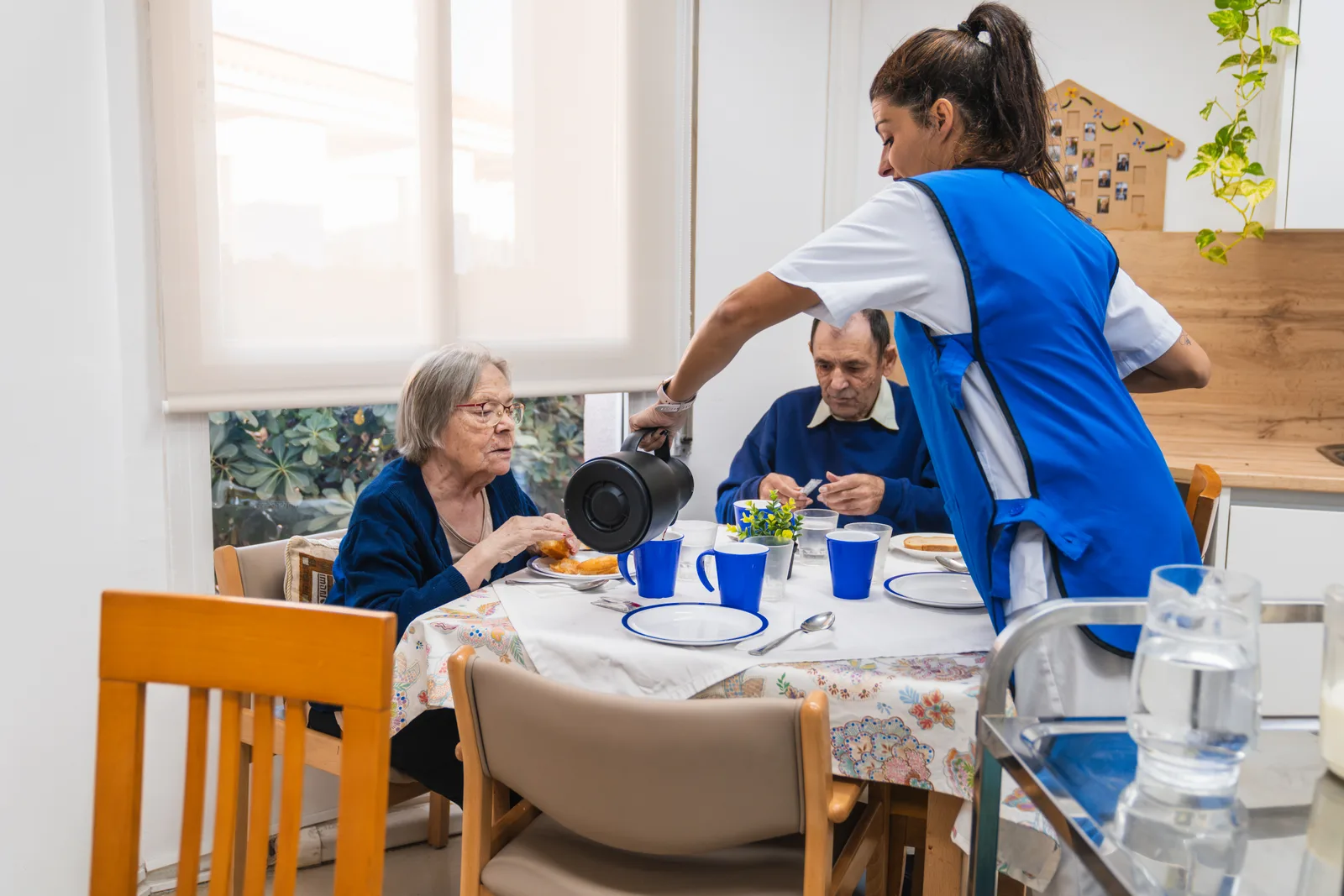
Maria realised something was wrong when her 78-year-old mother began avoiding family meals. At first, she thought it was simply a lack of appetite, but when she noticed her mother coughing frequently at the table and her voice sounding wet after drinking water, alarm bells rang. The doctor's diagnosis confirmed what the family hadn't known to name: dysphagia, a swallowing disorder that affects millions of elderly people worldwide.
Dysphagia is not merely a temporary inconvenience – it is a serious medical condition that can lead to grave complications if not recognised and treated in time. For families caring for an elderly relative, understanding this condition and knowing how to spot the early signs can make the difference between an active life and major health risks. The good news is that, once identified, dysphagia can be managed effectively through simple adaptations and appropriate medical support.
This article guides you step by step through everything you need to know about dysphagia in older adults: from the first warning signs to practical solutions you can implement at home or in a care home.
Contents
- What dysphagia is and why it occurs in older adults
- Warning signs that family members should watch for
- Associated risks and when to seek urgent medical attention
- Adapting nutrition at home and in care homes
- The role of the speech and language therapist and medical team
- Practical strategies for preventing complications
- Frequently asked questions
What dysphagia is and why it occurs in older adults
Dysphagia refers to difficulty swallowing food, liquids, or even saliva. It is not a disease in itself, but a symptom indicating that the complex swallowing mechanism – which involves more than 50 muscles and nerves – is no longer functioning properly. In older adults, this problem occurs far more frequently than one might imagine, affecting approximately 15–20% of seniors living independently and over 50% of those in care settings.
The swallowing process takes place in three distinct phases: oral (preparing and propelling food into the pharynx), pharyngeal (passage through the throat), and oesophageal (descent through the oesophagus to the stomach). Dysphagia can occur at any of these stages, and in older adults the cause is often multifactorial, combining the effects of normal ageing with various medical conditions.
The main causes of dysphagia in older adults
Understanding the causes helps you anticipate risks and communicate more effectively with the doctor. The most common causes include:
- Stroke – one of the most common causes, affecting the nerve control of the muscles involved in swallowing
- Parkinson's disease – causes muscular rigidity and slowed movement, including in the throat and oesophagus
- Dementia and Alzheimer's disease – patients may forget how to chew or swallow, lose the necessary coordination, or no longer recognise food
- Normal ageing – weakening of the muscles, reduced saliva production, and diminished protective reflexes
- Chronic gastro-oesophageal reflux – inflammation of the oesophagus makes swallowing painful
- Medications – many treatments for chronic conditions reduce saliva production or impair muscular coordination
Dysphagia versus normal chewing difficulties
It is important to distinguish between true dysphagia and chewing difficulties caused by dental problems. If your relative avoids meat or hard foods solely because their dentures do not fit well or they have missing teeth, the solution may be a dental one. True dysphagia, however, involves difficulty even with soft foods or liquids and requires specialist medical assessment.
Warning signs that family members should watch for
Early recognition of dysphagia can prevent serious complications. Many older adults do not report these problems themselves – whether out of embarrassment, because they consider them normal at their age, or because impaired cognitive function prevents them from realising there is an issue. For this reason, careful observation by family members and carers becomes essential.
The following signs should give you cause for concern and prompt you to seek medical assessment:
Direct signs during meals
- Frequent coughing or choking during or immediately after eating – an indication that food or liquid is going "the wrong way"
- A wet or gurgling voice after swallowing – suggests the presence of food residue or liquid in the airways
- Visible effort or repeated movements to swallow a single mouthful
- The need to drink liquids to wash down solid food
- Food or saliva dribbling from the mouth
- Holding food in the mouth without swallowing it, or prolonged chewing without swallowing
Indirect and behavioural signs
- Refusing certain foods – particularly meat, bread, or sticky foods that require chewing or cling to the roof of the mouth
- Unexplained weight loss – often the first sign noticed by the family
- Mealtimes taking much longer – if a meal that used to take 20 minutes now takes an hour
- Avoiding communal meals – out of embarrassment or anxiety related to swallowing difficulties
- Recurrent fever with no apparent cause – may indicate repeated chest infections
- Dehydration – dry skin, increased confusion, reduced urine output
If you notice two or more of these signs, do not wait for things to worsen. Book a medical appointment within one week at most. If your loved one is choking frequently or experiencing breathing difficulties after meals, seek urgent assessment.
Associated risks and when to seek urgent medical attention
Dysphagia that is left untreated or poorly managed can lead to serious complications that dramatically affect quality of life and even the survival of the older person. Understanding these risks will motivate you to act promptly and follow medical recommendations rigorously.
Aspiration pneumonia: the most serious complication
When food, liquid, or saliva enters the airways instead of the oesophagus, what doctors call aspiration occurs. In older adults, whose immune systems are weaker, these substances can cause aspiration pneumonia – a serious lung infection with a high mortality rate. Statistics show that aspiration pneumonia is one of the leading causes of death in patients with dementia or following a stroke.
Signs of aspiration pneumonia include: fever, chills, a productive cough, difficulty breathing, extreme fatigue, and increased confusion. If you notice these symptoms in an older person with known dysphagia, go to the emergency department immediately – every hour counts.
Malnutrition and dehydration
When swallowing becomes difficult and stressful, many older adults unconsciously reduce the amount of food and fluid they consume. The result is:
- Loss of muscle mass – worsens general weakness and increases the risk of falls
- Delayed healing – of wounds, pressure ulcers, or after surgical procedures
- Increased mental confusion – dehydration severely impairs cognitive function
- Frequent urinary tract infections – a direct consequence of chronic dehydration
- A weakened immune system – increased vulnerability to all types of infection
When to seek urgent medical attention
Certain situations require immediate medical intervention, not just a routine appointment:
- Complete inability to swallow liquids or one's own saliva
- Severe choking with breathing difficulties that do not resolve quickly
- Intense pain on swallowing, accompanied by fever
- Vomiting blood or black stools (possibly digested blood)
- Rapid weight loss – more than 5% of body weight within one month
- Signs of severe dehydration – sudden increased confusion, reduced consciousness, absence of urine output
- Symptoms of pneumonia following choking episodes
Adapting nutrition at home and in care homes
Once dysphagia has been diagnosed, adapting the diet becomes a daily priority. The good news is that, with appropriate modifications, most older adults can continue to enjoy safe and pleasurable meals. These adaptations can be implemented both at home and in care homes, with the support of a specialist dietitian.
Modified textures: classification and practical examples
The doctor or speech and language therapist will recommend a specific level of texture modification depending on the severity of the dysphagia. The international IDDSI (International Dysphagia Diet Standardisation Initiative) standard classifies foods and liquids across several levels:
- Thickened liquids – ranging from mildly thickened to pudding-like consistency, according to the recommendation
- Puréed diet – blended foods with no lumps, smooth purée texture
- Minced and moist diet – food cut into small pieces (under 4 mm), soft, moistened with sauces
- Soft diet – foods that can be easily bitten with a fork, requiring minimal chewing
Foods to avoid and safe alternatives
Regardless of the level of modification, certain foods carry increased risks for people with dysphagia and should be avoided:
- Sticky foods (peanut butter, caramel) – cling to the throat and are difficult to swallow
- Hard and crunchy foods (nuts, crisps, raw vegetables) – risk of choking
- Foods with mixed textures (soup with chunks, cereal with milk) – difficult to control in the mouth
- Fibrous foods (pineapple, asparagus) – can break apart into strands that are hard to swallow
Safe alternatives include: omelette, Greek yoghurt, mashed potato, well-flaked steamed fish, ripe or puréed fruit, well-cooked rice with sauce, puddings, and custards.
Correct positioning at mealtimes: essential details
The way an older person is positioned during a meal directly influences the safety of swallowing. Follow these basic principles:
- Upright position – seated in a chair or with the bed raised to at least 90 degrees
- Head slightly forward – chin tucked towards the chest helps protect the airway
- Feet supported on the floor or on a footrest, not hanging
- Remaining upright for at least 30 minutes after the meal
- A calm environment – no television or distractions that interfere with concentration on swallowing
Adapted menus: complete nutrition with modified textures
One of families' main concerns is that modifying textures will result in a nutritionally poor diet. With careful planning and creativity, you can ensure all the necessary nutrients are provided. Consult a dietitian to help you create varied menus that include sufficient protein (minced or puréed meat, fish, eggs, pulses), vitamins from well-prepared fruits and vegetables, and adequate hydration through thickened liquids or water-rich foods (cream soups, yoghurt, puddings).
The role of the speech and language therapist and medical team
Effective management of dysphagia requires a multidisciplinary approach. Each specialist contributes an essential piece to the care puzzle, and their collaboration ensures both the safety and quality of life of the older person.
Speech and language therapy assessment: stages and benefits
Speech and language therapy specialising in dysphagia (or swallowing disorder therapy) is the cornerstone of assessing and rehabilitating swallowing function. At the first appointment, the therapist will carry out a detailed clinical assessment, observing how the older person chews and swallows various textures and consistencies. Depending on the case, they may also recommend instrumental investigations such as videofluoroscopy (a dynamic radiological examination) or fibreoptic endoscopic evaluation of swallowing.
Based on this assessment, the speech and language therapist will:
- Determine the level of risk and safe food textures
- Create an individualised exercise plan to strengthen the muscles involved in swallowing
- Teach the patient and family compensatory techniques (positioning, specialist swallowing manoeuvres)
- Monitor progress and adjust recommendations periodically
Rehabilitation exercises: do they really work?
Yes, speech and language therapy rehabilitation exercises can significantly improve swallowing function in many patients, particularly after a stroke or in the early stages of neurodegenerative diseases. These exercises target strengthening the muscles of the tongue, throat, and larynx, improving coordination, and stimulating protective reflexes.
Examples include tongue-strengthening exercises (pressing the tongue against a palate or spatula), laryngeal elevation exercises (pronouncing the syllable "ah" at a high pitch), effortful swallowing manoeuvres, and controlled breathing exercises. Their effectiveness depends on daily practice, consistency, and the patient's cognitive ability to understand and carry out the instructions.
The medical team: who does what?
In addition to the speech and language therapist, other specialists are involved depending on the cause of the dysphagia:
- The GP – coordinates overall care and makes referrals to specialists
- The neurologist – for dysphagia caused by stroke, Parkinson's disease, or other neurological conditions
- The gastroenterologist – when the problem is at the level of the oesophagus or stomach
- The dietitian – ensures adequate caloric and nutritional intake with modified textures
- The ENT specialist – assesses the structures of the throat and larynx
- The geriatrician – provides a holistic approach to the older person's care and manages medications
Practical strategies for preventing complications
Beyond dietary adaptations and therapy, there are daily strategies that can significantly reduce the risk of complications and improve the mealtime experience for both the older person and their family.
The optimal daily mealtime routine
Establishing a consistent routine helps the older person prepare mentally and physically for meals:
- Schedule meals at the same times each day, when the person is most alert (usually in the morning and at lunchtime)
- Avoid mealtimes when the person is tired, drowsy, or has recently been given sedatives
- Keep portions small but increase frequency (5–6 small meals instead of 3 large ones)
- Ensure oral hygiene before and after meals to reduce bacteria in the mouth
- Check that dentures are properly fitted before eating
The carer at mealtimes: how to help without being overprotective
The role of the carer or family member at mealtimes is a delicate one – they must ensure safety without removing the older person's autonomy and dignity. Here are some essential tips:
- Set the right pace – do not rush the person; allow sufficient time between swallows to ensure the mouth is empty
- Small amounts – offer a small spoonful or half a spoonful at each swallow
- Verbal checks – ask "have you swallowed?" or "is there anything left in your mouth?" between swallows
- A calm environment – remove distractions, turn off the television, and keep conversation to a minimum during the actual act of swallowing
- Attentive observation – be prepared to recognise the signs of choking and to intervene with rescue manoeuvres if necessary
When a care home becomes necessary for severe dysphagia
There are situations in which home care becomes insufficient or unsafe for an older person with severe dysphagia. Honestly assess whether the family can provide: constant supervision at every meal, daily preparation of texture-modified foods, correct administration of medications (which may also require modifications), management of emergency situations, and transport to frequent specialist appointments.
Care homes specialising in the care of older adults with chronic conditions have staff specifically trained in dysphagia management, kitchens capable of preparing varied menus with modified textures, speech and language therapists and physiotherapists available for regular therapy, and continuous medical supervision. It is not a failure on the family's part to recognise when professional care becomes necessary – it is an act of love and responsibility.
Frequently asked questions
Can dysphagia be completely cured?
It depends on the cause. After a stroke, many patients recover their swallowing function within the first 3–6 months with appropriate therapy. In neurodegenerative diseases such as Parkinson's or Alzheimer's, dysphagia tends to progress, but it can be managed effectively to maintain quality of life. The key is early intervention and adherence to medical recommendations.
Can I thicken liquids at home, or are specialist products required?
There are commercially produced thickening products specifically formulated to be tasteless, offering a predictable consistency that is recommended by speech and language therapists. Improvised thickeners (cornflour, instant pudding mix) can work on occasion, but their consistency varies and they may alter the taste. Discuss with the speech and language therapist or dietitian which option is safest for your loved one's specific situation.
How many speech and language therapy sessions are needed, and are they covered by insurance?
The number of sessions varies depending on the severity of the dysphagia and the potential for recovery – from a few weeks to months of regular therapy. In Romania, certain speech and language therapy services may be reimbursed through the National Health Insurance House with a referral from a specialist doctor. Check with your local health insurance office what cover is available and what documentation is required.
Can medications cause swallowing problems?
Yes, absolutely. Many medications commonly used by older adults (antidepressants, antihistamines, Parkinson's medications, diuretics) can reduce saliva production or impair muscular coordination. If dysphagia developed after starting a new medication, inform the doctor immediately – the dose may need to be adjusted or the medication changed. Never stop a treatment on your own without the doctor's agreement.
What should I do if the older person refuses to eat modified-texture foods?
This is a common challenge, particularly when cognitive function is impaired or when the person feels they are losing their independence. Try to keep the presentation appealing (colourful purées, attractive crockery), include their favourite flavours and seasonings, involve the person in choosing the menu, and patiently explain why the modifications are necessary. The speech and language therapist or a geriatric psychologist can offer additional strategies for motivation.
Are there signs that dysphagia is worsening and that I should contact the doctor again?
Yes. Contact the medical team if you notice: an increase in the frequency of coughing or choking episodes, continued weight loss despite adaptations, recurrent fever or respiratory symptoms, increased refusal of food, or the need to modify textures further. Periodic review is essential, not only when acute problems arise.
Dysphagia in older adults is not inevitable – it is a condition that can be managed effectively with careful observation, appropriate adaptations, and specialist medical support. Whether you choose to care for your loved one at home or opt for a specialist care home, being well-informed and collaborating with the medical team gives you the tools needed to ensure the older person's safety and comfort. If you recognise the signs described in this article, do not delay – a conversation with your GP or a specialist speech and language therapist can make the difference between serious complications and an active life, filled with safe and enjoyable meals shared with loved ones.
This article is for informational purposes only and does not replace medical advice. For specific situations, please consult a specialist.
Previous
How to Check a Care Home: 7 Essential Checks Before You Choose
Next
Urinary Incontinence in the Elderly: What Families Need to Know
Similar articles

Secondary effects of medication in the elderly: warning signs
12 October 2026
How to Manage Specialist Referrals for an Elderly Person with Multiple Chronic Conditions
10 October 2026

Telemedicine for the Elderly: How to Prepare for an Online Consultation
9 October 2026

Aphasia After Stroke: How to Communicate With an Elderly Person Who Can No Longer Speak Normally
8 October 2026

Volunteering in Care Homes for the Elderly: How to Involve Family and Community
7 October 2026
Preventing Pressure Sores: What Every Family Should Know
6 October 2026