
Femoral Neck Fracture in the Elderly: Recovery After Surgery
Find out how recovery after a hip fracture unfolds, how to choose between home care and a care centre, and what adaptations are needed to prevent complications.
Contents
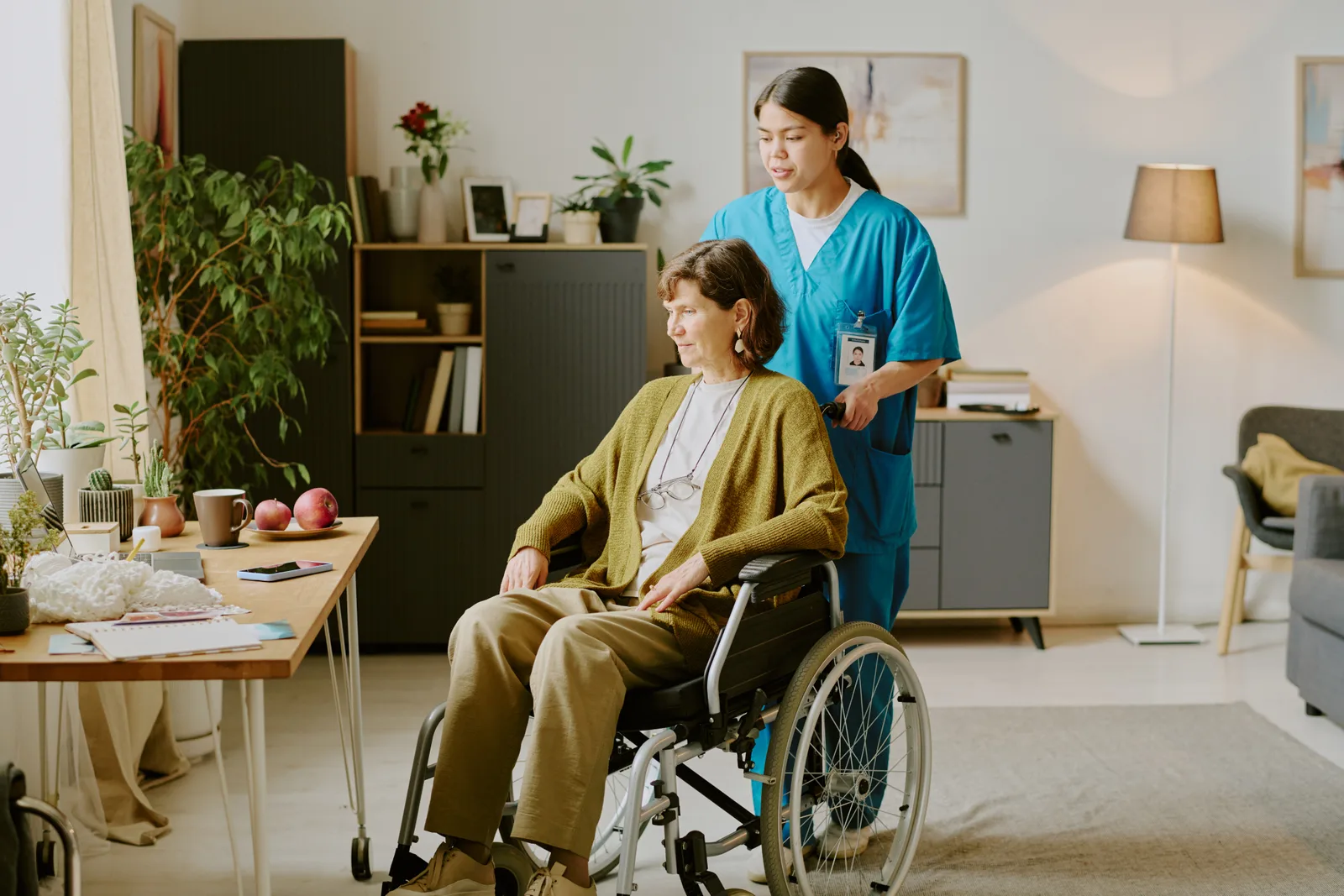
When a parent or grandparent suffers a hip fracture, the entire family's life changes in an instant. Hospital visits, concerns about healing, questions about recovery, and fear of complications become part of the daily routine. This injury, extremely common amongst older people, often marks a turning point in a senior's independence and requires sustained involvement from loved ones.
We understand that after surgery, countless dilemmas arise: will they be able to walk again? How long does recovery take? Is it better at home or in a specialist centre? How do we adapt the home to prevent further falls? This article is here to support families navigating this difficult period, offering clear information about the stages of recovery, care options, and practical steps to give the senior the best possible chance of recovery.
Although statistics show that around 30% of people over 65 who suffer hip fractures never return to the same level of independence, proper recovery and adequate support can make the difference between returning to an active life and long-term dependence.
Contents
- What is a hip fracture and why does it primarily affect older people
- Stages of post-operative recovery: from intensive care to independent walking
- Recovery at home or transfer to a centre: how to make the right decision
- The family's role: adaptations, prevention, and warning signs
- Rights, certificates, and services available in Romania
- Common complications and how to prevent them
- Frequently asked questions
What is a hip fracture and why does it primarily affect older people
A hip fracture involves a break in the thighbone at the narrow section connecting the femoral head to the rest of the bone, located just below the hip joint. This area is particularly vulnerable in older people due to osteoporosis, reduced muscle mass, and poor balance that makes falls more likely.
Medical statistics show that over 80% of hip fractures occur in people over 65, and women are affected almost three times more frequently than men, owing to post-menopausal hormonal changes that accelerate bone density loss. A simple slip on a rug, a hurried step over a threshold, or even a sudden movement can cause a fracture when the bone has become fragile.
Why it is considered a medical emergency
A hip fracture is dangerous not only because of the acute pain and inability to walk. The major risks arise from complications associated with prolonged immobility: pulmonary infections, venous thrombosis, pressure sores, and rapid deterioration of general health. For this reason, doctors recommend emergency surgery, typically within the first 24–48 hours of the accident.
The main types of surgical intervention include:
- Osteosynthesis – fixing the bone fragments with screws or metal plates, preferred in younger patients with good bone quality
- Partial arthroplasty – replacing the femoral head with a prosthesis, indicated for seniors with displaced fractures
- Total hip arthroplasty – replacing the entire joint, recommended when associated arthritis is also present
Stages of post-operative recovery: from intensive care to independent walking
Recovery after a hip fracture is a gradual process that requires patience, perseverance, and careful medical guidance. Each patient progresses differently, depending on age, general health, the type of intervention, and their motivation to engage with physiotherapy.
The first days post-surgery: early mobilisation
Counter-intuitively, doctors recommend mobilising the patient as quickly as possible — even from the first day after surgery if general condition permits. The physiotherapist will help the senior sit on the edge of the bed, perform simple leg movements, and learn how to stand up with assistance. This early mobilisation prevents complications from immobility and accelerates healing.
Initial exercises include:
- Isometric contractions of the thigh and gluteal muscles, performed whilst in bed
- Ankle flexion and extension movements to prevent thrombosis
- Gentle raising of the operated leg with the knee straight
- Moving from a seated position to standing with the aid of a walking frame
The following weeks: standing upright and assisted walking
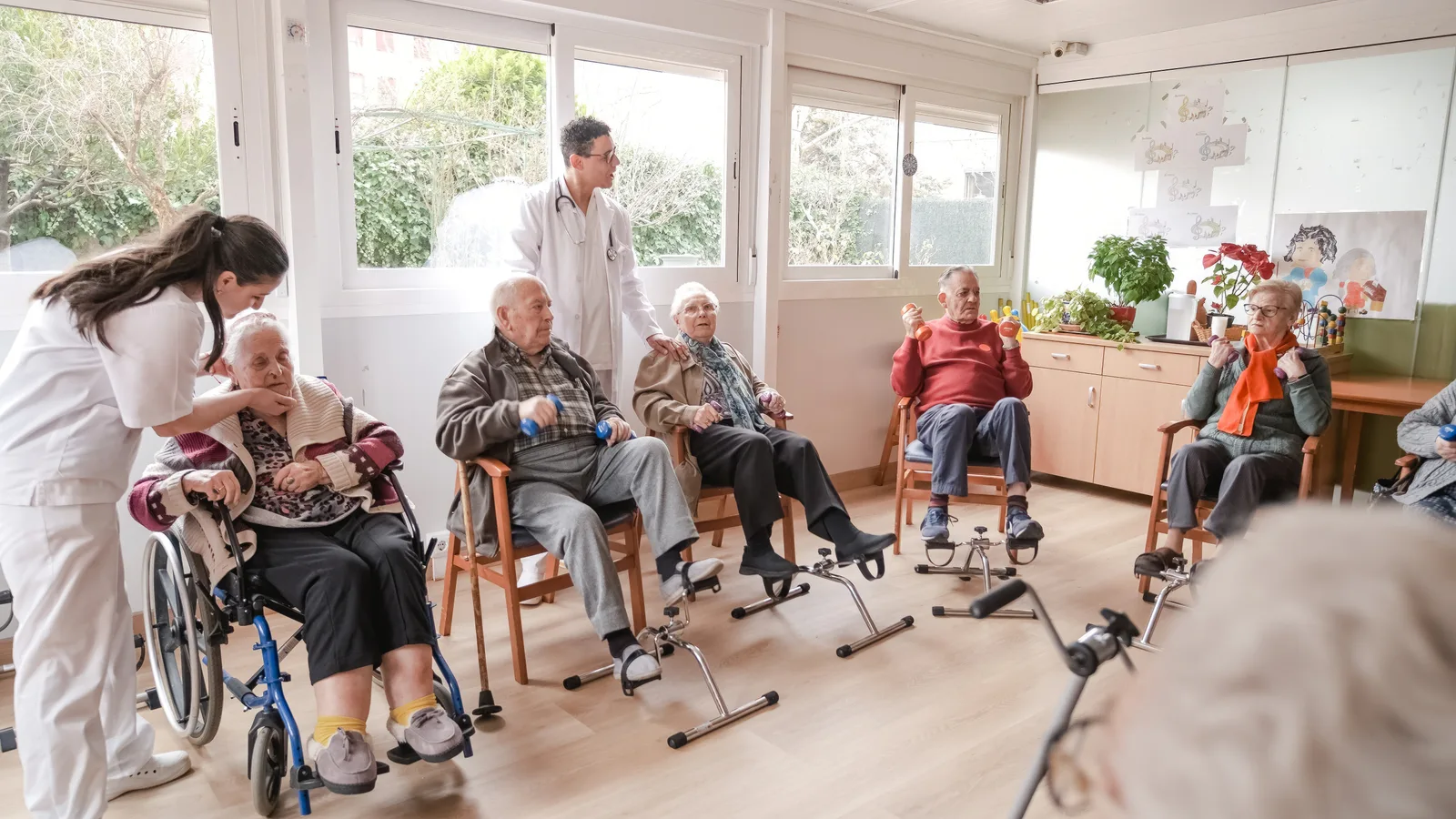
After discharge, recovery continues either at home with a domiciliary physiotherapist or in a rehabilitation centre. The primary goal is regaining independent walking, a process that can take between six weeks and three months — sometimes even longer for very elderly patients or those with other health conditions.
The physiotherapist will tailor the programme according to the type of prosthesis used and the surgeon's recommendations. Some procedures allow full weight-bearing on the operated leg from the outset, whilst others require partial weight-bearing for several weeks. The transition from a walking frame to crutches and then to a walking stick is made gradually, as muscle strength increases and balance improves.
Recovery at home or transfer to a centre: how to make the right decision
One of the most difficult choices families face is where to continue recovery after discharge from hospital. There is no universally applicable answer — each situation must be assessed individually, taking into account the senior's medical needs, the family's resources, and the conditions within the home.
The advantages of recovery at home
For many seniors, recovering in their own home provides emotional comfort and additional motivation. A familiar environment, the daily presence of family, and the maintenance of a known routine can all contribute to a better psychological state, which is an essential factor in healing.
Recovery at home is recommended when:
- The senior has a family member present who can provide constant supervision during the first few weeks
- The home can be adapted for safety (removing thresholds, installing grab rails, arranging a ground-floor bedroom)
- There is access to home medical services: a physiotherapist, nurse, and GP
- The patient is in a relatively stable state of health, with no major post-operative complications
- The family can manage the financial costs of home care, or benefits from support through insurance or the National Health Insurance House
When transfer to a specialist centre is indicated
Medical rehabilitation centres or medico-social care homes offer 24/7 medical supervision, specialist physiotherapy equipment, and a structured recovery programme. For seniors with complex medical needs, or families unable to provide constant care, these represent a safe alternative.
Transfer to a centre is recommended in situations such as:
- The patient lives alone, or family members work long hours and cannot provide supervision
- The home has multiple floors, narrow spaces, or architectural barriers that cannot be modified in the short term
- Post-operative complications arise requiring frequent medical monitoring
- The senior has multiple chronic conditions (poorly controlled diabetes, heart failure) that complicate recovery
- The family lacks the experience or emotional resources to manage intensive care
In Romania, there are both private rehabilitation centres and public or mixed centres that can accept patients with a referral. Costs vary significantly — from a few hundred RON per day at subsidised public centres, to over a thousand RON per day at luxury private facilities.
The family's role: adaptations, prevention, and warning signs
Family involvement is decisive in the success of recovery. Even if the senior is receiving professional care, the emotional support and active participation of loved ones makes the difference between a mechanical recovery and one that truly restores quality of life.
Adapting the home for safety
More than half of seniors who suffer a hip fracture are at increased risk of falling again in the following months if preventive measures are not taken. Adapting the home becomes an absolute priority.
Essential modifications at home:
- In the bathroom: install grab rails next to the toilet and in the bath/shower, use non-slip mats, consider a shower chair and possibly a raised toilet seat
- In the bedroom: ensure the bed is at the right height (feet should touch the floor easily when sitting on the edge), fit lateral support rails, keep bedside tables close for medication and a telephone
- In areas of movement: remove loose rugs or secure them with double-sided tape, clear cables and objects from the floor, ensure strong lighting throughout, including at night
- On stairs: install handrails on both sides, mark the edges of steps clearly, consider a stairlift if the senior lives on an upper floor
Warning signs requiring urgent medical attention
In the first weeks and months after surgery, the family must be alert to any signs that might indicate complications. Do not hesitate to contact the doctor or go to A&E if you notice:
- Increasing pain that does not respond to prescribed analgesics, or sudden and intense pain in the hip
- Swelling, redness, or discharge at the surgical incision site
- Fever above 38 degrees Celsius, accompanied by chills
- Unilateral swelling of the operated leg, with pain on pressure — possible venous thrombosis
- Breathing difficulties or chest pain — risk of pulmonary embolism
- Mental confusion or sudden changes in behaviour — may indicate infection or metabolic imbalances
- Inability to bear weight on the operated leg, despite previously being able to do so
Rights, certificates, and services available in Romania
Romania's health and social care system offers various forms of support for seniors recovering from a hip fracture; however, navigating the bureaucracy can be daunting. Being well informed helps families access all the entitlements available to them.
The disability classification certificate
Following a hip fracture with a hip prosthesis, the senior may apply for assessment for a disability classification certificate, at least on a temporary basis. This certificate provides access to:
- Subsidised or free medication in accordance with the relevant condition list
- Medical devices and orthopaedic aids (walking frame, crutches, walking stick) partially or fully covered
- Home care services through the local Social Assistance Directorate
- Transport concessions or tax benefits, depending on the disability classification awarded
The application is submitted to the Assessment Commission for Adults with Disabilities in the county of residence and includes a medical letter from the orthopaedic surgeon, medical documents, and a standard form. The assessment is carried out within a maximum of 30 working days.
Medical leave for a carer
A family member may be entitled to medical leave to care for a parent or grandparent in the period immediately following surgery, on the basis of a medical certificate issued by the GP or specialist. Depending on the clinical situation, this leave may be extended for successive periods.
Home care services
In Romania, there are public and private home care services that can be accessed:
- Public services provided by the local authority: many localities offer social care services at home through the Home Care Service (SAD), free of charge or with a modest contribution for individuals assessed as having care needs
- Medical services reimbursed by the National Health Insurance House: home nursing care and physiotherapy may be partially reimbursed on the basis of a medical recommendation
- Private providers: professional care agencies offer qualified staff with flexible hours, with costs ranging from 25–50 RON per hour depending on the region and the carer's qualifications
Common complications and how to prevent them
Even with careful management, some complications may arise during the recovery process. Being aware of these and how to prevent them allows you to take a proactive approach.
Loss of muscle mass and independence
Prolonged immobility leads rapidly to muscle atrophy in older people — it is estimated that within the first two weeks of immobilisation, a senior can lose up to 15% of their muscle mass. This is why early mobilisation and consistent physiotherapy are essential.
Prevention includes daily exercises, even the simplest ones, a diet rich in protein (lean meat, fish, eggs, dairy products), and avoiding the temptation to let the senior rest excessively.
Pressure sores and skin problems
Seniors who spend a great deal of time in bed or in an armchair are at risk of pressure sores — open wounds caused by prolonged pressure on certain areas. Prevention requires frequent repositioning (every 2–3 hours), the use of pressure-relieving mattresses, and rigorous skin hygiene.
Post-operative depression
Loss of independence, chronic pain, and fear of not making a full recovery can lead to depression, which in turn undermines recovery efforts. The family should be alert to signs such as loss of appetite, frequent crying, social withdrawal, or refusal to participate in physiotherapy. A conversation with the GP, and possibly the involvement of a psychologist or psychiatrist, may be necessary.
Frequently asked questions
How long does full recovery take after a hip fracture?
Recovery varies greatly from person to person, but on average seniors can return to independent walking with a stick within 2–3 months. Full recovery of muscle strength and balance can take 6–12 months. Perseverance with physiotherapy and overall general health significantly influence the duration.
Does a hip prosthesis need to be replaced periodically?
Modern hip prostheses have a lifespan of 15–20 years, or even longer in seniors with reduced activity levels. In advanced old age, most patients will not require prosthesis replacement. However, regular check-ups with the orthopaedic surgeon are essential for monitoring purposes.
Is it normal to experience pain in the non-operated hip as well?
Yes, it is common for the healthy hip to become painful in the first few weeks, as it bears more weight during recovery. Strengthening exercises for both lower limbs and posture correction with the guidance of a physiotherapist help to alleviate this pain.
Can the senior be left alone at home after the first few weeks?
This depends on how recovery is progressing and the level of independence achieved. After 4–6 weeks, many seniors can be left alone for short periods if they are walking independently with a stick or frame, have their phone to hand, and the home has been appropriately adapted. The assessment is made on an individual basis together with the medical team.
How much does home care cost compared to a rehabilitation centre?
Home care with a private carer for 8 hours per day costs approximately 4,000–6,000 RON per month, with physiotherapy on top of that (100–200 RON per session). A private rehabilitation centre ranges between 3,000–10,000 RON per month depending on facilities and services. Public or subsidised options can significantly reduce these costs.
How do we prevent another fall and another fracture?
Prevention includes adapting the home, wearing comfortable non-slip footwear, treating osteoporosis with calcium and vitamin D supplements or prescribed medication, correcting vision problems, and reviewing any medication that may cause dizziness or drowsiness. Balance exercises are also essential.
Recovery after a hip fracture is a demanding journey, but with the right support and proper information, the chances of your beloved senior returning to an active and fulfilling life are very real. Every small step forward — the first pain-free step, the first walk outside, returning to enjoyable activities — deserves to be celebrated and strengthens the motivation to keep going.
If you are facing this situation and need guidance on choosing the best recovery option, speak openly with the orthopaedic surgeon, the physiotherapist, and, where appropriate, a specialist in senior care. Ask questions, seek a second opinion when you feel the need, and engage actively in the recovery plan — your presence and care make an enormous difference to your loved one.
This article is for informational purposes only and does not replace medical advice. For specific situations, please consult a specialist.
Previous
Depression in the Elderly: How to Recognise It and What You Can Do as a Family
Next
Pressure sores in the elderly: how to prevent them and how to care for the skin
Similar articles
Polypharmacy in the Elderly: What Families Need to Know
16 October 2026

Caregiver Burnout: Signs to Recognise and How to Ask for Help
15 October 2026
Memory and Attention Training: What Every Family Should Know
14 October 2026

Foot Care for the Elderly: Warning Signs and Prevention
14 October 2026
Sleep Disorders in Seniors: When and How to Seek Help
13 October 2026
Osteoporosis and Bone Health — An Essential Guide for Carers
13 October 2026