
Victorians treated professional burnout with months-long holidays – a lesson for today's seniors
In the 19th century, British doctors were already recognising burnout and treating it through extended recuperation stays.
Professional burnout is not an invention of the modern world. Over 150 years ago, British doctors had already identified the devastating effects of "overwork" on health, particularly among educated people living in large industrial cities.
When excessive work became a recognised illness
In the second half of the 19th century, the expansion of railways, the telegraph, and imperial growth dramatically accelerated the pace of life. Doctors of the era observed that constant professional pressure and intense intellectual activity were seriously affecting the health of a significant portion of the population. The term used was "overwork", and one of the most respected specialists, C.H.F. Routh, devoted multiple editions of his work "On Overwork and Premature Mental Decay" to this troubling phenomenon.
Therapeutic holidays – the Victorian solution
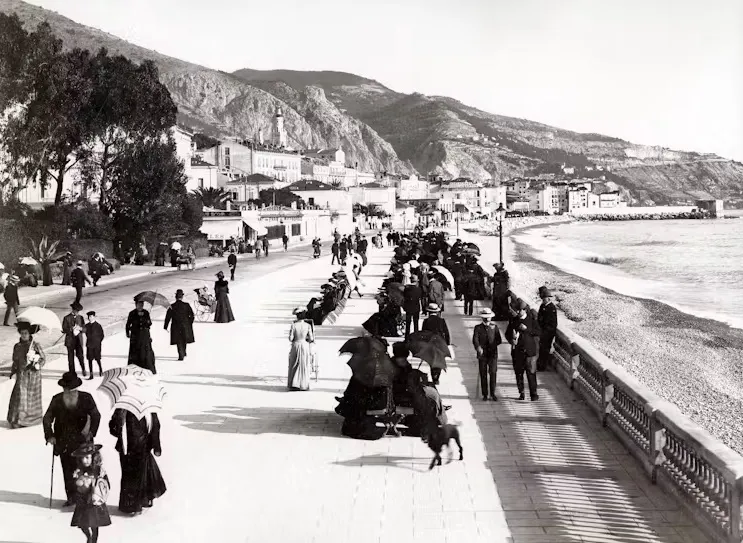
Unlike the modern approach, which treats burnout as an individual problem, Victorian doctors prescribed radical treatments: stays of several months at resorts considered beneficial to health. Menton, a town on the Côte d'Azur, became the preferred destination for those suffering from mental and physical exhaustion.
The physician James Henry Bennet, who restored his own health in Menton after leaving behind the stress of his professional life in London, popularised the idea that clean air, a mild climate, and exposure to sunshine contributed decisively to the recovery of patients affected by overwork.
Climatotherapy – an alternative to toxic urban life
19th-century climatotherapy theory acknowledged that certain conditions could be alleviated through a complete change of environment and lifestyle. At a time when major cities were suffocating under industrial pollution, the south of France represented a genuine sanctuary for health. Patients were encouraged to spend extended periods outdoors, take regular walks, and reconnect with nature.
Lessons for today's older adults
For elderly people who have worked hard throughout their lives, this Victorian perspective offers an important validation: the need for prolonged rest and recuperation is not a weakness, but a legitimate medical acknowledgement. The Victorians' concept of "legitimate idleness" – in which overworked professionals could take a genuine break from daily pressures – seems more relevant than ever.
In a society obsessed with productivity and constant connectivity, the Victorian model of treating exhaustion through extended periods of recovery offers a valuable perspective on the importance of rest in maintaining long-term health, particularly for generations who have lived under the constant pressure of work.
Content paraphrased and adapted by SeniorHelp from verified public sources.
Original source: Mediafax →Previous article
Extreme heatwave in France: major risk for elderly people
Next article
Pension indexation delayed until 2027 – measures announced by the incoming Government
Similar news

Microplastics in tap water can be reduced through boiling and filtering, a study shows
16 October 2026

Over 350,000 doses of flu vaccine to arrive in pharmacies next week
16 October 2026

First influenza-related death of this season confirmed by INSP: unvaccinated man from Cluj
16 October 2026

Partial Nephrectomy: The Operation That Treats Kidney Tumours and Preserves the Kidney
16 October 2026

Time spent in nature could improve one's relationship with food, a British study suggests
16 October 2026

What a liver operation involves: preparation and recovery
15 October 2026