
Head of the Fiscal Council: tax increases were inevitable, but by 2027 they will no longer be necessary
Daniel Dăianu says that the large budget deficit necessitated tax increases. He estimates that no new taxes will be needed in 2027, provided the economy grows by more than 2% and budgetary corrections continue.
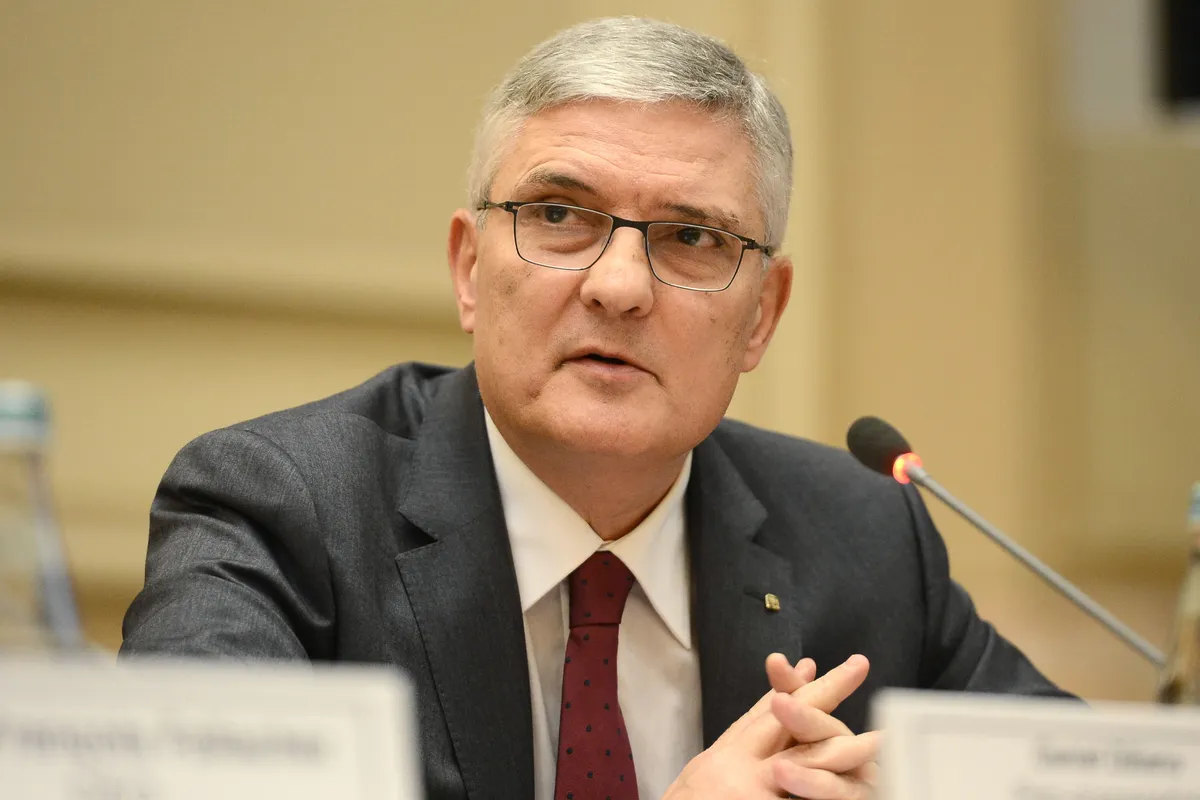
The President of the Fiscal Council, Daniel Dăianu, argues that Romania had no alternative but to raise taxes and duties, given the high budget deficit. However, he believes that further increases will not be necessary in 2027, provided that the economy grows by more than 2% of GDP and that the current budgetary correction measures are maintained.
The statements were made on Wednesday, at the launch of a new edition of the SME White Paper. Dăianu noted that on Tuesday he had met with representatives of the credit rating agency Fitch, and that on Thursday the leadership of the Fiscal Council was due to hold talks with Moody's, as part of Romania's sovereign credit rating review process.
"I don't believe we will face a rating downgrade"
"The rating agencies are not waiting for us. They have already flagged concerns. We had a meeting yesterday with Fitch. I believe we will not face a sovereign rating downgrade, as budget execution has been sound over the first five months, at roughly half the deficit recorded last year — admittedly achieved through expenditure controls, very strict controls," said Daniel Dăianu.
The economist stressed that the country needs a fully empowered government and a period of political "ceasefire". "Political disputes, political crises, and falling governments are not anomalies. But coming back down to earth, we realise that Romania needs a fully empowered government. And a ceasefire, before you even get to needing a fully empowered government — one that can deal with SAFE, with drawing up the 2027 budget, with completing the NRRP, which has brought in many billions, with the pay legislation, and so on," he explained.
"No new taxes are needed in 2027"
Dăianu recalled that, in his capacity as President of the Fiscal Council, he had warned on multiple occasions about macroeconomic policy errors. "This is the tragedy: Romania achieved convergence, incomes rose — albeit with very significant inequalities between citizens and groups of people. That is a reality, but a reckoning has arrived for certain macroeconomic policy mistakes. We have been warning for years that the moment would come when there would be no way back. And here we are in exactly that situation," he said.
He noted that he had conveyed this message to external partners as well, including ahead of Thursday's meeting with Moody's: "in our view, no new taxes or duties will be needed in 2027. We believe that in 2027 the economy can grow by more than 2% of GDP."
Dăianu also expressed doubt that Romania would enter recession next year: "Some people are rushing to talk about recession in 2027 as well. I don't think we will have a recession. This year, we will be on the edge, so to speak. Let us hope there will be no further external shocks, because we can see that hostilities in the Middle East are, unfortunately, flaring up again."
A call for political responsibility
Regarding the political crisis, Dăianu said the discussion should not focus on inter-party negotiations, but on solutions for the country: "As for the leaders of the parties that formed the government, the question is not whether they should remain at the table. The question is whether they understand that above any party interest, there is the interest of Romania."
He also noted that small and medium-sized enterprises are bearing the brunt of the current economic difficulties: "The greatest hardships, according to the statistics, are felt by SMEs. It's like boxing: if you hit a small one, it goes down. If you hit a big one, it doesn't feel it."
Dăianu also criticised proposals to cut taxes and abandon austerity measures in the context of a large deficit and weak economic growth: "I've heard voices calling for tax cuts again, for us to say stop to austerity. Let's set aside the political rhetoric. When you have a large deficit and low economic growth, can you avoid austerity? Your options are either losing access to financing or making a correction that hurts. But there is no other way. It's just empty words."
"Tax increases were unavoidable"
The President of the Fiscal Council insisted that raising taxes was inevitable: "It could not have been done without tax increases. Let someone come and show me how you cut 3% of GDP. We at the Fiscal Council are not paid by citizens to peddle fairy tales. And we know there has been a debate: spending cuts versus tax increases, or closing the VAT gap. It is pure fantasy — you cannot close the VAT gap overnight."
The event at which Daniel Dăianu spoke — the launch of a new edition of the SME White Paper — took place at the headquarters of the National Bank of Romania and was organised by the SME Romania Employers' Confederation. The document was compiled during the first half of this year, based on a nationally representative sample of approximately 1,800 small and medium-sized enterprises from all counties and sectors of activity, providing a comprehensive snapshot of Romania's entrepreneurial landscape.
The White Paper examines primarily how SMEs approach topics such as business financing, access to European funds, and human resources policies, whilst also drawing up a profile of the typical entrepreneur, their perceptions of the current economic climate, and their outlook for the future.
Content paraphrased and adapted by SeniorHelp from verified public sources.
Original source: Digi24 →Previous article
e-Sănătatea Mea: the platform for online medical records and doctor appointments from 2026
Next article
Pharmacies Call for Predictable Payments for Subsidised Medicines, Following Reduction of CNAS Delays
Similar news
 Foto ilustrativă
The Senate has voted on the ROBOR credit recalculation law. Romanians could receive money back from banks
14 October 2026

Senate wants recalculation of loans affected by ROBOR, based on IRCC
14 October 2026
Bușoi: The Next Government Must Quickly Decide Whether to Extend the Gas Support Scheme
14 October 2026

Average net salary fell to 5,688 RON in August, below inflation
13 October 2026

Average net salary fell in August 2026, inflation wiped out wage increases
13 October 2026

Annual inflation rose to 6.61% in September, INS announces
13 October 2026