
Romania had 19.04 million inhabitants on 1 January 2026, the population continues to decline
INS: Romania's population fell by 1,829 people in one year. Immigrants outnumbered emigrants, but not enough to offset the natural decline.
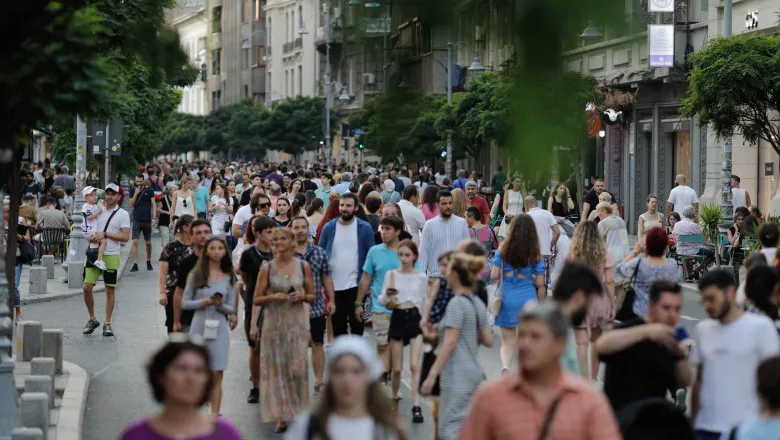
According to provisional data published on Friday by the National Institute of Statistics (INS), Romania's resident population stood at 19.041 million people on 1 January 2026, a decrease of 1,829 compared to the same date the previous year.
The decline in population was tempered by migration: the number of immigrants exceeded that of emigrants by 102,200. However, this difference was not sufficient to fully offset the natural population decline of 104,100 people, caused by the number of deaths exceeding the number of births.
The INS data confirms that Romania remained a country of net immigration in 2025, with the positive balance of international migration higher than in previous years and almost entirely offsetting the gap between deaths and births.
With regard to the gender breakdown of migration, men accounted for 57.9% of those who left the country, but also for 58.6% of those who came to Romania.
On 1 January 2026, the urban population stood at 9.792 million people, up 0.2% compared to the previous year. The total female population was 9.744 million people, down 0.1%.
Nearly 136 elderly people for every 100 young people
The INS statistics also highlight an acceleration of demographic ageing. People aged 65 and over accounted for 20.5% of the country's population on 1 January 2026, compared to 20.3% a year earlier.
Over the same period, the proportion of children aged between 0 and 14 fell from 15.4% to 15.1%. As a result, the demographic ageing index rose from 131.3 to 135.9 elderly people for every 100 young people. In practical terms, at the beginning of 2026, Romania had nearly 136 people aged over 65 for every 100 children under the age of 15.
The demographic dependency ratio fell slightly, from 55.6 to 55.2 young and elderly people for every 100 working-age adults.
The INS notes that the resident population includes Romanian citizens, foreign nationals, and stateless persons who have been habitually residing in Romania for at least 12 months. During the war in Ukraine, Ukrainian citizens under temporary protection in Romania are also included in this category. The figures for 1 January 2026 are provisional and are subject to revision in December.
Content paraphrased and adapted by SeniorHelp from verified public sources.
Original source: Digi24 →Previous article
Bucharest City Hall promises monthly payments of 250 RON to persons with disabilities, until 2030
Next article
USA Approves Drug That Doubles Survival in Pancreatic Cancer
Similar news
 Foto ilustrativă
The Senate has voted on the ROBOR credit recalculation law. Romanians could receive money back from banks
14 October 2026

Senate wants recalculation of loans affected by ROBOR, based on IRCC
14 October 2026

Bușoi: The Next Government Must Quickly Decide Whether to Extend the Gas Support Scheme
14 October 2026

Average net salary fell to 5,688 RON in August, below inflation
13 October 2026

Average net salary fell in August 2026, inflation wiped out wage increases
13 October 2026

Annual inflation rose to 6.61% in September, INS announces
13 October 2026