
AI Helps Japanese Researchers Discover the Gene That Alters Blood Stem Cells During Ageing
Researchers from Tohoku University have used artificial intelligence to identify Pbx1, a gene involved in the ageing of stem cells that produce blood. The study was published in *Science Advances*.
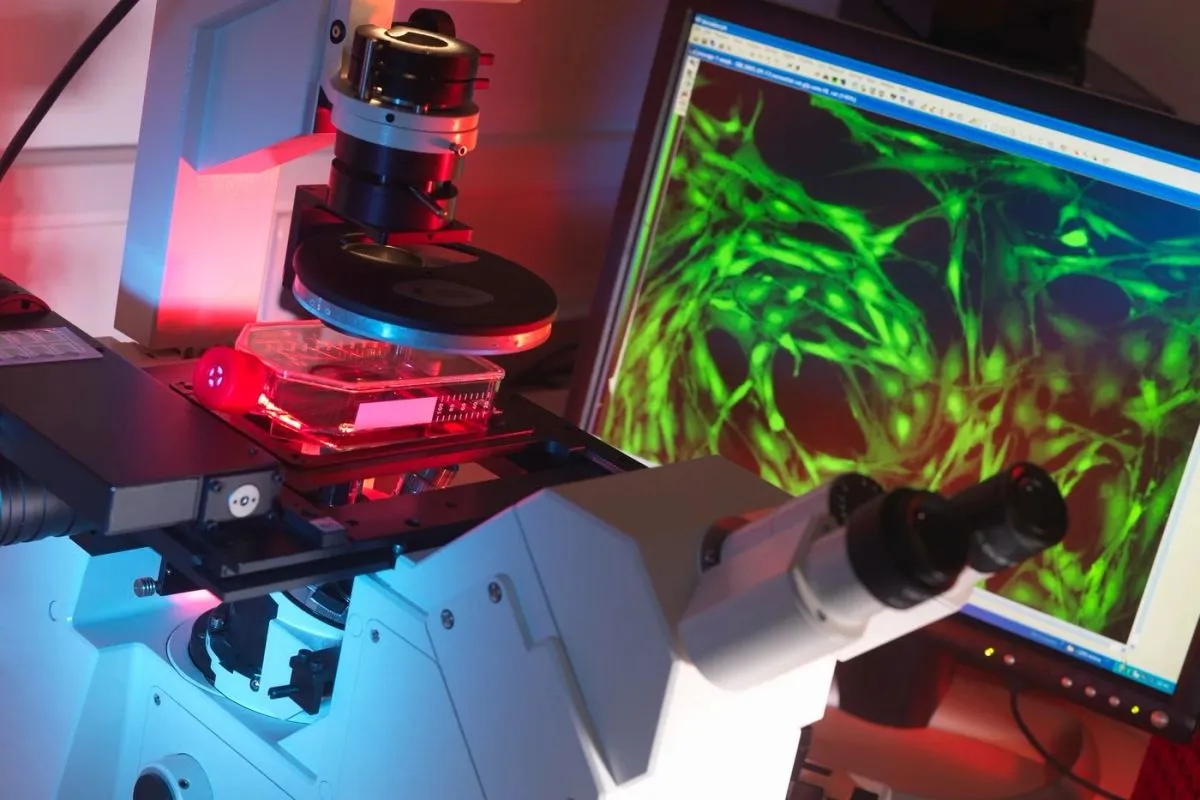
A team of researchers from Tohoku University in Japan has used artificial intelligence to identify an important mechanism involved in the ageing of blood-producing stem cells. The analysis pointed to Pbx1, a transcription factor that appears to contribute to changes in the behaviour of these cells as we age. The study was published in the journal Science Advances, according to Medical Xpress.
An important clarification: artificial intelligence did not independently "discover" the gene responsible for ageing. The model was used to drastically narrow down the number of possibilities, after which the researchers verified the results through genetic and epigenetic analyses and experiments on mice.
What happens to blood-producing stem cells as we age
Haematopoietic stem cells are found primarily in the bone marrow and have the capacity to self-renew and generate all major types of blood cells: red blood cells, white blood cells, and platelets. They replace cells lost through natural processes and help restore the blood system following haemorrhage, infection, or treatments such as chemotherapy.
With age, a paradox emerges: the number of these cells may increase, yet their ability to produce a balanced blood system declines. Aged cells produce fewer mature cells, including red blood cells and lymphocytes, and shift increasingly towards platelet production. These changes have been associated with anaemia, reduced immune function, clot formation, and certain blood disorders specific to old age.
The researchers wanted to determine whether these changes represent merely progressive deterioration or an entry into a distinct biological state. The findings support the latter.
Two genetic programmes activated simultaneously
By analysing haematopoietic stem cells from mice of different ages individually, the researchers discovered that aged cells simultaneously activate two genetic programmes: one that keeps cells in a highly immature state characteristic of stem cells, and another that primes them for the production of megakaryocytes — the large bone marrow cells from which platelets originate.
These changes do not appear abruptly in old age. The programme associated with the primitive state begins to take shape even before birth, whilst the programme linked to platelet production becomes more evident after birth and continues to increase thereafter. The researchers concluded that the ageing of haematopoietic stem cells is a gradual process that unfolds across an entire lifetime, rather than occurring suddenly in old age.
How artificial intelligence was used
One of the major challenges in genetic research is the sheer volume of data: cells employ thousands of genes that interact with one another, forming complex networks.
The Tohoku team used Geneformer, an artificial intelligence model based on the Transformer architecture, previously trained on gene expression data from approximately 30 million cells. The model was subsequently fine-tuned using data from around 160,000 young and aged haematopoietic stem and progenitor cells.
The AI was used to estimate which genes might "push" a young cell towards a state similar to that observed in aged cells. The analysis yielded 143 candidate genes, which were not automatically assumed to be responsible for the process. The researchers experimentally validated the predictions through transcription factor screening, transcriptomic and epigenetic analyses, and transplantation experiments.
Through this process, the gene Pbx1 emerged as a central node in the genetic network associated with haematopoietic stem cell ageing.
The role of the Pbx1 gene
Pbx1 is a transcription factor — that is, a protein that regulates the activity of other genes. In aged haematopoietic stem cells, the researchers observed a strong link between Pbx1 and genes associated with the maintenance of an immature state, cellular ageing, and platelet production.
To verify the functional effect, the researchers increased Pbx1 activity in young stem cells. The result: the modified cells began to display many of the characteristics of aged cells. According to the study, up to 73.3% of the genes activated by Pbx1 also showed increased activity in aged stem cells.
When transplanted into mice, the modified cells produced fewer red blood cells and shifted relatively more towards platelet production. The researchers propose that the underlying mechanism involves Pbx1 suppressing the Gata1 gene, which plays a role in red blood cell formation.
A new biological state, not merely deterioration
Keiyo Takubo, one of the lead researchers, explained that aged stem cells are often regarded as versions of young cells that have gradually lost their functions. However, the study's findings indicate that these cells instead enter a stable and distinct state, with their own biological characteristics and tendencies — not simply a general decline.
This conclusion may explain why simply increasing the number of stem cells is insufficient to restore blood production to the levels seen in youth.
The connection with anaemia, clots, and blood disorders
The reduction in red blood cell production may contribute to anaemia associated with old age, whilst the pronounced shift towards platelet production may be linked to clot formation. The researchers also note possible connections with clonal haematopoiesis and certain blood cancers.
Clonal haematopoiesis occurs when a stem cell carrying certain genetic alterations gives rise to a large population of descendant cells. The phenomenon becomes more common with age and is associated with an increased risk of haematological and cardiovascular disease. Future studies will need to determine whether the Pbx1-related mechanism also plays a role in this process.
What these findings mean for the future
The identification of Pbx1 gives researchers a concrete target for investigating the mechanisms that alter haematopoietic stem cells with age. A better understanding of this genetic network could, in the long term, contribute to research into conditions such as anaemia, thrombosis, clonal haematopoiesis, and certain blood cancers, with potential relevance to stem cell transplantation and blood system recovery following chemotherapy.
For now, these possibilities do not represent available treatments. The functional experiments were conducted on cells and in mice, and researchers have yet to establish whether the same mechanism operates in humans. At this stage, the value of the discovery remains scientific: artificial intelligence narrowed down an enormous space of genetic possibilities, and laboratory experiments identified Pbx1 as an important regulator within one of the networks associated with the ageing of the blood-producing system.
Content paraphrased and adapted by SeniorHelp from verified public sources.
Original source: Realitatea →Previous article
Heating Assistance 2026–2027: income thresholds and application submission period
Next article
Nazare: pensions could increase "prudently" in 2027; a VAT rise is not being considered
Similar news

Microplastics in tap water can be reduced through boiling and filtering, a study shows
16 October 2026

Over 350,000 doses of flu vaccine to arrive in pharmacies next week
16 October 2026

First influenza-related death of this season confirmed by INSP: unvaccinated man from Cluj
16 October 2026

Partial Nephrectomy: The Operation That Treats Kidney Tumours and Preserves the Kidney
16 October 2026

Time spent in nature could improve one's relationship with food, a British study suggests
16 October 2026

What a liver operation involves: preparation and recovery
15 October 2026