
Volunteering in Care Homes for the Elderly: How to Involve Family and Community
Discover how you can transform a senior's life through a simple act of volunteering. A complete guide for families who wish to bring joy and a sense of normality to their loved ones.
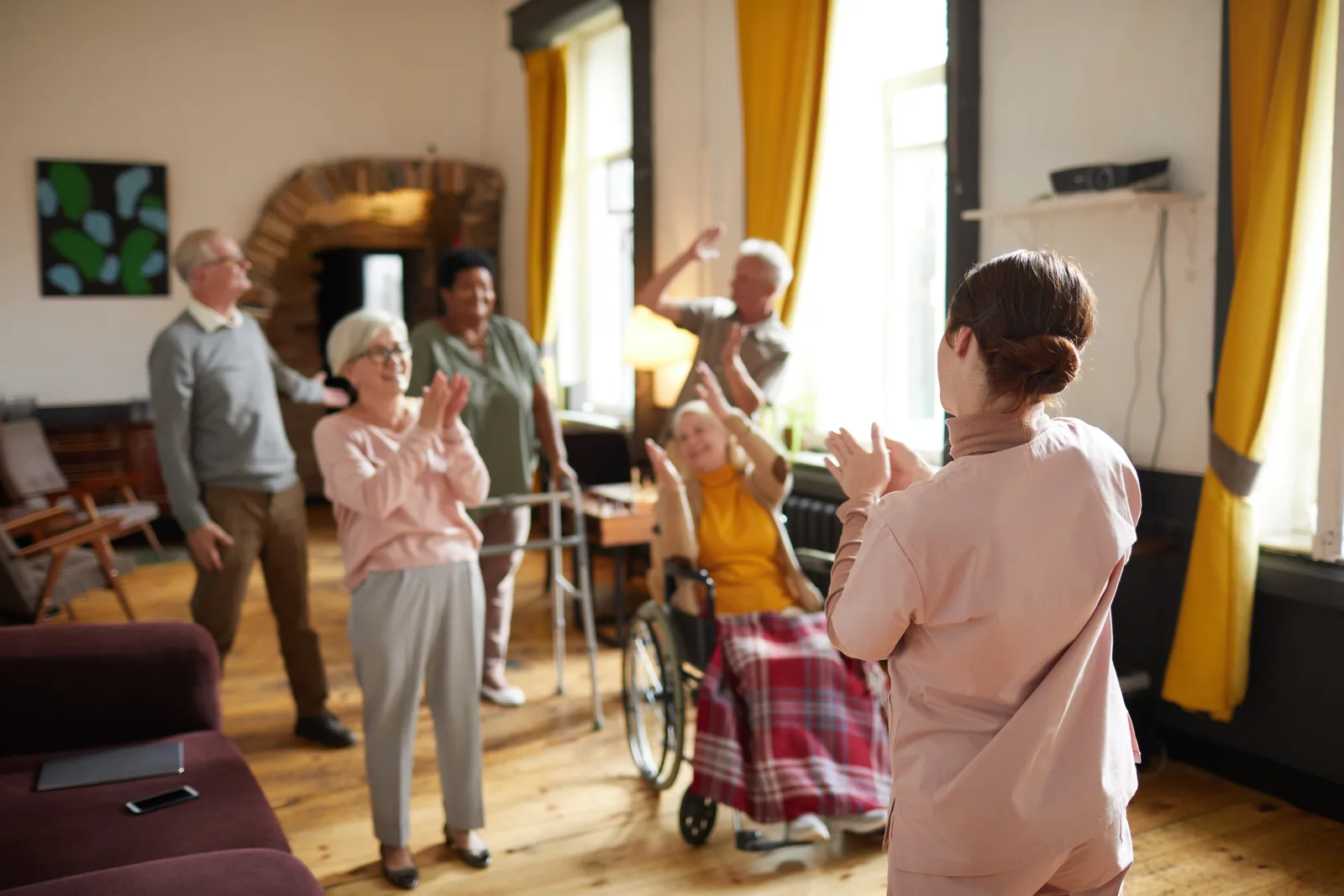
Contents
When your mother or father becomes a resident in a care home, the guilt can be overwhelming. Questions multiply: are they getting enough attention? Do they feel lonely? Do they still have moments of joy? The reality is that, no matter how good the medical staff are, nothing can fully replace genuine human connection and the variety of social interactions. This is where volunteering comes in — an essential bridge between institutional isolation and normal life, full of colour.
Volunteering in care homes for the elderly is not merely about occasional visits out of pity. It means creating moments of normality, bringing the outside world in, transforming a care setting into a place where people still truly live, rather than merely survive. And when families and communities become actively involved, the effects are remarkable: older people become individuals again, not just patients.
In this article, you will discover how volunteering actually works in care homes across Romania, what real benefits it brings to older people, and — most importantly — how you and your family can make a difference in a senior's life, whether that is your own loved one or other residents who no longer receive visitors.
Contents
- What volunteering in Romanian care homes means
- The legal framework and volunteering rules
- Concrete benefits for older people: more than just company
- How families can organise volunteering activities
- Organisations and programmes in Romania through which you can volunteer
- How to involve young people, neighbours, and community groups
- Practical tips for first-time volunteers
- Frequently asked questions
What volunteering in Romanian care homes means
Volunteering in a care home is far more flexible than most families imagine. You do not need to be a specialist or spend hours there every day. It might mean a half-hour conversation every Sunday, reading a book together, playing backgammon, listening to stories from their youth, or simply being present with someone who would otherwise spend the day staring at the ceiling.
In Romania, many modern care homes actively encourage volunteer involvement, recognising that holistic care means more than medication and meals on time. It means cognitive stimulation, emotional connection, and a sense of purpose. An older person who has someone to talk to about their favourite television series or the garden they had at home is a healthier, more alert, and happier individual.
Types of volunteering activities
- Individual visits — personalised conversations, companionship for specific residents
- Group activities — music, theatre, creative workshops, themed celebrations
- Outings — walks in the park, visits to museums or cultural events
- Intergenerational activities — sessions with children, teenagers, or young volunteers
- Practical assistance — reading correspondence, helping with phone or tablet use
The legal framework and volunteering rules
Volunteering in social care institutions in Romania is governed by the Volunteering Act (Law no. 78/2014), which protects both volunteers and the people they support. To carry out volunteering activities in a care home, a volunteering agreement must be in place between you (or the organisation you represent) and the host institution.
Private and public care homes have different procedures, but most require a few straightforward conditions: a clean criminal record, written consent to participate in activities, and in some cases, a short induction course on working with older people. None of this is complicated — these measures exist for everyone's safety.
Clear responsibilities and boundaries
It is essential to understand that a volunteer does not replace medical staff. You cannot administer medication, make medical decisions, or intervene in care protocols. Your role is complementary: you provide the human and social dimension that goes beyond strictly medical care. This distinction protects everyone and allows each person to do what they do best.
Concrete benefits for older people: more than just company
When we talk about the benefits of volunteering for older people, we are not speaking in abstract terms. Research in recent years has demonstrated measurable, concrete effects. Older people who have regular contact with volunteers show lower rates of depression, better cognitive function, and even improved responses to treatment.
Social isolation in older people is not simply about loneliness — it is a genuine health risk factor, comparable to smoking or obesity. An isolated older person faces a higher risk of cognitive decline, cardiovascular disease, and premature death. Volunteering acts as a scientifically documented antidote to these effects.
Directly observable effects
- Cognitive stimulation — varied conversation keeps the mind active and sharp
- Emotional regulation — anticipating visits creates positive expectation
- A sense of worth — older people feel seen as individuals, not just patients
- Connection with the outside world — news, stories, normality
- Greater motivation — better self-care when they have visitors to look forward to
We have seen countless cases in which withdrawn and listless residents suddenly became communicative and cheerful once they began receiving regular visits. There is nothing magical about it — it is simply the basic human need to be seen, heard, and valued.
How families can organise volunteering activities
If you have a parent or relative in a care home, you are ideally placed to initiate volunteering activities that enrich the lives of the entire resident community. Start by speaking with the care home coordinator or activities manager (if one exists). Explain that you would like to become more involved and ask what needs they have identified.
Many care homes are receptive but lack the resources to coordinate such initiatives on their own. By offering to organise and facilitate activities, you lighten their workload and bring benefits to everyone. You can start simply: a monthly music session, a storytelling circle, a themed day.
Steps for organising an activity
- Identify interests — what would residents enjoy? Ask them directly
- Assess resources — what do you have available (space, time, a modest budget)
- Coordinate with staff — choose suitable times and ensure you do not disrupt the medical routine
- Invite other family members — this enriches the experience and shares the responsibility
- Document and repeat — photographs (with residents' consent), feedback, improvements
Concrete activity ideas initiated by families
There is no need to reinvent the wheel. Here are some tried-and-tested activities that have proved popular: organise a poetry recital where each resident recites their favourite poem from their youth; bring a musical instrument and play songs they know; set up a simple cookery workshop (pastries, cakes) where residents who are able can contribute; arrange a storytelling session where older people talk about their former careers; bring children for a themed Christmas or Easter visit.
Organisations and programmes in Romania through which you can volunteer
If you would prefer to join a structured programme rather than organise everything yourself, there are several organisations in Romania that coordinate volunteering activities in care homes. These offer training, insurance, and logistical support, making the experience more straightforward for newcomers.
Fundația Age Romania runs programmes dedicated to combating isolation in older people, with volunteers specially trained in engaging with seniors. World Vision România and Salvați Copiii also have intergenerational initiatives that connect young people with older adults.
Volunteering platforms and networks
- Volunteering.ro — a national platform where care homes post their volunteering needs
- Rețeaua națională a voluntarilor — coordinates activities across multiple cities
- Local associations — many churches and community centres have their own programmes
- University programmes — students of psychology, social work, and medicine often seek volunteering placements
Joining an existing programme has the advantage of benefiting from others' experience, receiving regular feedback, and not being solely responsible for the organisation. It is an excellent option if you are just starting out and want to learn by doing.
How to involve young people, neighbours, and community groups
One of the most beautiful aspects of volunteering in care homes is the potential to create intergenerational bridges. Older people have so much to share, and young people need perspectives and wisdom that only lived experience can offer. When you manage to bring these generations together, something remarkable happens for both sides.
To engage young people — whether children, teenagers, or students — frame the activity as a learning experience rather than a chore. Young people will want to take part once they understand its value. A secondary school student who volunteers regularly at a care home develops empathy, patience, and active listening — skills that will serve them throughout their life.
Strategies for engaging young people
- Create joint projects — older residents tell stories, young people write and illustrate a book
- Technology sessions — teenagers teach older people to use a tablet or smartphone
- Skills exchange — older residents teach traditional crafts, young people teach English
- School groups — coordinate with teachers to arrange visits as part of civic education lessons
Involving neighbours and the local community
The care home in your neighbourhood need not remain an isolated island. You can turn the local community into a support network for residents. Talk to the owners of nearby cafés about the possibility of regular visits; invite the church choir to sing occasionally; organise an open day where local residents can meet the people who live there; coordinate with the local bookshop to arrange reading sessions.
When the community embraces the care home as an integral part of the neighbourhood, older residents no longer feel forgotten. They become part of the local fabric, part of everyday life. And that makes all the difference.
Practical tips for first-time volunteers
If you have never volunteered with older people before, it is perfectly natural to feel a little uncertain at first. Here are some tips to help you create a positive experience for yourself and for the residents.
Be consistent and predictable. Coming once a week at the same time is far more valuable than appearing randomly whenever you have a free moment. Residents will look forward to your visit, anticipate it, and prepare for it. This regularity builds security and trust.
Communicating effectively with older people
- Speak clearly, but not condescendingly — raise your voice only when genuinely necessary
- Listen actively — many older people need someone who truly listens, not merely hears
- Be patient — thinking and speaking may be slower, but the ideas are clear
- Respect privacy — do not press topics they do not wish to discuss
- Accept repetition — if they tell you the same story ten times, listen each time with equal attention
What to avoid
- Promises you cannot keep — better to promise less and deliver more
- Assuming all older people are the same — each has a unique personality, preferences, and needs
- Focusing excessively on illness — talk about life, not about medical conditions
- Taking photographs without consent — respect dignity and the wish for privacy
And perhaps the most important piece of advice: do not force yourself to be artificially cheerful. Authenticity is what creates genuine connection. You can be empathetic, calm, and present — you do not need to be the life and soul of the party.
Frequently asked questions
How much time do I need to commit as a volunteer in a care home?
There is no mandatory minimum, but consistency matters more than duration. One hour a week, every week, is infinitely more valuable than five hours once a month. Most programmes appreciate a commitment of at least three to six months, to allow genuine relationships to form.
Can I volunteer if I have no experience with older people?
Absolutely. Most volunteers begin without any prior experience. Care homes and organisations provide basic training, and staff will guide you along the way. What matters most is a genuine willingness to be present and empathetic.
What should I do if a resident becomes too emotionally attached?
It is quite natural for older people to develop affection for volunteers who visit them regularly. Establish clear, healthy boundaries from the outset — explain when you will come, how long you will stay, and what you can and cannot offer. Speak with the care home coordinator if you feel the situation is becoming difficult to manage.
Can I visit my own parent and other residents in the same visit?
Yes, and it is actively encouraged. Group visits reduce the pressure on any single resident and allow for broader socialisation. Simply ensure that your parent is comfortable and does not feel overlooked if you share your attention with others.
Do I need to pay anything to volunteer?
No. Volunteering is free for the volunteer. Some organisations may ask for a small contribution towards insurance or training materials, but care homes do not charge for the right to volunteer.
What should I do if I observe neglect or inappropriate treatment?
Report your observations to the care home coordinator immediately. If the problem persists or is serious, contact the local Social Assistance Directorate or, in urgent cases, the relevant authorities. Volunteers have a moral responsibility to protect vulnerable residents.
Volunteering in care homes for the elderly is not an act of charity — it is an act of mutual humanity. You offer your time and presence, but in return you gain perspective, wisdom, and the profound satisfaction of making a real difference in someone's life. If you have read this far, you are probably already feeling the call. The next step is simple: pick up the phone, ring your local care home, and ask how you can help. Someone there is waiting for you, even if they do not yet know it.
This article is intended for informational purposes only and does not replace medical advice. For specific situations, please consult a qualified professional.
Previous
Aphasia After Stroke: How to Communicate With an Elderly Person Who Can No Longer Speak Normally
Next
Preventing Pressure Sores: What Every Family Should Know
Similar articles
Foot Care for the Elderly: Warning Signs and Prevention
14 October 2026

Osteoporosis and Bone Health — An Essential Guide for Carers
13 October 2026

Validation Therapy for Elderly People with Dementia: A Guide for Families
13 October 2026

Secondary effects of medication in the elderly: warning signs
12 October 2026
How to Manage Specialist Referrals for an Elderly Person with Multiple Chronic Conditions
10 October 2026
Telemedicine for the Elderly: How to Prepare for an Online Consultation
9 October 2026