
Assessment Visit to a Care Home: A Complete Guide for Family Members
Find out what to look for, what questions to ask, and how to assess whether a care home is the right fit for your loved one. Practical tips for making an informed decision.
Contents
The decision to choose a care home for a parent or close relative is one of the most difficult a family can make. Behind this choice lie concern, responsibility, and the desire to provide our senior with the best possible care. The first assessment visit to a care home therefore becomes a crucial moment, where every detail observed and every question asked can make the difference between the right choice and one we might come to regret.
Many families reach this stage after months of caring at home, having explored various options and realised that their loved one's needs have exceeded what they can manage alone. Whether it involves constant medical supervision, socialisation, or greater safety, a care home becomes a viable solution. But how do we distinguish a truly high-quality centre from one that merely appears impressive at first glance?
This guide will take you step by step through the assessment visit, helping you observe the essential aspects, ask the right questions, and make an informed decision based on concrete criteria rather than general impressions.
Contents
- Preparing for the visit: what to check in advance
- First impressions: atmosphere and cleanliness
- Essential questions for staff and management
- Medical and care services offered
- Accommodation conditions and daily facilities
- Financial and contractual matters
- Warning signs you should not ignore
- Frequently asked questions
Preparing for the visit: what to check in advance
Before scheduling the actual visit, it is essential to carry out an initial check of information about the care home. This pre-assessment process will save you time and help you focus on the genuinely viable options.
Begin by verifying that the facility is authorised and holds all the necessary licences to operate. In Romania, care homes for elderly persons must hold operating licences issued by the competent authorities. Request these documents in writing or check them on the official websites of the relevant bodies.
Preliminary checklist
- Up-to-date operating authorisations and licences
- Reviews and recommendations from other families
- The facility's history and the management team's experience
- Types of care offered and the medical team's specialisations
- The care home's capacity and staff-to-resident ratio
- Basic fees and potential additional costs
Also speak with other families who have relatives in the care of that home. Their first-hand experiences can offer valuable insights that promotional materials will never reveal. Do not hesitate to seek out online support groups for family members — these are genuine sources of authentic information.
First impressions: atmosphere and cleanliness
From the moment you step into the care home, your senses will pick up a wealth of telling details. Try to schedule your visit at an ordinary time of day, not during special events, so that you can observe the real day-to-day routine of the place.
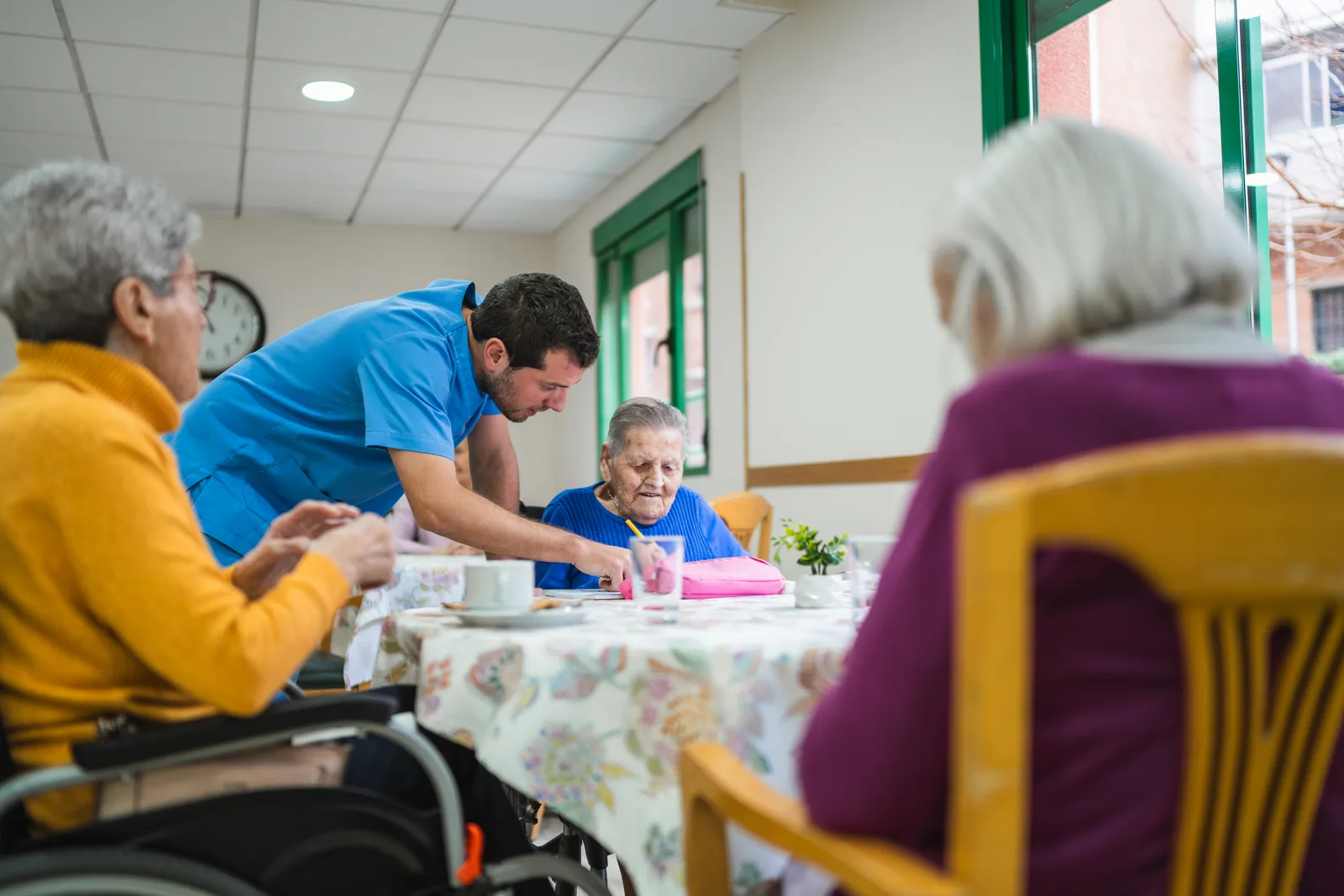
The general atmosphere says a great deal about the quality of care. A good care home exudes warmth, respect, and dignity. Residents appear well cared for, staff address them by name and with a smile rather than with mere clinical efficiency. Notice whether the seniors are engaged in activities, whether they are chatting with one another or with staff, and whether they seem comfortable in their own environment.
Visual quality indicators
- Impeccable cleanliness in common areas, day rooms, and any bathrooms visited
- Adequate natural light and a pleasant temperature in the rooms
- Absence of unpleasant odours (urine, strong chemical products)
- Personalised spaces in residents' rooms, with personal belongings visibly present
- Well-maintained and accessible recreational areas
- Functional safety systems: emergency call buttons, handrails, adequate lighting
Do not hesitate to ask to visit several rooms, including some that are currently unoccupied as well as some that are lived in. The differences between the two will tell you whether the presentation photographs reflect reality or merely an idealised version of it.
Essential questions for staff and management
The discussion with the care home's team is the moment when you can clarify all the practical aspects of care. Prepare a list of essential questions in advance and note down the answers so that you can compare them later with other options.
Begin by asking about the ratio of staff to residents. An optimal ratio ensures that each senior receives the attention they need. Also ask about staff turnover — a high rate of employee changeover can indicate management problems or inadequate working conditions, which directly affects the quality of care.
Questions about the care team
- How many nurses and care assistants are available on each shift?
- What specific training do the care assistants have in elderly care?
- Who is responsible in the event of a medical emergency, and what is the protocol?
- Is staff available around the clock or only during certain hours?
- How frequently are staff trained, and in which areas?
Also request information about the individualised care plan. Every senior has distinct needs, and a quality care home will develop a personalised plan based on the medical assessment and the resident's personal preferences. Ask how this initial assessment is carried out and how often the plan is reviewed.
Medical and care services offered
The medical aspect is perhaps the most important consideration when choosing a care home, particularly if your loved one has chronic conditions or special monitoring needs. Clarify exactly which medical services are included in the basic fee and which incur additional costs.
Ask whether there is an on-call doctor present on site or whether one is called in only when summoned by the care staff. Find out how the administration of medication is managed, who oversees it, and how it is stored. For individuals with conditions such as diabetes, dementia, or cardiovascular problems, it is essential that staff have specific experience in managing these conditions.
Medical services to check
- The presence of a dedicated doctor or arrangements with local medical practices
- Availability of nurses with training in geriatric care
- Clear protocols for emergencies and swift transfer to hospital
- Physiotherapy and physical rehabilitation services
- Monitoring of vital signs and medication administration
- Arrangements with specialists for periodic consultations
In cases where your senior prefers to remain at home but requires professional medical care, alternatives such as home care services also exist. For example, Trimedical - Îngrijiri medicale la domiciliu in Dobroești offers comprehensive home medical care that is safe, prompt, and professionally delivered around the clock, representing an option for families who wish to postpone a move to a care home for as long as possible.
Accommodation conditions and daily facilities
The quality of daily life in a care home depends greatly on the physical living conditions and the facilities available. Rooms must be more than simply clean spaces — they must allow seniors to maintain their dignity, privacy, and a degree of independence.
Visit both individual rooms and shared rooms, if both options exist. Observe the size of the room, the position of the window, access to the bathroom, and the space available for furniture and personal belongings. Ask whether residents are permitted to bring their own furniture or decorations to personalise the space.
Practical aspects to assess
- The location and accessibility of the bathroom — ideally en suite or very close by
- Functional alarm systems in the room and in the bathroom
- The ability to keep personal belongings secure
- Access to the outdoors: a garden, terrace, or balcony
- Adequate heating and cooling for all seasons
- Noise levels and privacy — how well soundproofed the rooms are
Do not overlook social and leisure activities either. A varied activity programme — ranging from gentle physical exercise to socialisation sessions, games, reading, or outings — contributes enormously to the emotional wellbeing of seniors. Ask to see the weekly schedule and observe whether there is sufficient variety and whether the activities are adapted to the different abilities of the residents.
Financial and contractual matters
Financial transparency is an important indicator of an institution's integrity. Request a clear breakdown of all costs, not just the basic monthly fee. Many families are surprised by additional costs that can arise: specialist medical services, medications, extra activities, and enhanced personalised care.
Read the contract carefully before signing it and, if necessary, consult a solicitor or a trusted person with experience of such documents. Check the clauses relating to the trial period, the conditions for terminating the contract, and the refund policy under various scenarios.
Essential financial questions
- What is the basic monthly fee and what does it include exactly?
- Which medical or care services are billed separately?
- Are there annual fee increases and how are these communicated?
- What happens if the resident's health deteriorates and additional services become necessary?
- Are there registration fees, deposits, or other initial costs?
- What is the billing policy and what are the payment terms?
If the family budget is limited, do not hesitate to discuss this openly. Some care homes offer assistance programmes or can suggest more affordable alternatives. What matters is finding a solution that is sustainable in the long term, not just for the first few months.
Warning signs you should not ignore
Even if a facility appears impressive at first glance, there are certain signs that should give you pause. Trusting your instincts is essential — if something seems wrong, it is probably worth investigating more thoroughly or looking at other options.
Avoid care homes that do not allow you to visit without advance notice or that restrict your access to certain areas. Complete transparency is the hallmark of an institution with nothing to hide. Also pay attention to the way staff speak about residents — with respect and empathy, or in an impersonal and mechanical manner.
Risk indicators
- Staff who avoid eye contact or appear irritated by your questions
- Residents left unsupervised in common areas with no stimulation or activity
- Frequent contradictions in the explanations given by different members of staff
- Refusal to provide a full list of fees or to explain the contract in detail
- Pressure to sign the contract quickly without time for reflection
- Absence of visible accreditation documents or refusal to present them
- Consistent negative comments from multiple independent sources
If you notice that residents are not being properly cared for — soiled clothing, neglected personal hygiene, untreated wounds — this is the most serious warning sign of all. No other advantage can compensate for inadequate basic care.
Frequently asked questions
How many care homes should I visit before making a decision?
Ideally, visit at least three to five care homes to have a solid basis for comparison. This will help you better understand the standards that exist and make it easier to identify which characteristics are truly important for your specific situation. Write down your impressions immediately after each visit so as not to confuse them.
Can I visit the care home outside of officially scheduled hours?
Many quality institutions actively encourage unannounced visits, viewing them as a demonstration of transparency. If a care home strictly limits visits to specific hours or rigid booking requirements, it is entirely reasonable to ask why. That said, do respect the need for minimal notice so as not to disrupt the residents' routine.
What should I do if my parent refuses to take part in visits?
This is a common and delicate situation. Try to involve them gradually, perhaps beginning with conversations about general needs for safety and company rather than about a "care home" as such. If the refusal persists but home care becomes impossible, consult a geriatrics or psychology specialist for communication strategies. In extreme cases, home care services such as those offered by Trimedical - Îngrijiri medicale la domiciliu can serve as an intermediate solution, providing time for adjustment.
How often can I visit my parent after they have moved into a care home?
Most care homes permit daily visits during certain hours. Check the exact visiting policy, including whether there are restrictions on visiting hours or the number of visitors at any one time. Good institutions encourage family involvement and may even allow participation in communal activities or shared mealtimes with the resident.
How do I verify whether the staff are genuinely qualified?
Request information about the qualifications of the medical staff — nurses, care assistants, and physiotherapists. You may ask about continuing professional development programmes and care quality audits. Professional bodies such as the Colegiul Asistenților Medicali can also confirm whether staff are registered and up to date with their professional training.
What should I do if unforeseen problems arise after the move?
Maintain open and regular communication with the care home's management. Most problems can be resolved through constructive dialogue. If the situation does not improve, review the contractual clauses regarding termination and explore other options. In serious cases of negligence, you may contact the supervisory authorities or associations for the protection of elderly persons.
Choosing a care home for a loved one is a complex decision that requires time, research, and careful assessment. Do not rush and do not allow yourself to be pressured into a decision that does not feel right. Every family and every senior has unique needs, and what works perfectly for others may not be ideal for your situation. If you are in the process of exploring your options and would like to speak with specialists about alternatives or about how to prepare for the transition, do not hesitate to seek professional guidance or contact experienced providers who can support you every step of the way.
This article is for informational purposes only and does not replace medical advice. For specific situations, please consult a specialist.
Previous
Rights of the Elderly Patient in Romania: What Families Need to Know
Next
Diabetes in Older Adults: A Practical Guide for Families
Similar articles

ECHO 2026 Barometer: how Romanians live after the age of 60 and what they think about care homes
9 November 2026
The Rights of the Elderly Patient in Romania — What the Family Needs to Know
9 November 2026
Training courses for carers: what every family needs to know
7 November 2026
Frequently Asked Questions About Alzheimer's Disease: Answers for Families
6 November 2026

Hearing Loss in the Elderly: A Practical Guide to Hearing Aids
5 November 2026
Documents for the care home: the complete family guide
2 November 2026