
Assessment Visit to a Care Home: What Every Family Should Know
A complete guide for families visiting a care home: essential questions, red flags, and quality criteria to help you make the right decision for your loved one.
Contents
The moment a family decides to visit a care home for their loved one is often laden with conflicting emotions: concern, guilt, hope and uncertainty. The decision to explore this option does not represent an abandonment of responsibility, but rather a mature expression of love – an acknowledgement that their loved one deserves professional care that families are sometimes unable to provide at home. But how do you choose the right place when every facility appears, at first glance, much the same?
An assessment visit is far more than a simple guided tour. It is the moment when a family can observe the real day-to-day life of the care home, ask the essential questions, and evaluate whether the institution's values align with their own needs and expectations. A well-prepared visit can make all the difference between a decision made with peace of mind and one made with lingering regrets.
In Romania in 2026, the number of private care homes for seniors has grown significantly, offering families more options – but also more challenges when it comes to making a choice. This guide will take you step by step through the evaluation process, helping you identify the essential quality criteria and ask the questions that truly matter.
Contents
- Preparing for the visit: what to check before you go
- First impressions: atmosphere and cleanliness matter
- The medical team and staff qualifications
- Facilities and living spaces
- Essential questions to ask the director
- Warning signs you should not ignore
- Observing interactions with current residents
- Financial and contractual matters
- How to make the final decision after multiple visits
- Frequently asked questions
Preparing for the visit: what to check before you go
An effective assessment visit begins with thorough preparation at home. Before scheduling your visit, it is essential to have a clear list of your loved one's medical and personal needs. These may include chronic conditions, mobility limitations, special dietary requirements or social preferences.
Preliminary online research is a valuable first step. Check the facility's website, reviews and any inspection reports published by public health authorities. Look for information about the care home's certifications and accreditations – these indicate compliance with national quality standards. You should also ask friends, GPs or social workers for recommendations based on real experience.
Documents to prepare before your visit
- A complete list of current medications and ongoing treatments
- Recent medical summaries and principal diagnoses
- The senior's personal preferences (diet, daily routine, hobbies)
- Specific questions relating to the family's particular needs
- The maximum budget available and the type of services required
Schedule your visit at a time when the care home is in full swing – preferably in the morning or afternoon, rather than at the weekend or during atypical periods. This way, you will observe the real daily routine, staff interactions with residents and the authentic atmosphere. If possible, visit unannounced, or request a second spontaneous visit to see how the facility operates under normal conditions.
First impressions: atmosphere and cleanliness matter
From the moment you step through the door, your senses will pick up important signals. The smell of the care home is an immediate indicator of hygiene standards: it should be clean, with no persistent unpleasant odours. If you notice a strong smell of disinfectant, this may indicate an attempt to mask other problems, rather than a genuinely high standard of cleanliness.
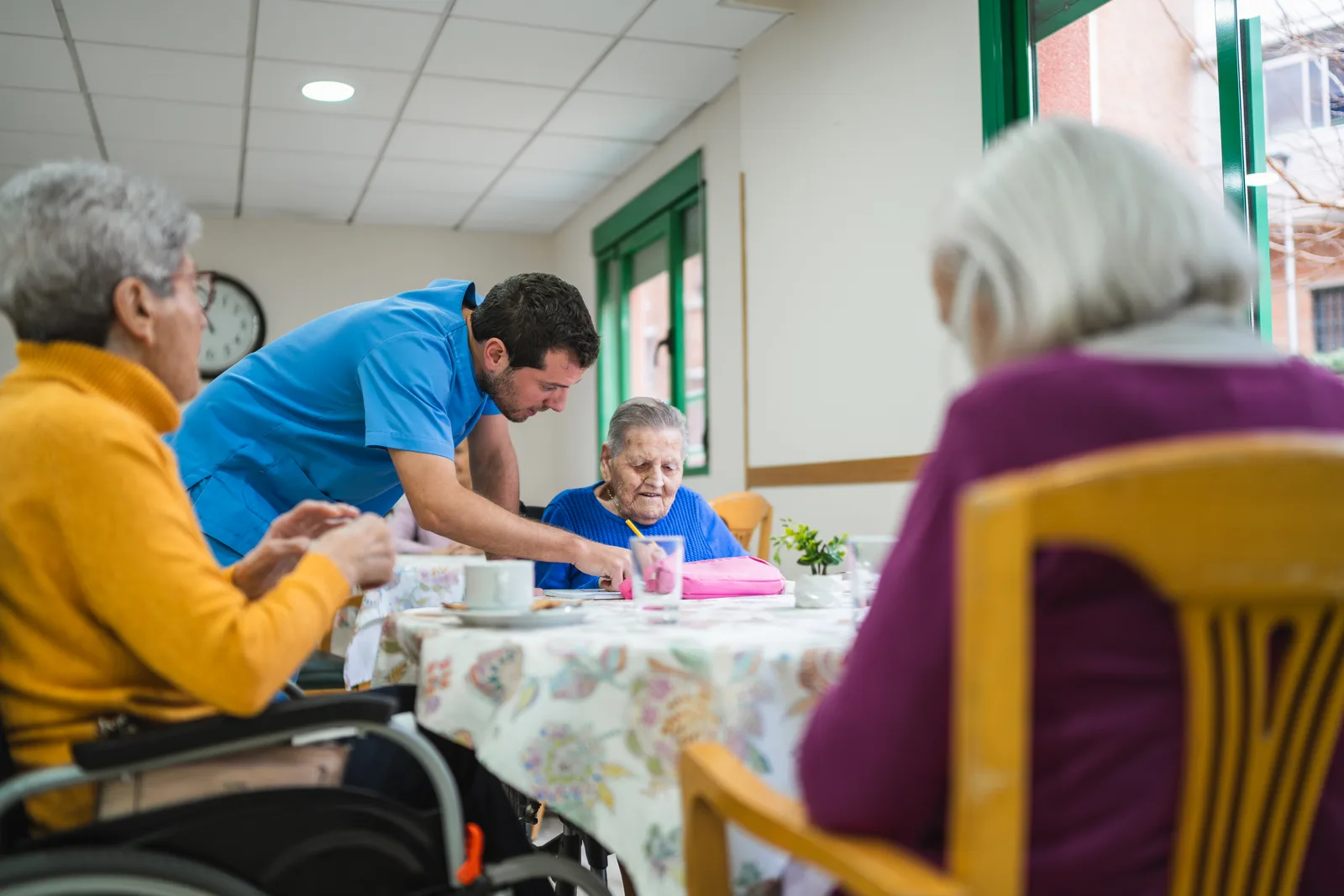
Observe the general atmosphere. Do the residents appear engaged in activities, or are they isolated in their rooms? Does the staff interact with them gently and respectfully, or do they seem rushed and distant? These seemingly small details speak volumes about the institution's culture. A quality care home invests in creating a warm environment, not merely a functional one.
Things to observe in the first few minutes
- The brightness and temperature of the communal areas
- The noise level and the quality of conversations
- The condition of the furniture and décor – does it feel like a home, or a cold institution?
- Accessibility for people with disabilities (ramps, handrails, door widths)
- The presence of safety features that are visible yet unobtrusive (alarm buttons, well-lit corridors)
For example, at Camin de Batrani LUXAB WEST in Municipiul București, Sector 6, visitors frequently remark on the warm, homely atmosphere, supported by bright spaces and furnishings that encourage socialisation. Luxab Sector 6 is not simply a care home for the elderly – it is a community supported by a dedicated medical team, something that is reflected in the way daily activities are organised and in the attention given to each individual resident.
The medical team and staff qualifications
The quality of care depends directly on the competence and dedication of the team. Ask about the staff-to-resident ratio, particularly for direct carers. An acceptable standard is one carer to every five to seven residents during the day, and one to every ten to twelve at night, depending on the residents' level of dependency.
Check the qualifications of the medical team. Is a doctor present on a permanent basis, or only on request? Are there full-time nurses? What training do the carers have – do they hold specialist qualifications in gerontology or palliative care? Qualified staff make the difference between mere survival and a life that is truly well cared for.
Questions about the medical team
- How quickly can a doctor intervene in an emergency?
- Is there a collaborative protocol with local hospitals?
- How is daily medication managed, and what verification system is in place?
- What is the staff turnover rate – a high turnover rate indicates management problems?
- Do staff receive ongoing training and supervision?
Also observe the body language and tone of staff when they speak about residents. Do they use names, or refer to "the old lady in room 5"? This subtle distinction reveals the level of respect and individualisation in the care provided. A quality care home treats each resident as a unique person, not as a number.
Facilities and living spaces
Ask to see several types of room, not just the show room. Check whether rooms can be personalised – can residents bring their own furniture, photographs or personal belongings? These details transform an institutional space into a genuine home.
Examine the bathrooms and sanitary facilities carefully. Are they adapted for people with reduced mobility? Are there grab rails, a level-access shower, bath seats? Is privacy respected, or are bathrooms shared without adequate partitioning? Hygiene in these spaces is fundamental to the health and dignity of residents.
Facilities checklist
- Sufficient space in the room to move around with a walking frame or wheelchair
- A functioning emergency call system in the room and bathroom
- Adequate ventilation and natural lighting
- Sound insulation between rooms for privacy
- Communal areas for social activities (dining room, lounge, garden)
- Accessible and safe outdoor areas
- A physiotherapy room or rehabilitation spaces
Ask about cleaning services – how often are rooms and communal areas cleaned? Who is responsible for laundering and maintaining personal bedding and clothing? These practical details are important for day-to-day comfort.
Essential questions to ask the director
Your conversation with the director or medical coordinator is the moment to clarify the fundamental issues. Do not be afraid to ask difficult questions – a serious professional will appreciate your interest and respond with transparency.
Begin with questions about the care philosophy. How does the care home approach maintaining residents' autonomy? What programmes of cognitive and social stimulation are on offer? How are situations involving deteriorating health or palliative care needs managed? The answers will reveal whether the institution has a long-term vision or takes a purely reactive approach to care.
Critical topics to discuss
- The admissions process and the transition period – how do they facilitate adjustment to the new home?
- The individualised care plan – how often is it reviewed, and who is involved in drawing it up?
- The communication policy with families – regular reports, visitor access, transparency in the event of incidents
- Procedures in the event of a medical emergency or crisis situation
- Daily activities and socialisation programmes – are they optional or compulsory?
- The management of dementia or challenging behaviours
Ask about concrete cases. How have they recently handled a difficult situation? This question can reveal a great deal about the team's competence and their approach to problem-solving. At Camin de Batrani LUXAB WEST, for example, the multidisciplinary team approaches each case individually with personalised care plans that are continually adapted as residents' needs evolve.
Warning signs you should not ignore
There are clear indicators that a care home is not meeting the required standards. Residents who appear physically neglected – dirty clothing, poor personal hygiene, untreated wounds – are the most serious warning sign of all. No explanation justifies this level of neglect.
Be wary of evasive answers. If staff avoid direct questions, restrict access to certain areas or refuse to provide information about certifications and inspections, these are serious grounds for concern. Transparency is the cornerstone of trust.
Red flags – signs you should look elsewhere
- Residents left alone for extended periods without supervision
- Insufficient staff, or staff who are clearly overwhelmed
- An absence of clear safety protocols or incomplete documentation
- Below-standard hygiene conditions in the kitchen or bathrooms
- A defensive or hostile attitude from management when questioned
- Residents showing visible signs of dehydration, malnutrition or pressure sores
- A lack of activities, or residents permanently in bed or in a chair without medical justification
Trust your instincts. If something makes you feel uncomfortable, even if you cannot pinpoint exactly what it is, that feeling is a valid signal. The family's emotional comfort in their relationship with the institution is essential for a successful long-term partnership.
Observing interactions with current residents
If possible, ask permission to speak with a few current residents or their families. Their direct experiences are the most valuable source of information available. Ask about their general satisfaction, what the first few weeks were like, what they appreciate most and what they would change if they could.
Observe the spontaneous interactions between staff and residents. Do carers smile and speak gently? Do they respect the pace and choices of each individual, or do they rush through routines for the sake of efficiency? Small gestures – a hand on the shoulder, a patient response to a repeated question – reveal the true care culture of the home.
Things to observe in interactions
- Staff address residents by name and with respect
- Residents appear comfortable and relaxed in the presence of carers
- There are genuine conversations, not merely one-sided instructions
- A variety of activities – some residents reading, others socialising, others resting
- How moments of confusion or agitation are handled
Pay attention also to the dynamics between residents. Are there friendships and positive interactions? Does the care home foster these relationships through group activities and social events? A vibrant resident community indicates management that understands care is not purely medical, but also human and social.
Financial and contractual matters
Financial clarity is essential to avoid unwelcome surprises. Request a full breakdown of costs – what does the basic monthly fee include, and which services are charged as extras? Some care homes appear to have lower fees but add supplementary costs for almost every additional service.
Check what happens in the event of temporary hospitalisation or absence. Do you pay the full fee to hold the place, or are there reductions? What policy exists for fee increases – are they announced with reasonable notice? In 2026, prices for private care homes in București vary considerably, from approximately 1,500 RON to over 4,000 RON per month, depending on the level of care and the facilities offered.
Contractual aspects to check
- The minimum contract duration and the terms for termination
- What happens to the security deposit and the conditions under which it is returned
- The clearly defined responsibilities of the care home versus those of the family
- The complaints and grievances procedure
- Clauses relating to changes in the level of care should the resident's condition deteriorate
- The institution's civil liability insurance
Never sign a contract on the spot, regardless of any pressure applied. Ask to take it home to study carefully, ideally with the assistance of a solicitor or specialist consultant. A reputable care home will respect your need to make an informed and considered decision.
How to make the final decision after multiple visits
After visiting several options, the decision-making process can feel overwhelming. Create an evaluation framework based on your priority criteria: the quality of the medical team, the atmosphere, the location, the cost, and any specialist facilities your loved one requires. Assess each care home against these criteria and compare them objectively.
Involve the elderly person in the decision as much as possible. Even if they have cognitive limitations, their preferences and comfort matter. Visit the shortlisted options together and observe their reactions. Sometimes, a positive emotional connection with a place or with the staff can be just as important as any objective checklist.
Final steps before making your decision
- Schedule an unannounced second visit to each shortlisted care home for a final check
- Request references from the families of current residents
- Check recent online reviews and any reported incidents
- Discuss the options with your loved one's GP for a medical perspective
- Resolve any remaining doubts before signing the contract
Once the decision has been made, plan the transition carefully. A quality care home, such as Camin de Batrani LUXAB WEST, will offer a gradual integration plan, easing the adjustment through preliminary visits, introductions to staff and familiarisation with the daily routine. In this way, the dedicated team can begin building a relationship of trust with the new resident right from the very start.
Frequently asked questions
How often should I visit the care home after admission?
There is no fixed rule, but in the first few weeks, frequent visits help with adjustment and allow you to monitor the transition. After that, establish a rhythm that maintains the emotional bond without disrupting the resident's routine. Most care homes allow daily visits within certain hours.
What should I do if I notice neglect or abuse after admission?
Document any concerning situations immediately, with photographs and detailed notes. Report the matter first to the care home's management via a formal written complaint. If you do not receive a satisfactory response within 48 hours, contact the Direcția de Sănătate Publică and, in serious cases, the Police. The safety of your loved one is the absolute priority.
Can I personalise the room and bring items from home?
Most care homes permit and actively encourage personalisation with photographs, small pieces of furniture, personal bedding and personal belongings, provided safety regulations are observed (no open flames, electrically tested appliances). This personalisation is enormously helpful in creating a sense of home and emotional comfort.
What happens if the resident's health deteriorates significantly?
Quality care homes have clear protocols for managing deteriorating health, including increasing the level of care or transferring the resident to a specialist facility. Check these procedures in the contract before admission and ensure that there is a process for rapid communication with the family in such situations.
How long does the adjustment period to a care home take?
Adjustment varies from person to person, but most specialists estimate between three weeks and three months. The first few days can be emotionally difficult for both the senior and the family. Patience, regular visits and encouragement to take part in activities all help to ease the transition.
Do I need to choose a care home that specialises in dementia?
If your loved one has advanced dementia or exhibits challenging behaviours, a specialist care home with staff trained in managing such situations is recommended. These units have additional safety protocols, environments designed to prevent wandering and specific therapeutic activities, providing a significantly better quality of life.
Choosing a care home for your loved one is one of the most important decisions a family will ever make. A thorough assessment visit, the right questions and careful observation of the details will give you the confidence that you are making the right choice. Do not rush the process – take time to visit several options, speak with residents and families, and listen to your intuition. If you would like to explore a trusted option in București, LUXAB WEST care home in Sector 6 offers comprehensive and transparent assessment visits, where the team will answer all your questions with professionalism and empathy.
This article is for informational purposes only and does not replace medical advice. For specific situations, please consult a specialist.
Previous
How to Manage Faecal Incontinence in Elderly People: A Complete Guide
Next
Chronic Pain in the Elderly: How to Recognise It and What Families Can Do
Similar articles

Memory and Attention Training: What Every Family Should Know
14 October 2026

Validation Therapy for Elderly People with Dementia: A Guide for Families
13 October 2026
How to Communicate Effectively with the Care Home's Coordinating Physician
3 October 2026
Rights of the Elderly Patient in Romania: What Families Need to Know
29 September 2026
Assessment Visit to a Care Home: A Complete Guide for Family Members
28 September 2026
Diabetes in Older Adults: A Practical Guide for Families
28 September 2026