
Dementia in the Elderly: When and How to Seek Specialist Help
Recognising the signs of dementia and seeking specialist help in time can radically transform your loved one's quality of life. Find out when the right moment is to ask for help and what options are available to you.
Contents
Maria realised something was wrong when her mother – always an organised woman – forgot to turn off the gas cooker for the third time in the same week. Repeated episodes of forgetfulness, confusion about what day it was, and difficulty finding the right words in conversation turned a vague worry into a painful certainty: her mother needed specialist help. Maria's story is not unique – millions of families face the challenges of dementia in their loved ones every year.
Dementia is not a single disease, but an umbrella term describing a set of symptoms that affect memory, thinking and social abilities severely enough to interfere with everyday life. For families, recognising the point at which "normal" forgetfulness becomes a warning sign can be overwhelming. Many families delay seeking help out of fear, denial, or simply a lack of information about what steps to take.
This article is here to support families facing these difficult questions: How do you tell the difference between normal forgetfulness and signs of dementia? When is the right time to consult a specialist? What forms of specialist support are available, and how do you choose the right option for your loved one? Understanding these aspects can make the difference between a poor quality of life and appropriate care that allows the senior to live with dignity.
Contents
- What dementia is and how it manifests
- Warning signs you should not ignore
- The difference between normal forgetfulness and dementia
- The main types of dementia in older adults
- The diagnostic process: what to expect
- When to seek specialist help
- Care options for people with dementia
- The family as a care partner
- Frequently asked questions
What dementia is and how it manifests
Dementia is a progressive decline in cognitive function that affects a person's ability to carry out daily activities independently. It is not a normal part of ageing, but the result of pathological changes in the brain that destroy nerve cells and the connections between them. Understanding the nature of this condition is the first step towards getting the right help.
The way dementia manifests varies from person to person, but it usually follows a progressive pattern. In the early stages, the signs can be subtle – difficulty finding words, forgetting recent events, or placing objects in unusual locations. As the disease advances, symptoms become more obvious and more debilitating, affecting long-term memory, the ability to make decisions, and even the recognition of close family members.
The areas affected by dementia
Dementia affects not only memory, but multiple aspects of cognitive and behavioural functioning:
- Memory – difficulty retaining new information and recalling recent or older memories
- Communication – problems finding the right words, following or participating in conversations
- Abstract thinking – difficulty solving problems, planning and organising
- Orientation – confusion about time, place or people
- Behaviour – personality changes, agitation, anxiety or social withdrawal
The impact on daily life
What sets dementia apart from occasional forgetfulness is its impact on independence. A person with dementia may struggle with activities they have performed their entire life – preparing meals, managing finances, driving, or even personal hygiene. These changes do not appear suddenly; they develop gradually, which is why recognising them is sometimes delayed.
Warning signs you should not ignore
Early recognition of the signs of dementia can make a significant difference to the quality of care and the quality of life of the person affected. Although every case is unique, there are certain manifestations that should prompt the family to seek a specialist medical assessment. Ignoring or downplaying these signs out of fear, or in the hope that things will "get better on their own", can delay the intervention and support that is needed.
One of the most important factors is the frequency and severity of symptoms. Occasional forgetfulness is normal at any age, but when episodes become repetitive, interfere with daily routine, and are accompanied by other cognitive or behavioural changes, it is time to act.
A complete list of warning signs
- Memory loss that affects daily life – forgetting recently learned information, asking the same questions repeatedly, increasing reliance on reminders or family members
- Difficulty with planning and problem-solving – trouble following a familiar recipe, managing bills, or concentrating on familiar tasks
- Confusion about time or place – losing track of the date, the season or their location, forgetting how they got somewhere
- Problems with speech or writing – stopping mid-conversation without knowing how to continue, repeating the same things, difficulty finding the right word
- Placing objects in unusual locations – putting keys in the fridge or the remote control in the wardrobe, being unable to retrace their steps
- Poor judgement – unusual financial decisions, neglecting personal hygiene, wearing clothing inappropriate for the season
- Withdrawal from social activities – giving up hobbies, avoiding social interaction, a decline in initiative
- Changes in mood and personality – confusion, suspicion, depression, fear or anxiety, irritability in unfamiliar situations
The difference between normal forgetfulness and dementia
This question troubles most families: "Is it just old age, or something more serious?" The distinction between age-related forgetfulness and that caused by dementia is not always clear-cut, but there are criteria that can guide this assessment. Understanding these differences helps you make the right decision about when to seek medical help.
Normal age-related forgetfulness is usually minor and does not progress rapidly. An older person may forget where they put their glasses, but will remember later. In dementia, the person may forget they wear glasses, or what they are for. The essential difference lies in the severity, frequency, and impact on independence.
A comparison between normal forgetfulness and signs of dementia
- Normal: You occasionally forget an acquaintance's name but remember it later | Dementia: You forget important appointments and cannot recall them afterwards
- Normal: You occasionally make a mistake when calculating a bill | Dementia: You have persistent difficulty managing money and paying bills
- Normal: You sometimes forget what day it is but work it out later | Dementia: You lose track of the date, the season, or where you are
- Normal: You occasionally need help with technology | Dementia: You can no longer use familiar devices or forget the steps involved in familiar activities
- Normal: You sometimes make a questionable decision | Dementia: You repeatedly make inappropriate or dangerous decisions
The main types of dementia in older adults
Not all forms of dementia are the same, and understanding the specific type can influence the care plan and the family's expectations. Each form has distinctive characteristics, a particular rate of progression, and specific challenges. A correct diagnosis, established by specialists, is essential for tailoring care to the senior's individual needs.
Alzheimer's disease
Accounting for approximately 60–80% of dementia cases, this is the best-known form. It is characterised by the accumulation of abnormal proteins in the brain that destroy the connections between nerve cells. Early symptoms include forgetting recent events, difficulty finding words and spatial disorientation. Progression is gradual but continuous, eventually affecting all aspects of cognitive function.
Vascular dementia
This is the second most common form and arises as a result of problems with blood circulation in the brain, often following strokes or micro-haemorrhages. Unlike Alzheimer's, it can follow a stepwise course, with sudden deteriorations followed by periods of stability. Symptoms vary depending on the area of the brain affected, but often include difficulty concentrating, slow thinking and problems with planning.
Other important forms
- Lewy body dementia – characterised by cognitive fluctuations, visual hallucinations and motor symptoms similar to Parkinson's disease
- Frontotemporal dementia – primarily affects personality and behaviour, and tends to appear at a younger age
- Mixed dementia – a combination of two or more types, most commonly Alzheimer's and vascular dementia
The diagnostic process: what to expect
The first step towards a correct diagnosis is consulting a GP, who will assess the symptoms and recommend further investigations or a referral to a specialist in neurology, geriatrics, or geriatric psychiatry. A dementia diagnosis is not based on a single test, but on a comprehensive assessment that may take several appointments and involves multiple components.
The diagnostic process can seem daunting, but it is essential for establishing an appropriate care plan. Doctors will want to rule out other reversible causes of cognitive symptoms – vitamin deficiencies, thyroid problems, depression, adverse medication effects, or infections. This methodical approach ensures that treatable conditions that can mimic dementia are not missed.
Components of the assessment
- Full medical history – discussions about symptoms, family history, current medications and existing medical conditions
- Physical and neurological examination – checking reflexes, balance, coordination and sensory function
- Cognitive tests – standardised assessments of memory, attention, language and problem-solving abilities
- Laboratory tests – blood tests to rule out reversible causes
- Brain imaging – MRI or CT scanning to identify structural changes, tumours or the effects of strokes
- Psychiatric assessment – to identify depression or other mental health conditions
The importance of early diagnosis
Although dementia cannot be cured in most cases, early diagnosis offers significant advantages. It allows treatments to be started that can slow the progression of symptoms, enables future planning whilst the person can still participate in decisions, provides access to support services, and opens up the possibility of taking part in clinical trials for new treatments.
When to seek specialist help
The decision to seek specialist help for a parent or partner with dementia is one of the most difficult a family can face. Many carers begin with the conviction that they can manage on their own, out of love and devotion. However, the reality of caring for someone with dementia is that needs increase progressively, and carer burnout can affect both the carer's own health and the quality of care provided.
There are certain critical moments that signal the need for professional help. When the senior's safety is at risk – whether through wandering, improper use of cooking appliances, frequent falls, or forgetting to take medication – this becomes an urgent priority. Similarly, when behaviours become difficult to manage at home – severe agitation, aggression, insomnia or hallucinations – the expertise of specialist staff becomes essential.
Signs that the family needs specialist help
- The primary carer is showing signs of physical or emotional exhaustion, depression or social isolation
- The senior's medical needs exceed the family's knowledge or capabilities
- The behaviour of the person with dementia is becoming unpredictable or dangerous
- The round-the-clock care required can no longer be provided by the family
- The senior's quality of life is declining due to a lack of adequate stimulation or socialisation
- Repeated family conflicts arising from care or treatment decisions
Examples of specialist services
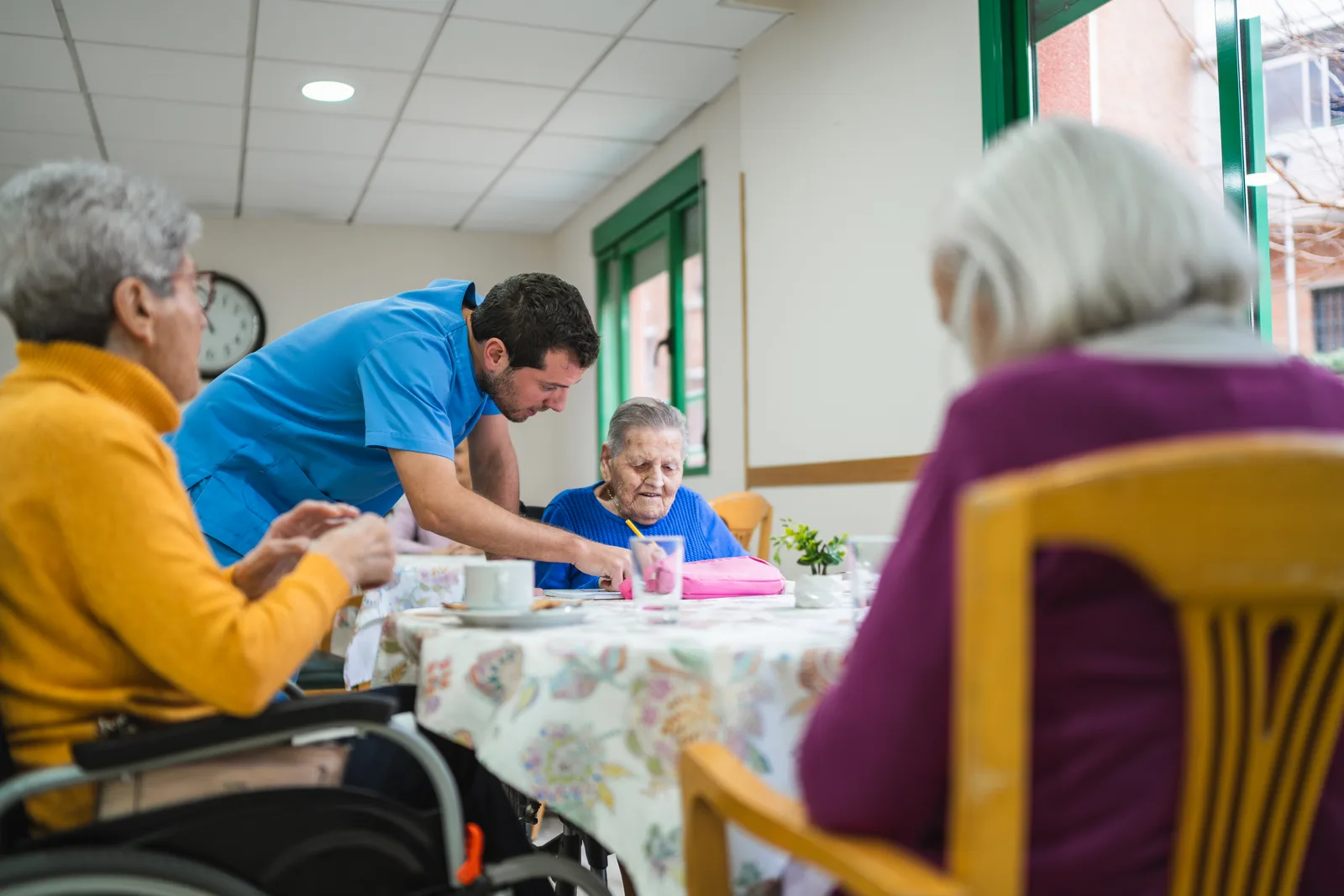
Specialist help does not necessarily mean immediate residential placement. There is a spectrum of options, ranging from home assistance for a few hours a day and day centres for people with dementia, through to residential facilities with specialist staff. At Cămin de Bătrâni LUXAB in Bucharest, for example, the multidisciplinary team is trained to provide personalised care for seniors with dementia at various stages, in an environment that combines safety with comfort and respect for each person's dignity.
Care options for people with dementia
The range of services available for people with dementia has expanded considerably, giving families more options to choose the approach that best suits the senior's needs and available resources. Each option has advantages and limitations, and the right choice depends on the stage of dementia, medical needs, the preferences of the senior and their family, and financial resources.
Home care
For mild to moderate stages, home care can be an excellent option, allowing the senior to remain in a familiar environment. This may include support from family members, supplemented by professional services – nurses, physiotherapists or professional carers who visit at home. The advantages include maintaining familiar routines and surroundings, but it requires constant coordination and can become overwhelming for the family as the disease progresses.
Day centres
These centres offer structured activities, supervision and socialisation during the day, allowing carers to work or rest. Good programmes for people with dementia include cognitively adapted activities, occupational therapy and meals, in a safe and stimulating environment. This is an excellent intermediate solution that extends the period during which the senior can remain at home.
Specialist residential care
Care homes specialising in dementia offer round-the-clock supervision, specifically trained staff, a purpose-adapted environment for safety, and therapeutic activities. Facilities such as Cămin de Bătrâni LUXAB offer not only medical care, but also cognitive stimulation programmes, occupational therapy and an environment in which seniors live with dignity, respect and comfort. Specialist staff are trained to manage the challenging behaviours associated with dementia and to provide emotional support for both the senior and their family.
Criteria for choosing the right option
- Stage of dementia – supervision and medical care requirements
- Safety – risk of wandering, falls or improper use of objects
- Family capacity – availability, health and capabilities of carers
- Financial resources – costs and long-term sustainability
- Quality of services – staff qualifications, carer-to-resident ratio, activities on offer
- Location – proximity to family for regular visits
The family as a care partner
Regardless of the type of care chosen – at home or in a residential facility – the family's role remains essential to the wellbeing of the senior with dementia. The relationship with the care team should be one of partnership, in which the family contributes knowledge about the loved one's history, preferences and personality, whilst the professionals bring medical expertise and experience in managing dementia.
Open and regular communication with the care team is fundamental. The family should share information about observed changes, dietary preferences, routines that calm the senior, or past events that bring them joy. In turn, professionals should keep the family informed about changes in condition, behavioural shifts or new medical needs.
Important roles for the family
- Advocacy – ensuring the senior's needs and preferences are respected and communicated to the team
- Emotional continuity – regular visits, bringing familiar objects, joining in activities
- Monitoring – observing the quality of care and raising any concerns
- Support in decision-making – participating in care planning and important medical decisions
- Connection to the past – sharing life stories that help staff better understand the person
Caring for the carer
An often-overlooked aspect is the wellbeing of family members themselves. The stress of caring for someone with dementia can lead to burnout, depression and health problems. It is essential that carers accept help, take regular breaks, maintain their own social relationships, and seek support groups or counselling when needed. A carer who is physically and emotionally well is able to provide far more effective support to their loved one.
Adapted communication with people with dementia
As dementia progresses, communication becomes increasingly challenging for both the person affected and their family. Understanding how communication abilities change and adapting your own style of interaction can reduce frustration and maintain emotional connection. Effective communication is not just about words – it also involves tone of voice, body language and the environment in which the interaction takes place.
In the early stages, the person may have difficulty finding words or following complex conversations. As the disease advances, they may lose the ability to speak coherently altogether, but remain able to perceive emotions and tone of voice. Non-verbal communication – eye contact, gentle touch, facial expressions – becomes increasingly important.
Strategies for effective communication
- Simplicity – use short sentences, simple words, one idea at a time
- Patience – allow time for a response; do not rush or interrupt
- Eye contact – position yourself at the same level and maintain eye contact to hold their attention
- A calm, positive tone – even if the words are not understood, tone conveys reassurance
- Avoid arguing – if the person believes something that is not true, do not insist on correcting them; validate the emotion rather than the "fact"
- Simple questions – favour closed questions (yes/no) rather than complex open-ended ones
- Routine – conversations in the same place at the same times can reduce confusion
Frequently asked questions
Is dementia hereditary?
There is a genetic component to some forms of dementia, but the majority of cases are not strictly hereditary. If one of your parents has dementia, your risk is slightly increased, but it is by no means certain that you will develop the condition. A healthy lifestyle – physical exercise, a balanced diet and cognitive stimulation – can reduce the risk.
How much does caring for a person with dementia cost in Romania?
Costs vary significantly depending on the type of service and the level of care required. Home care with a personal assistant can cost between 2,000 and 4,000 RON per month, whilst care in a specialist residential home can range from 1,500 to 5,000 RON per month, depending on location, facilities and the level of medical care provided. It is important to discuss costs and included services transparently before making a decision.
Can dementia be stopped or reversed?
Most forms of dementia are progressive and cannot be fully cured or reversed. However, some causes of dementia-like symptoms – vitamin deficiencies, thyroid problems, medication side effects – are reversible if treated promptly. This is why a correct and early diagnosis is crucial. Current treatments can slow progression and improve quality of life.
How do I choose the right care home for a parent with dementia?
Look for facilities with staff who specialise in dementia, not just general elderly care. Visit in person, observe interactions between staff and residents, check the staff-to-resident ratio, and ask about activity programmes and how challenging behaviours are managed. A quality facility, such as Cămin de Bătrâni LUXAB, will be transparent, will encourage questions, and will involve the family in the care plan.
Is it normal to feel guilty when choosing residential care?
Yes, feelings of guilt are extremely common, but it is important to understand that choosing professional care does not mean abandonment. Often, this decision is made out of love, when a person's needs exceed the family's capacity to provide safe and adequate care. The senior's quality of life and safety must come first, and professional care can provide both in a way that the family alone cannot sustain in the long term.
How long does dementia typically last?
Progression varies greatly from person to person. From the first symptoms to the advanced stages, the course can span anywhere from 4 to 20 years, with an average of approximately 8–10 years for Alzheimer's disease. Factors influencing progression include age at diagnosis, type of dementia, general state of health, and the quality of care and cognitive stimulation received.
Dementia is a complex challenge that affects not only the person diagnosed, but the entire family. Recognising the early signs, seeking a specialist medical assessment and choosing the right care options are essential steps in ensuring the quality of life and dignity of your loved one. You are not alone on this journey – there are dedicated professionals and support structures ready to accompany you. If you recognise the signs described in this article in someone close to you, do not delay – speak to your GP or contact a specialist in senior care to receive the right guidance.
This article is for informational purposes only and does not replace medical advice. For specific situations, please consult a specialist.
Previous
How to Manage an Elderly Person's Medication in a Care Home
Next
How to Cope with Anticipatory Grief When a Parent Is Seriously Ill
Similar articles

Occupational Therapy at Home for the Elderly: A Complete Guide
11 October 2026
How to Manage Specialist Referrals for an Elderly Person with Multiple Chronic Conditions
10 October 2026
Telemedicine for the Elderly: How to Prepare for an Online Consultation
9 October 2026
Aphasia After Stroke: How to Communicate With an Elderly Person Who Can No Longer Speak Normally
8 October 2026

Volunteering in Care Homes for the Elderly: How to Involve Family and Community
7 October 2026
Preventing Pressure Sores: What Every Family Should Know
6 October 2026