
Hormone therapy in menopause, reassessed after 25 years of reluctance
FDA has relaxed its warnings on menopausal hormone therapy. A Romanian specialist explains what the new data says about the benefits and risks.
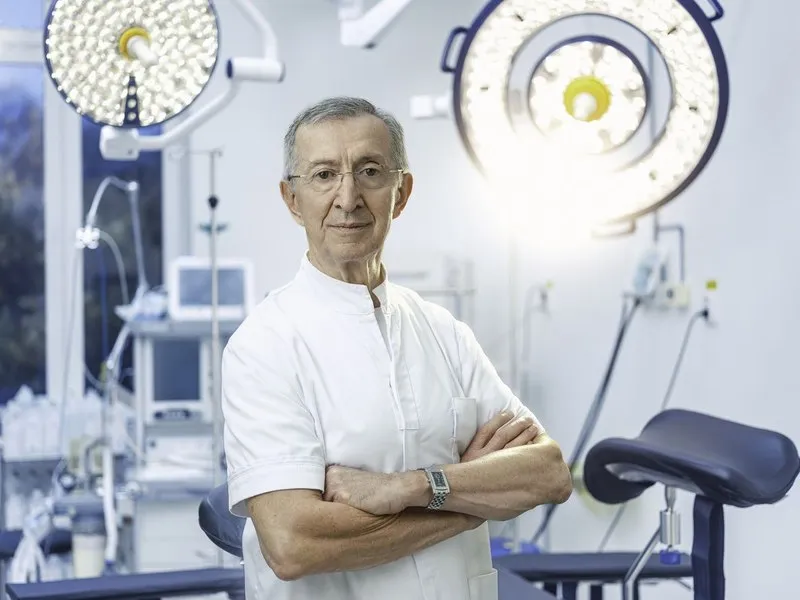
For nearly 25 years, menopausal hormone therapy was widely avoided due to fears surrounding cardiovascular and breast cancer risks. A recent analysis by Prof. Dr. Gheorghe Peltecu, a specialist in obstetrics and gynaecology and professor at UMF "Carol Davila", shows that these concerns must be reassessed in light of new scientific evidence.
Menopausal symptoms significantly affect quality of life. Hot flushes and night sweats occur in approximately 75% of women and can last for years, frequently accompanied by insomnia, anxiety, fatigue, joint pain, and vaginal dryness.
In November 2025, American authorities announced a major shift: the Food and Drug Administration (FDA) requested the removal of strict warnings regarding menopausal hormone therapy, following a reinterpretation of data accumulated over recent decades. In February of this year, the FDA officially approved label changes for an initial group of menopausal hormonal products.
"For nearly 25 years, hormone therapy was widely avoided, primarily due to fears surrounding cardiovascular and breast cancer risks. Today, we understand that these risks are not uniform and depend on essential factors such as the patient's age, the timing of treatment initiation, and the type of therapy used," explains Prof. Dr. Gheorghe Peltecu.
In the early 2000s, the international HERS (Heart and Estrogen/progestin Replacement Study) and Women's Health Initiative (WHI) studies reported an increased risk of cardiovascular disease and breast cancer in women undergoing hormone therapy, leading to a dramatic decline in its use worldwide. Subsequent reanalysis of the data revealed, however, that many of these risks were influenced by the timing of therapy initiation, as the majority of study participants were older women, far removed from the onset of menopause.
What current data shows
Hormone therapy can have a favourable safety profile when initiated within the so-called "window of opportunity" — that is, within the first 10 years of menopause onset. During this period, cardiovascular risk is not significantly elevated, the benefits for symptom relief are considerable, and quality of life can be substantially improved.
Risks in context
One of the most widely discussed risks remains that of breast cancer, which varies depending on the type of therapy and duration of use. For combined hormone therapy (oestrogen + progesterone), administered for 5 years starting from age 50, the data shows:
- one case of breast cancer in approximately 50 women, with daily administration;
- one case in approximately 70 women, with intermittent administration.
Oestrogen-only therapy carries a significantly lower risk, estimated at one case in 200 women.
Furthermore, correct use of combined therapy reduces the risk of endometrial cancer, through the protective effect of progesterone on the uterine lining. Menopausal hormone therapy is also associated, according to meta-analyses, with a reduced risk of colorectal cancer.
"It is essential that these figures are understood in context. We are not talking about a uniform or inevitable risk, but rather a balance between benefits and risks that must be assessed individually for each patient," emphasises Prof. Dr. Gheorghe Peltecu.
Not a universal treatment
Specialists caution that hormone therapy is not suitable for all women and should only be recommended following a thorough medical evaluation, encompassing personal history, risk factors, and any associated conditions. Treatment is not recommended in cases such as a history of breast cancer, thromboembolic events, or severe cardiovascular disease.
"Hormone therapy is not a universal treatment, but for certain patients it can radically transform quality of life. What matters is that the decision is an informed one, grounded in current scientific evidence and an open dialogue between doctor and patient," concludes Prof. Dr. Gheorghe Peltecu.
Prof. Dr. Gheorghe Peltecu is a specialist in obstetrics and gynaecology, a professor at UMF "Carol Davila", and one of the pioneers of gynaecological and breast oncological surgery in Romania, with a career spanning over 35 years and thousands of surgical procedures performed. He is also the initiator of the educational project "Stimă nu Stigmă" (Respect, not Stigma), through which he aims to educate the public and dismantle the stigma associated with female cancers.
Content paraphrased and adapted by SeniorHelp from verified public sources.
Original source: Adevărul →Previous article
ANMDMR blocks Colebil and Panczebil in pharmacies due to active substance concerns
Next article
Hypertension, diabetes, smoking: three risk factors between ages 45-65 that can delay dementia
Similar news
Peripheral Arteriography: the investigation that reveals blockages in the arteries of the legs and arms
25 September 2026

Socola Study: 6 in 10 Romanians Quickly Forget Essential Details. When Should We Be Concerned
25 September 2026

Palpitations, high blood pressure, chest pain: when you need a cardiologist
24 September 2026
Radiotherapy in the treatment of lung cancer: when and how it is used
24 September 2026

Aerophagia: when bloating and belching come from swallowed air, not from food
23 September 2026

Nearly 300,000 Romanians have dementia, and the number could reach 400,000 by 2050
22 September 2026