
S&P Decides Romania's Credit Rating Today: What a Potential Downgrade to "Junk" Status Would Mean
Friday, 2 October 2026, S&P will review Romania's BBB- rating, which carries a negative outlook. A downgrade would move the country into speculative-grade territory.
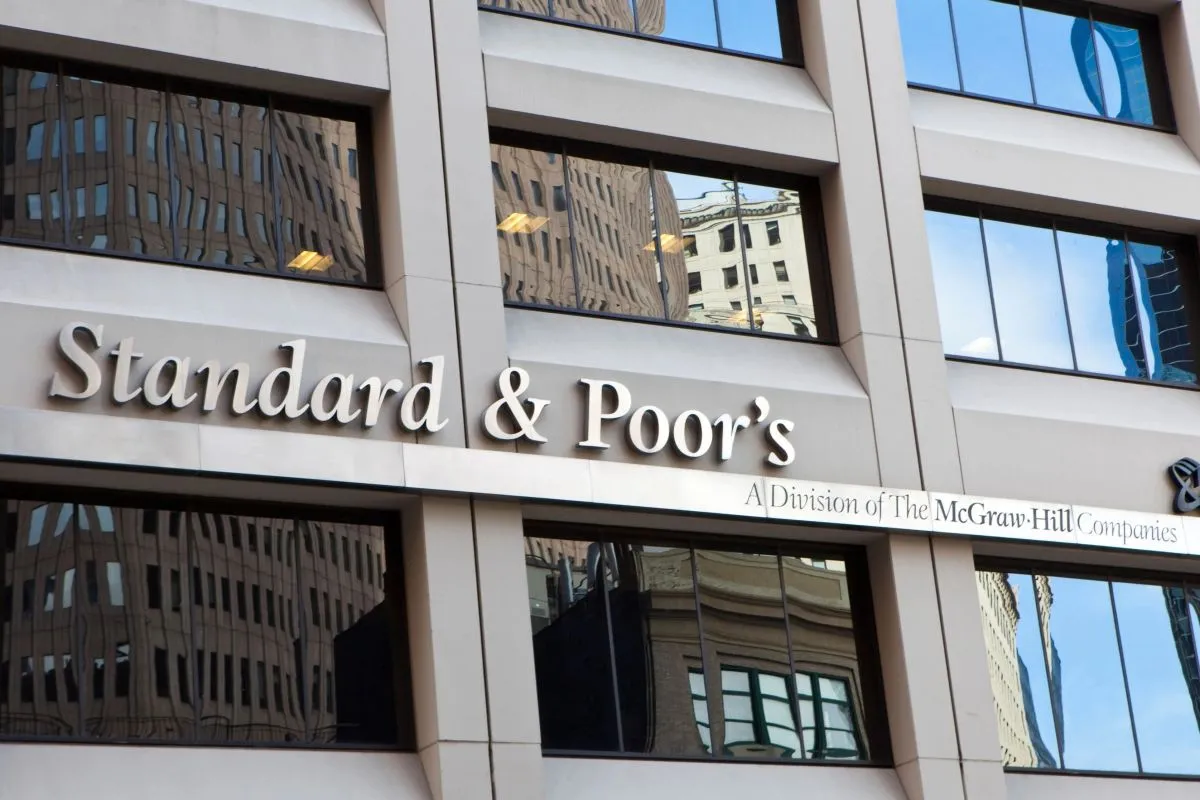
Romania awaits the decision of S&P Global Ratings on Friday, 2 October 2026 — an assessment with a direct impact on the country's borrowing costs. Romania currently holds a BBB- rating with a negative outlook, the lowest rung of the investment-grade category. A potential downgrade would move Romania into speculative territory, commonly known as "junk".
The timing of the review coincides with difficulties in forming a new government and mounting pressure on the state budget. Deficit reduction and the credibility of fiscal consolidation measures are key factors in the agency's decision.
The rating situation ahead of S&P's verdict
On 15 May 2026, S&P affirmed Romania's BBB-/A-3 ratings, maintained the negative outlook, and announced 2 October as the date of the next review. BBB- is the lowest level within investment-grade territory, and the negative outlook signals a risk of downgrade rather than a decision already taken.
The agency has several options: it may retain the current rating and outlook, change the outlook alone, or actually revise the rating itself. Today's assessment therefore does not automatically mean a move to "junk" status.
What Fitch and Moody's have decided
The other two major rating agencies have also kept Romania at the lower boundary of the investment-grade category. Fitch reaffirmed the BBB- rating with a negative outlook on 31 July 2026, whilst Moody's maintained a Baa3 rating, also with a negative outlook, on 7 August — Baa3 being the equivalent of BBB- on Moody's scale.
All three agencies thus place Romania just one step away from speculative territory. Should S&P downgrade the country, the decision would affect only that agency's assessment, without automatically altering Fitch's or Moody's ratings. Romania would retain its investment-grade status from the other two agencies, provided they do not revise their own evaluations.
What a downgrade to "junk" would entail
The principal risk is a rise in financing costs: if Romanian bonds were perceived as riskier, investors might demand higher interest rates to lend to the state, which would increase interest expenditure and the cost of refinancing public debt.
A decline in investor confidence could also affect capital flows. In its May report, S&P highlighted Romania's vulnerability, driven by its large external financing requirement and the significant share of non-resident investors in holdings of government securities.
Nevertheless, the impact of any potential downgrade by S&P would also depend on the decisions of the other agencies — it would not automatically mean the simultaneous loss of investment-grade status across all three ratings.
The link with the political deadlock
The review comes at a time when difficulties in forming a new government are hampering the adoption of measures needed to reduce the deficit. A Reuters analysis from 1 October notes that the prolonged political impasse and rising public debt are intensifying pressure on Romania's rating.
S&P has already signalled that risks related to the consolidation of public finances and the reduction of external imbalances remain elevated. Today's decision will reveal whether these vulnerabilities prompt a change to the rating or whether the current assessment is maintained.
Content paraphrased and adapted by SeniorHelp from verified public sources.
Original source: Realitatea →Previous article
ROBOR rose to 6.11%, the second consecutive increase. Loan repayments are becoming more expensive
Next article
Romanians Are Earning More, but Expenses Are Rising Even Faster. Economists Explain Why
Similar news
 Foto ilustrativă
The Senate has voted on the ROBOR credit recalculation law. Romanians could receive money back from banks
14 October 2026

Senate wants recalculation of loans affected by ROBOR, based on IRCC
14 October 2026

Bușoi: The Next Government Must Quickly Decide Whether to Extend the Gas Support Scheme
14 October 2026

Average net salary fell to 5,688 RON in August, below inflation
13 October 2026

Average net salary fell in August 2026, inflation wiped out wage increases
13 October 2026

Annual inflation rose to 6.61% in September, INS announces
13 October 2026