
Romanians Are Earning More, but Expenses Are Rising Even Faster. Economists Explain Why
Household incomes rose by 3.2%, while expenditure increased by 4.5%. Nearly 85% of money goes on food, taxes and bills, according to INS data.

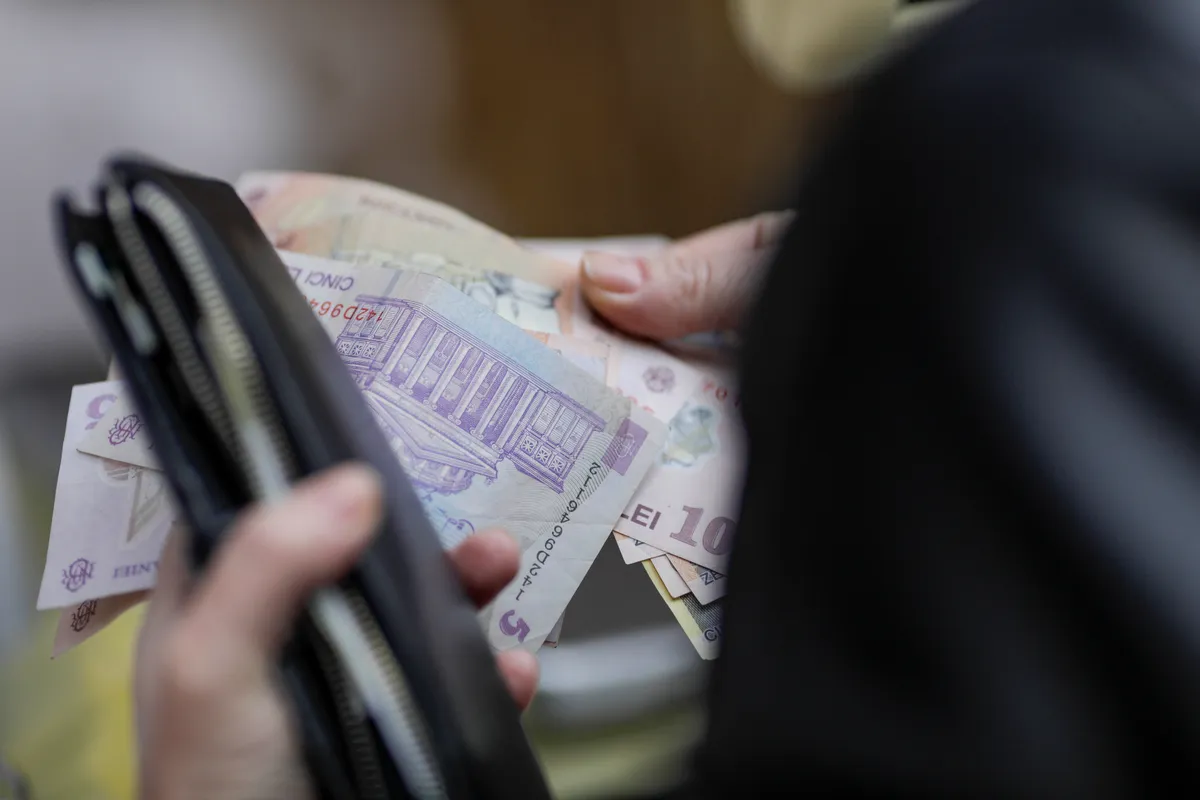
Although wages have risen, Romanians find their money stretching ever thinner, as price increases over the past year have outpaced income growth.
According to data from the National Institute of Statistics, the average household income rose by 3.2% in the first quarter of this year compared to the same period last year. The problem is that, over the same period, expenditure climbed by 4.5% — faster than incomes.
The average monthly income of a family reached nearly 9,500 RON, whilst expenditure exceeded 8,000 RON per month. Almost 85% of a household's earnings go towards food, taxes, and bills, and from what remains, people can barely manage to save anything.
Digi24 journalist Mihai Vălușescu illustrates the phenomenon with a simple example from the market: "If last year we could buy a kilogram of tomatoes for 11 RON, this year we have to either reduce the quantity or dig into our pockets and add at least 1 RON to the total."
Ciprian, a young man from Timișoara, describes how his financial situation has changed: "When I was on a lower salary, I could put money aside. Now, even though I'm on a good salary, I'm getting on well and I've gained experience, my money still doesn't go far enough. We give up the little treats and focus strictly on the basics."
Anca says that when the budget tightens, the first thing people cut back on is discretionary spending: "Usually the luxuries, so to speak. We don't go out as much. When we do go out, we economise a little — we no longer order 7 courses at a restaurant; we share a portion instead." Other people interviewed said they are trying to cope by working up to 14 hours a day.
Ovidiu Constantin Bunget, a professor at the Faculty of Economics and Business Administration at the West University of Timișoara, explains the paradox: "Utility costs have gone up, VAT has increased for the end consumer, and what is far more significant is that the purchasing power of the nominal wage has been eroded by the inflation rate. Averages can create a somewhat misleading impression that things are improving. The situation is more uncomfortable, particularly for those on very low incomes."
Inflation has severely eroded Romanians' wages over the past year. It was only in August that the inflation rate began to ease, falling to 6.2%, after several months in which it had hovered around 10%.
Content paraphrased and adapted by SeniorHelp from verified public sources.
Original source: Digi24 →Previous article
S&P Decides Romania's Credit Rating Today: What a Potential Downgrade to "Junk" Status Would Mean
Next article
Genetic testing for breast cancer: who is it recommended for and what do the results show
Similar news
Average net salary fell to 5,688 RON in August, below inflation
13 October 2026

Annual inflation rose to 6.61% in September, INS announces
13 October 2026

Higher bills this winter: Hidroelectrica raises energy prices, gas prices are also on the rise
11 October 2026

Electricity bills could rise by 12-15%, energy suppliers warn
9 October 2026

BNR explains why the euro has climbed to new all-time highs against the leu
8 October 2026
BNR Keeps Key Interest Rate at 6.50%. Inflation Falls, Economy Remains Fragile
8 October 2026