
Romania enters talks with S&P on Thursday: what the risk of a downgrade to "junk" status means
Romania begins talks with S&P on Thursday, 24 September, ahead of the agency's verdict on 2 October regarding its sovereign credit rating. A downgrade would move the country into the speculative "junk" category.
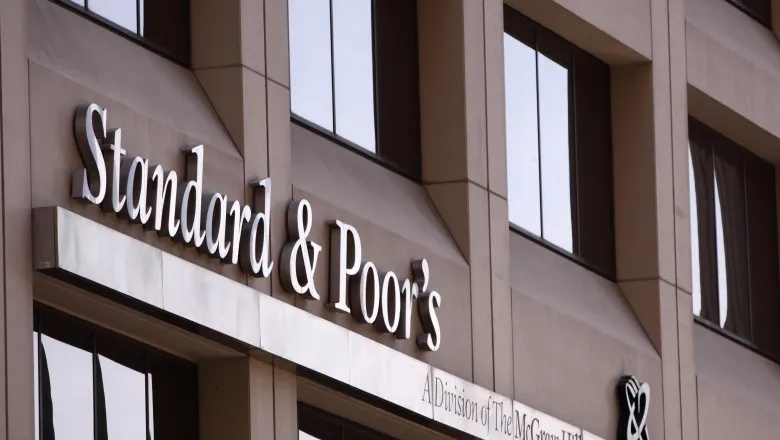
Starting Thursday, 24 September, representatives of the rating agency S&P are holding discussions with Romanian authorities, ahead of the verdict announced for 2 October regarding the country's sovereign rating. This is a significant moment, as Fitch and Moody's have already maintained Romania's investment-grade status this summer, albeit at the lower boundary and with a negative outlook. S&P thus remains the last relevant assessment in this cycle.
Romania currently holds an S&P rating of BBB-/A-3 with a negative outlook – the last rung before the speculative category, commonly known as "junk". A potential downgrade of even one notch would push the country into this category, which could restrict certain investors' access to Romanian government securities and make borrowing more expensive for the Romanian state.
The S&P mission will hold talks with the Ministry of Finance and other institutions involved in public finance management. The agency will examine both the trajectory of budgetary indicators and the prospects for fiscal correction measures to continue in the coming years.
The assessment comes against the backdrop of a prolonged period of political instability: the Bolojan Government was dismissed on 5 May, two prime ministerial nominees failed to secure investiture in Parliament, and Siegfried Mureșan is now attempting to form a new Cabinet without a clear parliamentary majority.
What the "junk" category means and why it matters
A country rating reflects how confident the agency is that a state will repay its debts on time. Ratings of BBB- and above are considered "investment grade", whilst anything below this threshold falls into the speculative, or "junk", zone. A drop below this level would not prevent Romania from borrowing, but it would reduce the number of institutional investors permitted, under their own regulations, to hold such assets.
Adrian Codîrlașu, President of CFA România, explained in July to Digi24.ro: "Certain companies and investment funds are no longer permitted, under their own regulations, to invest in such assets."
In practice, some pension funds and investment funds would be compelled to sell their Romanian securities, and the state would need to find alternative creditors willing to accept a higher level of risk, which would result in higher interest rates. The potential consequences include: greater financing costs for the state and companies, capital outflows, and pressure on the exchange rate.
A negative decision from S&P would not automatically cancel the investment-grade ratings maintained by Fitch and Moody's, but it would send a clear signal to markets of increased risk associated with Romania, prompting investors to demand higher yields for financing the state.
Interest expenditure is already elevated. Finance Minister Alexandru Nazare announced at the beginning of September that it had exceeded 40 billion RON in the first seven months of the year, an increase of more than 26% compared with the previous period. More expensive financing would mean fewer funds available in the budget for investment and public services.
The political crisis – the principal risk
Romania enters the discussions with S&P with a number of favourable arguments: the budget deficit fell, in the first seven months of 2026, to 2.34% of GDP, down from 3.99% in the same period of 2025. In nominal terms, the deficit was reduced by 28.36 billion RON, and investment grew by almost 1 [figure truncated in source].
Content paraphrased and adapted by SeniorHelp from verified public sources.
Original source: Digi24 →Previous article
Euro reaches a new all-time high: 5.2788 RON, announced by the NBR on Wednesday
Next article
Aerophagia: when bloating and belching come from swallowed air, not from food
Similar news
 Foto ilustrativă
Unemployment rose in August to 260,919 people, the majority aged over 55
25 September 2026
ROBOR at three months rose to 5.93%, the highest level in the past seven months
24 September 2026
 Foto ilustrativă
Nazare, after meeting with S&P: budget execution, the main argument for maintaining the rating
24 September 2026

Rising maintenance bills: pensioners fear the costs of this winter
24 September 2026
Alexandru Nazare: there is no risk to the payment of pensions and salaries at this time
24 September 2026

INSCOP Poll: over half of Romanians see no economic recovery; 61% among AUR voters
23 September 2026