
Peripheral Arteriography: the investigation that reveals blockages in the arteries of the legs and arms
Pain when walking, coldness in a limb, or wounds that won't heal may signal poor circulation. Peripheral arteriography pinpoints the exact location of the blockage and can be immediately followed by treatment.
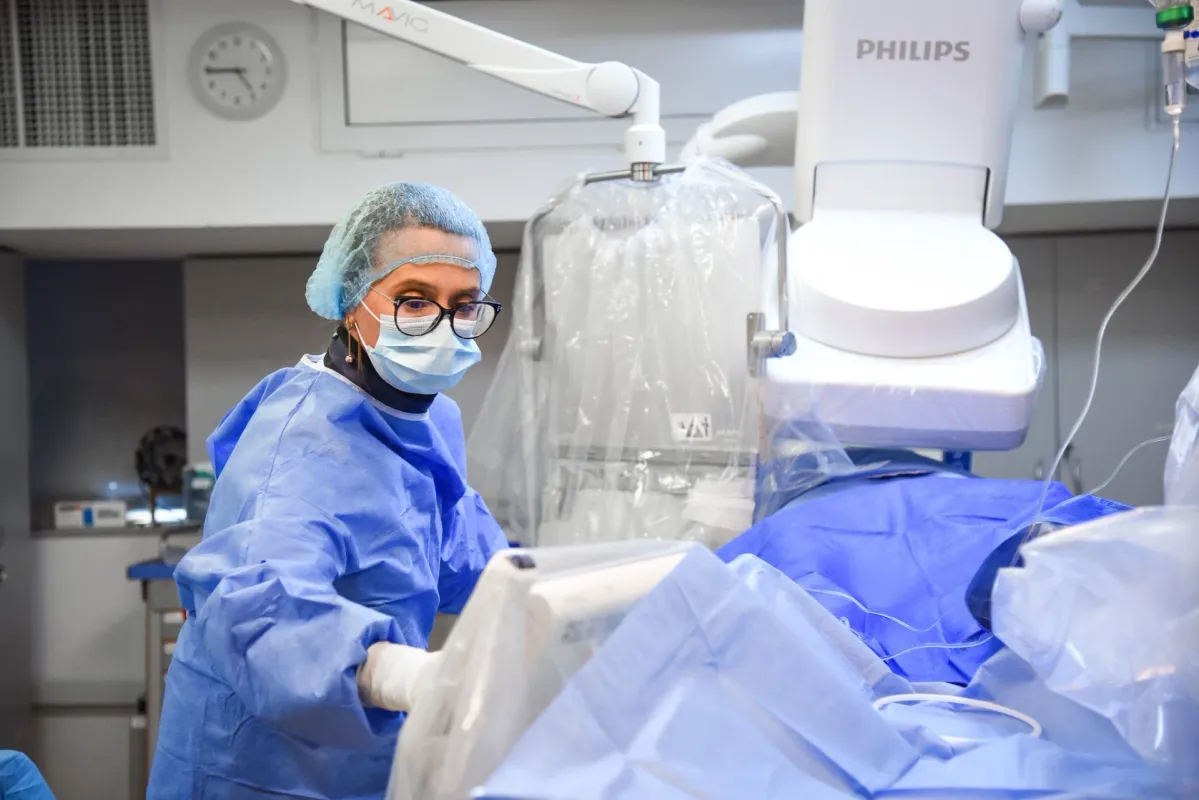
Leg pain when walking, a persistent sensation of coldness in a limb, or wounds that heal slowly and with difficulty may be signs that blood is no longer circulating normally through the peripheral arteries. In such cases, doctors need the clearest possible picture of the exact area where blood flow is obstructed.
Peripheral arteriography is the investigation that makes this possible: by inserting a catheter into a blood vessel and using a contrast agent, doctors can visualise the arteries in real time, under radiological guidance. The procedure precisely identifies the location of narrowings or blockages (occlusions) and their extent — essential information for determining the appropriate treatment for peripheral arterial disease.
A major benefit of this investigation is that, in suitable cases, the diagnosis can be immediately converted into treatment within the same procedure. Using the same catheter, doctors can perform balloon angioplasty and, where necessary, insert a stent to restore blood circulation. In this way, peripheral arteriography can serve a dual role — diagnostic and therapeutic — avoiding, in many selected cases, the need for conventional surgery.
Article supported by SANADOR.
Content paraphrased and adapted by SeniorHelp from verified public sources.
Original source: Realitatea →Previous article
Unemployment rose in August to 260,919 people, the majority aged over 55
Next article
Socola Study: 6 in 10 Romanians Quickly Forget Essential Details. When Should We Be Concerned
Similar news

Socola Study: 6 in 10 Romanians Quickly Forget Essential Details. When Should We Be Concerned
25 September 2026
Palpitations, high blood pressure, chest pain: when you need a cardiologist
24 September 2026
Radiotherapy in the treatment of lung cancer: when and how it is used
24 September 2026
Aerophagia: when bloating and belching come from swallowed air, not from food
23 September 2026
Nearly 300,000 Romanians have dementia, and the number could reach 400,000 by 2050
22 September 2026

Study: REM sleep linked to lower risk for dozens of diseases
22 September 2026