
Rogobete: The Pay Law Could Trigger an Exodus of Doctors from Hospitals
Former Health Minister Alexandru Rogobete warns that the new Pay Act, if it remains in its current form, could lead to a mass exodus of doctors from Romania.
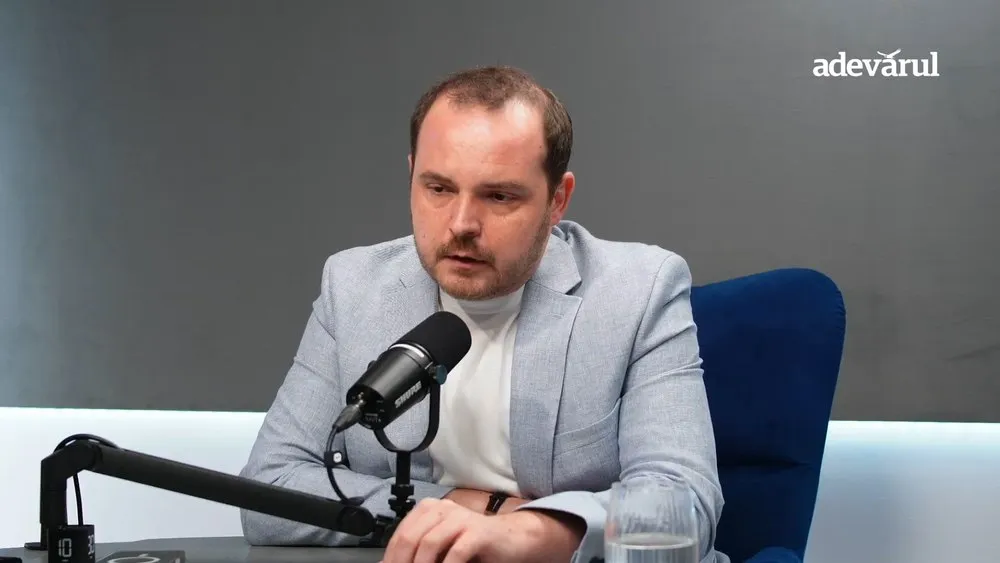
Former Health Minister Alexandru Rogobete warned, during the "Interviurile Adevărul" programme, that the current draft of the Pay Law risks triggering the largest wave of departures from the Romanian healthcare system since the Revolution.
According to him, a decline in the financial attractiveness of the medical profession could push an increasing number of doctors to choose to work in other European Union member states.
"If this bill passes in its current form, there will be the biggest exodus of medical staff since the Revolution. I can guarantee this, because nobody will come to work in the healthcare system on a salary one and a half times lower than the EU average, and most will leave this country, as they have counter-offers from EU member states," said Alexandru Rogobete.
The former minister stressed that the effects of such a reform must be carefully assessed before the law is adopted in its final form, particularly as the Romanian healthcare system is already facing staff shortages in many medical units across the country.
Why the law was not adopted earlier
Rogobete also explained why the Pay Law was not implemented during the period when PSD held the Ministry of Labour: simultaneously funding both this law and the new Pensions Law would not have been financially feasible.
Both reforms are part of the National Recovery and Resilience Plan (PNRR), but their combined budgetary impact would have been too great had they been implemented at the same time, the former minister explained.
"The PNRR had two costly laws — the Pensions Law and the Pay Law. Both couldn't be done in the same year, meaning 2023, when they were scheduled, because the deficit would have spiralled and there were no financial resources. Then-Prime Minister Ciucă negotiated with the European Commission and split them into two. The first was the Pensions Law, also costly and with a significant impact, and they moved the Pay Law to the final payment request, meaning 2026, precisely to create a gap between the two laws so as not to burden the national budget even further. The version (ed. note: of the Pay Law) has been in the works since 2023, with all the trade unions, with Mrs Bucura, with Mr Rafila — I was involved as well. This has been in progress since 2023," Alexandru Rogobete stated.
Interim Minister Cseke Attila's position
Alexandru Rogobete also commented on the stance of interim Health Minister Cseke Attila, who has opposed the current form of the draft law.
The former minister said he values the UDMR leader's administrative experience and noted that he too had warned of the risk that the reform could reduce incomes within the healthcare system.
"I have a great deal of appreciation and respect for Minister Cseke. He is a professional who knows public administration very well. His position has been firm and clear — he stated that he does not support this bill, and the minister himself said that salaries would fall and that he cannot back such a measure," Alexandru Rogobete declared.
Content paraphrased and adapted by SeniorHelp from verified public sources.
Original source: Adevărul →Previous article
Rogobete, criticism over hospital reductions based on ICU occupancy rates
Next article
A persistent cough lasting more than three weeks: doctors warn of lung cancer risk
Similar news
2.2 million pensions miscalculated? What CNPP says about the Court of Accounts report
18 September 2026
 Foto ilustrativă
Court of Accounts audits confidentiality bonuses in pension houses
17 September 2026
 Foto ilustrativă
Rogobete criticises the Health reform: "Cutting isn't reform"
17 September 2026
 Foto ilustrativă
Daniel Dăianu: there is no need to freeze pensions and salaries in 2027
17 September 2026
 Foto ilustrativă
Health: 100 million RON missing for salaries, money taken from HIV, Mother-Child, Transfusions
16 September 2026
 Foto ilustrativă
Rogobete: "The healthcare system is screaming" – urgently requests funds from the Reserve Fund
16 September 2026