
Patient aged 69, oxygen-dependent, died after a fall at the Cluj Pneumophthisiology Hospital
A 69-year-old man, admitted with pulmonary fibrosis, died on Saturday after falling in the ward's bathroom. The hospital has launched an internal investigation, with conflicting accounts regarding the response time.
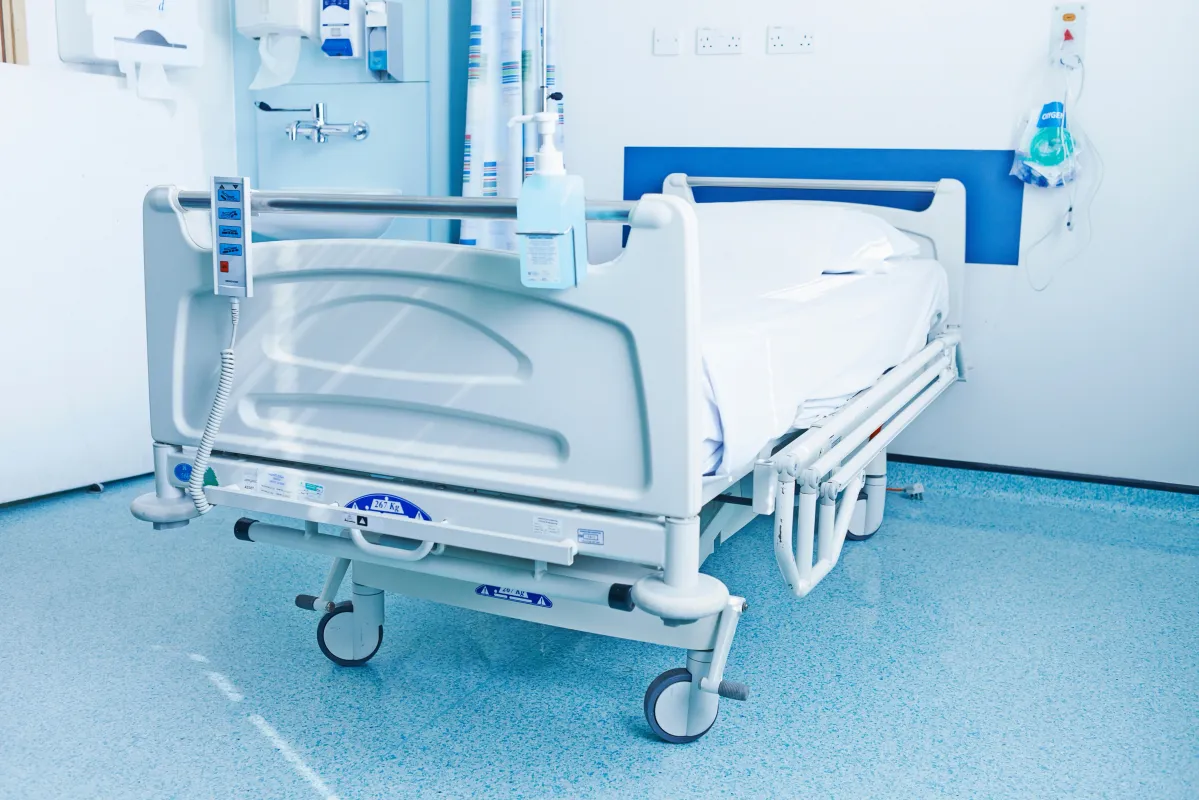
A 69-year-old patient receiving oxygen therapy died on Saturday after falling in the bathroom of the Pneumology ward at the Pneumoftiziology Hospital in Cluj-Napoca, where he was an inpatient.
According to information published in the local press (Știri de Cluj), the man had reportedly made his way to the bathroom without his recommended respiratory support device and fell there. A fellow patient from the ward went into the corridor and called for help.
What the hospital manager says
Prof. dr. Milena-Adina Man, the hospital's manager, told Știri de Cluj: "It took 30 seconds from when the patient called out for help – saying that the man had fallen in the bathroom – to the moment the on-call doctor arrived. The doctor came down with six nurses: three from the ward upstairs and three from the ground floor."
According to the manager, as soon as staff became aware of the fall, the on-call doctor requested support from the Intensive Care team. The ICU doctor, who was in another building, reportedly arrived within approximately three minutes, by which point resuscitation efforts had already been initiated: "Resuscitation manoeuvres began practically within seconds," she added.
The patient's health condition
The hospital manager stated that the man had been diagnosed with idiopathic pulmonary fibrosis in fibrotic exacerbation and was also suffering from renal failure, for which he was undergoing dialysis. "This means that 85% of patients die within the first three months. Renal failure on dialysis," said Prof. dr. Man.
The patient's condition required respiratory support, and he also had a ventilator that was to be used in conjunction with oxygen. According to the manager, the patient's family had been informed of both the diagnosis and the prognosis, and were aware that untreated idiopathic pulmonary fibrosis carries an estimated survival of between three and five years. Due to his renal failure, the patient had been unable to undergo antifibrotic treatment, and according to the hospital, he had also not been using the ventilator supplementing his oxygen to maintain his saturation levels.
Medical assessment on the day of the incident
Hospital management states that the patient had been monitored on the day of his death as well: following the ward round, his treatment and oxygen levels were adjusted, blood samples were taken, and the on-call doctor subsequently returned to the room for a further check. The manager noted, however, that when the patient made his way to the bathroom, he had not followed the recommendation to use the ventilator: "He went to the bathroom. He didn't stay on the ventilator as he had been advised. He went to the bathroom and fell there."
A relative's account
Journalists from Știri de Cluj were also contacted by a relative of another patient who had been in the ward at the time of the incident. The woman did not witness the event directly, but relayed what she had been told by her hospitalised family member. According to this account, the patient had tripped over the oxygen tube on his way to the bathroom and fallen, striking his head: "From what I understood, the man had an oxygen tube. With no one there to help him, he went to the bathroom, tripped over the tube, fell, hit his head, and died." This version of events was contradicted by hospital management following consultations with the on-call doctor.
The woman also reported that her relative and another patient in the ward had called out for help on Saturday evening at around 19:00, and that someone had only arrived approximately 10 minutes later. She further claimed that patients had been moved out of the ward for 30 to 40 minutes before being transferred to another room, and that the deceased patient's body had remained at the scene for approximately four hours before being removed.
Internal inquiry and police involvement
Prof. dr. Milena-Adina Man stated that, regardless of the initial internal checks, the hospital had launched a case review procedure, which would include taking statements from patients who had been in the ward at the time, in order to establish the precise sequence of events.
Police also attended the hospital, their presence forming part of standard procedure in the event of any patient fall: "The Police came – they come every time, for every fall," the manager explained.
The hospital management's initial findings contradict the claim that 10 minutes elapsed before medical staff intervened. According to the manager, the on-call doctor arrived within approximately 30 seconds, and resuscitation efforts began immediately, before the arrival of the Intensive Care doctor.
Content paraphrased and adapted by SeniorHelp from verified public sources.
Original source: Realitatea →Previous article
How body composition is measured: the DXA Total Body scan
Next article
Lumbar Disc Herniation with Spinal Canal Stenosis: the Case of a Surgically Treated Patient
Similar news

Elderly people tricked with "free medical assessments" into taking out loans for expensive devices
6 October 2026

Romania, 3rd in the EU for Poverty Risk: 27.4% of the Population Affected
21 September 2026

Little money, long distances: there are Romanians who haven't seen a doctor in over a decade
21 September 2026

Ambulance Services in 17 Counties Without Funding for September. Union Calls for Budget Rectification
16 September 2026
Ambulances in 17 counties left without funds for material expenses in September
16 September 2026
17 Ambulance Services Without Funds to Cover September Expenses
16 September 2026