
Mureșan blames PSD-AUR for the leu's fall: "They are creating instability and economic uncertainty"
Siegfried Mureșan links the depreciation of the leu to PSD-AUR votes against the Bolojan and Mureșan governments. The euro climbed to 5.34 RON, ahead of S&P's verdict on Romania's credit rating.
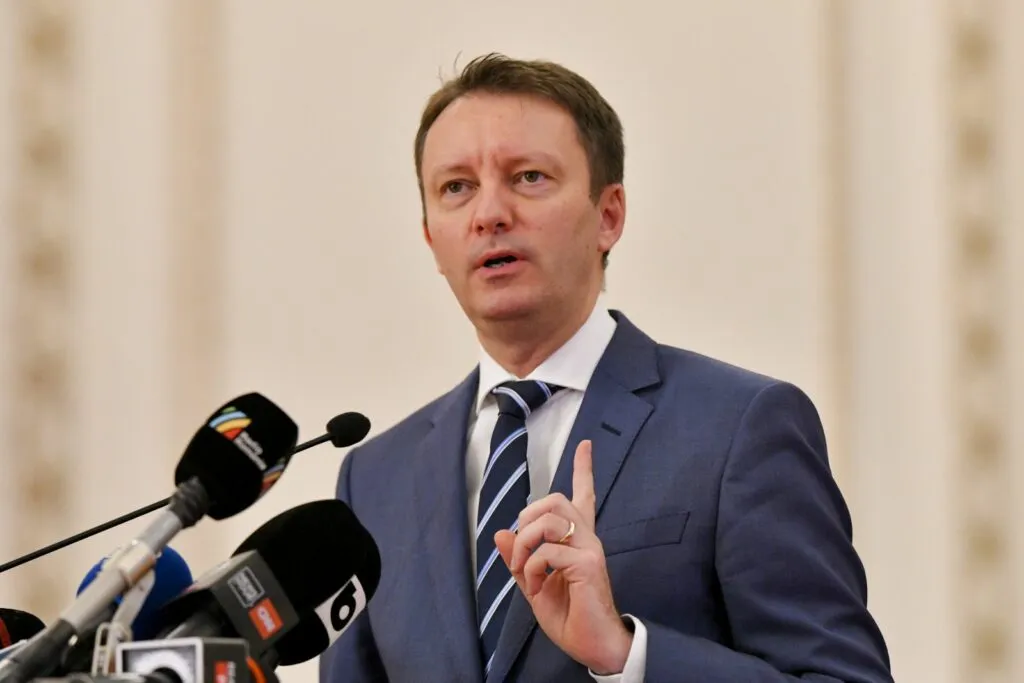
Siegfried Mureșan criticised PSD on Friday following the rapid depreciation of the national currency over recent days. The former prime minister-designate links this development to the political crisis caused, he argues, by votes from PSD and AUR — which first brought down the Government led by Ilie Bolojan, and this week led to the rejection of the Cabinet he himself had proposed.
"The leu has depreciated sharply at two points over the past year: during the PSD–AUR motion of no confidence against the Government led by Ilie Bolojan, and this week, when PSD–AUR once again rejected the pro-European government I proposed," Mureșan wrote.
According to him, since the motion of no confidence against the Bolojan Cabinet was initiated, the leu has depreciated by more than 5%.
"PSD costs us money both when it is in government and when it is in opposition. In government, it costs us money through the enormous deficit that people are then left to cover. In opposition, it costs us money by creating political instability and economic uncertainty," Mureșan added.
Euro climbs from 5.27 to 5.34 lei
These statements come against the backdrop of a sharp movement in the foreign exchange market. On Friday, 2 October, the euro was trading at around 5.34 lei on the interbank market, having stood at 5.27–5.28 lei on Thursday. The last official exchange rate published by the NBR, for 1 October, had been 5.2777 lei per euro.
This development is unfolding amid heightened political instability. On Wednesday, Parliament rejected the Cabinet proposed by Siegfried Mureșan, which received 182 votes — below the threshold of 233 required for investiture. PSD and AUR did not support the proposed governing formula.
Romania awaits S&P's verdict
Adding to the tension: S&P Global Ratings is due to publish a new assessment of Romania's sovereign credit rating on Friday. The country currently holds a BBB-/A-3 rating with a negative outlook — the last rung within the investment-grade category.
According to Reuters, political instability, rising public debt, and the next government's capacity to continue fiscal consolidation are all factors being closely monitored by investors and rating agencies. Any deterioration in the risk perception surrounding Romania could affect the borrowing costs faced by the state, as well as investor appetite for Romanian assets, including the leu.
Content paraphrased and adapted by SeniorHelp from verified public sources.
Original source: Mediafax →Previous article
Flu vaccination has begun: who receives the vaccine for free and who gets a 50% subsidy
Next article
COPD and Severe Asthma: Major Risks for Patients and the Healthcare System
Similar news
 Foto ilustrativă
The Senate has voted on the ROBOR credit recalculation law. Romanians could receive money back from banks
14 October 2026

Senate wants recalculation of loans affected by ROBOR, based on IRCC
14 October 2026

Bușoi: The Next Government Must Quickly Decide Whether to Extend the Gas Support Scheme
14 October 2026
Average net salary fell to 5,688 RON in August, below inflation
13 October 2026

Average net salary fell in August 2026, inflation wiped out wage increases
13 October 2026

Annual inflation rose to 6.61% in September, INS announces
13 October 2026