
Innovative medicines: Romanians wait twice as long as Europeans for approved treatments
50 innovative medicines are awaiting reimbursement in Romania. Patients wait an average of 1,100 days, compared to 597 in Europe.
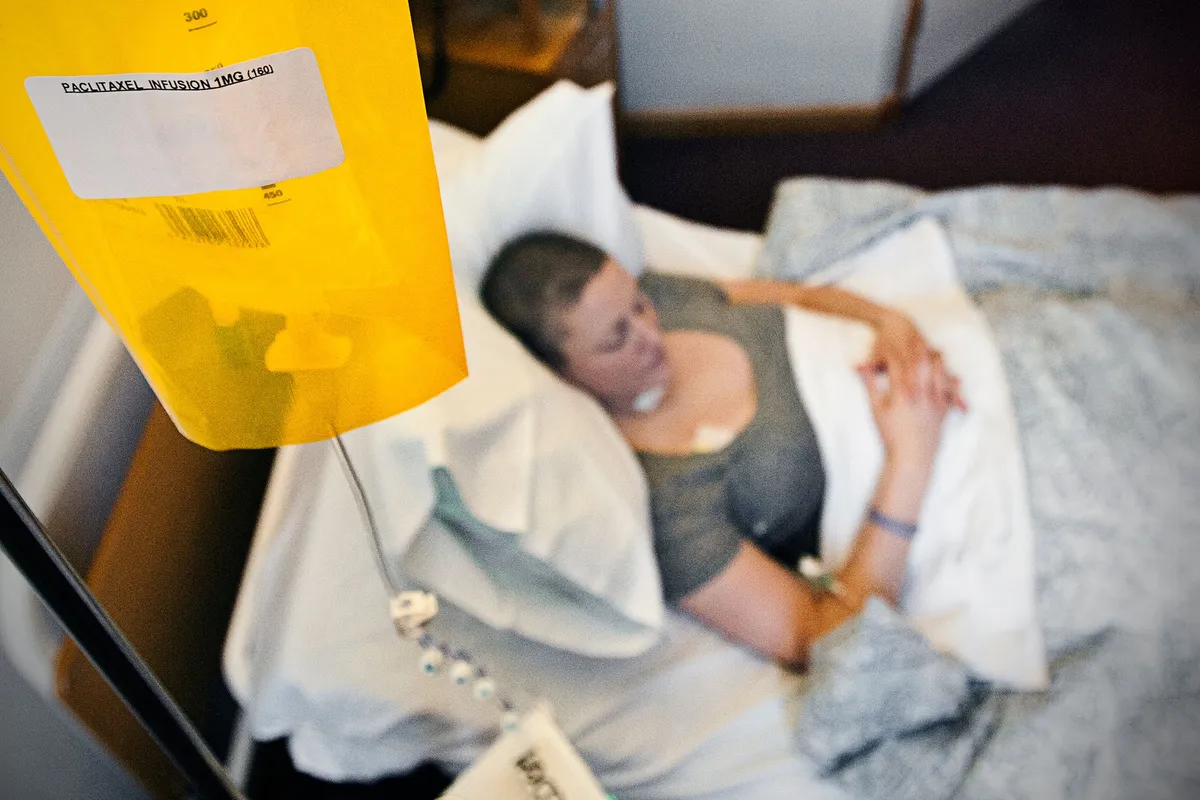
Patients in Romania wait almost twice as long as the European average to access innovative medicines. According to the Romanian Association of International Medicines Manufacturers (ARPIM), treatments approved between 2021 and 2024 reached Romanian patients after approximately 1,100 days, whilst the European average is 597 days.
Currently, 50 innovative medicines — for oncological, cardiac, neurological conditions and rare diseases — are awaiting inclusion on the list of reimbursed medicines. The Ministry of Health confirmed, in a response to Digi24, that steps are under way for 33 of these to reach patients, but the formalities regarding administration protocols have not yet been completed.
The case of a patient with multiple myeloma
Camelia Soceanu has multiple myeloma (Kahler's disease), a type of blood cancer that affects the bone marrow. Thanks to the treatment she is receiving, she is able to lead a nearly normal life and continues to go to work.
"The treatment is extremely effective, because, as you can see, I am a normal person. I can go about all my personal affairs, but the moment the myeloma makes itself known, things deteriorate," the patient explains.
The medicine she is being treated with has received approval from the National Medicines Agency, but has not yet been added to the reimbursement list. For the time being, she receives the treatment through a donation programme run by the pharmaceutical company that manufactures it.
"The thing is, donations are also limited, and we expect the pharma company to tell us it can no longer sustain this programme," says Camelia Soceanu. "Things will deteriorate very sharply and quickly, and death becomes the outcome. The sword is hanging over our heads."
The legislation is not being observed
Dr Ioana Bianchi, Director of External Relations at ARPIM, highlights that legislation exists setting out the timeframes within which the list of reimbursed medicines should be updated, but that this is currently not being adhered to.
Patient representatives stress that the delays mean not only suffering, but also greater costs for the healthcare system in the long run.
"Every delay in reimbursing medicines leads to the worsening of illness, disability, and even the death of the patient. If we do not treat in time, we treat at far greater expense and with significant loss of human life," says Rozalina Lepădatu, President of the Association of Patients with Autoimmune Diseases.
"The fact that innovative medicines are not reimbursed does not mean that these costs are reduced, because the disease progresses. Patients end up being hospitalised more frequently," adds Dr Ioana Bianchi.
Major disparities compared to other countries
Romania spends €138 per capita on medicines, compared with approximately €220 on average in neighbouring states and €550 on average in Western countries.
"We have the right to life, and the state should look after us and understand that we are in a grave situation. This is a matter of life and death," concludes Camelia Soceanu.
Content paraphrased and adapted by SeniorHelp from verified public sources.
Original source: Digi24 →Previous article
Coughing at mealtimes: when it can be a sign of reflux or a swallowing disorder
Next article
Romania's pharmaceutical production exceeded 7 billion RON in 2025, with the top three players holding half the market
Similar news
College of Physicians calls for government reforms: on-call duties paid at 2017 salary levels
14 October 2026
 Foto ilustrativă
Patients with chronic illnesses warn they risk running out of treatments. Appeal to authorities
14 October 2026
 Foto ilustrativă
Crisis hits the state budget: 20,000 social care employees risk going without pay
14 October 2026
CNAS Opens Competition for 16 Director General Positions at Health Insurance Houses
14 October 2026
Health sector needs 8 billion RON by year's end, Rogobete warns
13 October 2026

Ministry of Health Requests 800 Million RON: Without Funding, Emergency Services and Ambulance Risk Disruption
13 October 2026