
Finances See Signs of Economic Stabilisation, Despite GDP Falling by 0.4%
Minister Nazare says that European investments have increased by 56%, the external deficit and inflation are falling, although GDP declined slightly in the second quarter.
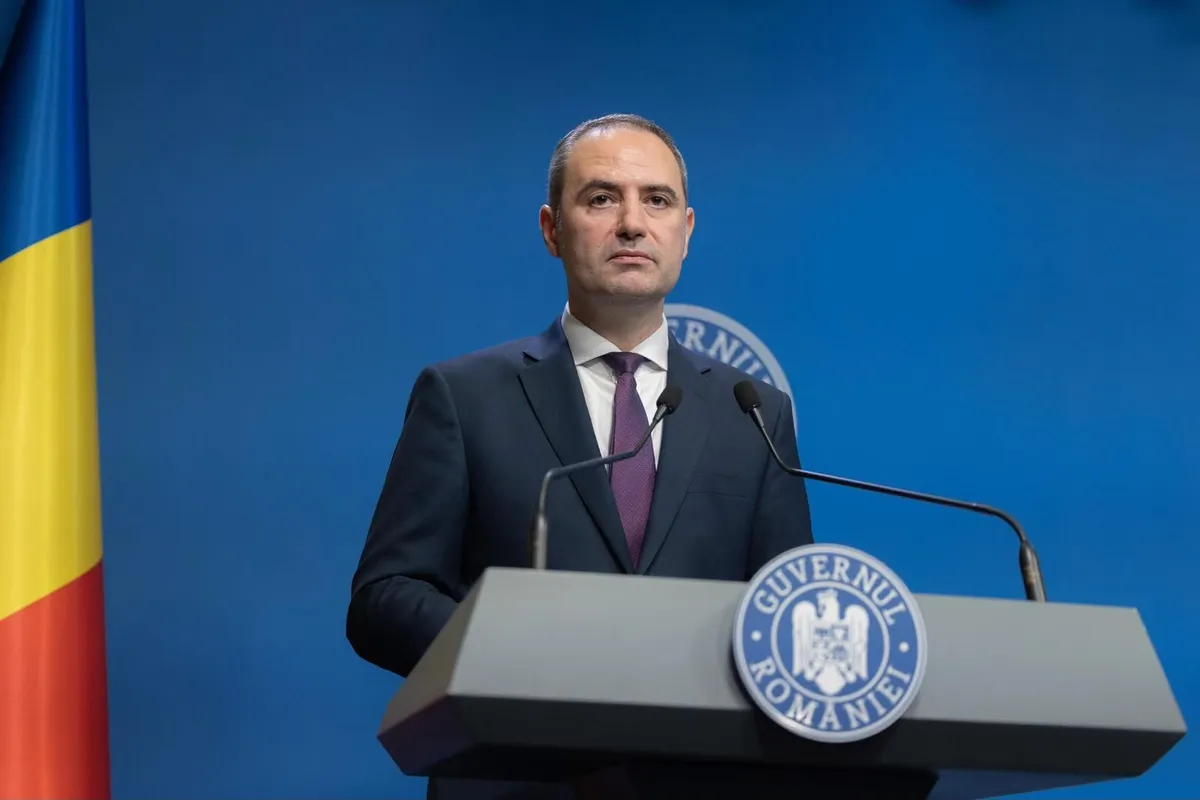
The Government believes that Romania's economy is showing signs of stabilisation, although the National Institute of Statistics announced on Friday that Gross Domestic Product stagnated in the second quarter of 2026 compared to the first three months of the year, and fell by 0.4% compared to the same period in 2025. Finance Minister Alexandru Nazare argues that investments from European funds have accelerated, net exports have made a stronger contribution, and both the external deficit and inflation have begun to decline.
In the second quarter of 2026, GDP remained at the same level in real terms compared to the previous quarter. Compared to Q2 2025, GDP fell by 0.4% in the gross series and by 2% in the seasonally adjusted series. Over the first six months of the year, the economy contracted by 0.8% compared to the same period in 2025 in the gross series, and by 1.6% in the seasonally adjusted series.
The Ministry of Finance interprets these figures as a slowdown in economic contraction and points to positive developments in several sectors, including construction, supported by infrastructure projects.
"The data from the first part of 2026 offers the first signals of this rebalancing process: the economic contraction has eased, investments financed from European funds have accelerated, the contribution of net exports has improved, the external deficit is narrowing, and inflation has returned to a downward trajectory. The Ministry of Finance will continue to support a fiscal framework that allows imbalances to be corrected, whilst protecting the investments and projects that contribute to strengthening Romania's economic potential," said Alexandru Nazare.
Investments from European funds up by 56%
One of the arguments cited by the Finance Ministry in support of a potential stabilisation is the trajectory of investments. In the first half of the year, investments financed from European funds rose from 27.2 billion RON to 42.5 billion RON, an increase of 56%.
These investments are also reflected in the performance of construction and infrastructure projects. The Ministry estimates that works in transport and energy infrastructure may generate additional effects beyond their immediate contribution to GDP, by reducing logistical costs, improving connectivity, and increasing domestic production capacity.
Furthermore, the contribution of net exports to economic growth turned positive from Q4 2025 onwards, against a backdrop of more moderate import growth and rising exports.
External deficit narrows
In the first five months of the year, the current account deficit fell by 5.4% compared to the same period in 2025. The goods trade deficit decreased by 3.9%, with exports growing by 2.3% whilst imports recorded only marginal growth.
The Ministry of Finance notes, however, that ongoing investments also entail imports of equipment, technology, and other capital goods, which may temporarily slow the reduction of the external deficit. Over the medium term, the expansion and modernisation of production capacities should contribute to improved competitiveness and higher exports, as well as to replacing a portion of imports with domestic production.
Another indicator cited is inflation. The annual rate fell from 10.42% in June to 8.2% in July, and the Ministry of Finance expects the disinflation process to intensify from August onwards, as the base effects associated with last year's fiscal measures begin to fade.
A slowdown in consumption and wage growth is also contributing to easing price pressures. Inflation nonetheless remains at an elevated level, and geopolitical tensions alongside volatility in international energy prices continue to pose risks.
The Ministry of Finance takes the view that the current adjustment period should lead to a shift in the economic growth model, following years in which consumption played a significant role, accompanied by the accumulation of large fiscal and external deficits. The objective is for investment, productivity, and external competitiveness to carry greater weight in the economy.
"Sustainable economic growth cannot be built on stimulating consumption through ever-larger public deficits, but on investment, productivity, competitiveness, and a stable fiscal framework capable of supporting development without accumulating new imbalances," Alexandru Nazare emphasised.
Content paraphrased and adapted by SeniorHelp from verified public sources.
Original source: Digi24 →Previous article
Pension Houses overwhelmed by CASS reimbursement requests from seniors
Next article
PNRR: Romania requests €2.84 billion from the EU, with projects including 5 new hospitals
Similar news
BNR explains why the euro has climbed to new all-time highs against the leu
8 October 2026
Cristian Bușoi: electricity prices will rise, but not by 50%
7 October 2026
 Foto ilustrativă
How much a Romanian household earns and spends, according to INS
7 October 2026
Euro, record exchange rate at the NBR: 5.3527 RON. How the dollar, franc and gold have evolved
6 October 2026
Health 2025: Romanians paid 130 billion RON, over a quarter directly out of pocket
5 October 2026
S&P reaffirms Romania's rating at "BBB-". Nazare: "An important result, but insufficient"
2 October 2026