
Expert Anton Hadăr explains why pension increases after recalculation are minimal
The specialist reveals that the pension recalculation brings negligible increases due to the way benefits from previous employment are calculated.
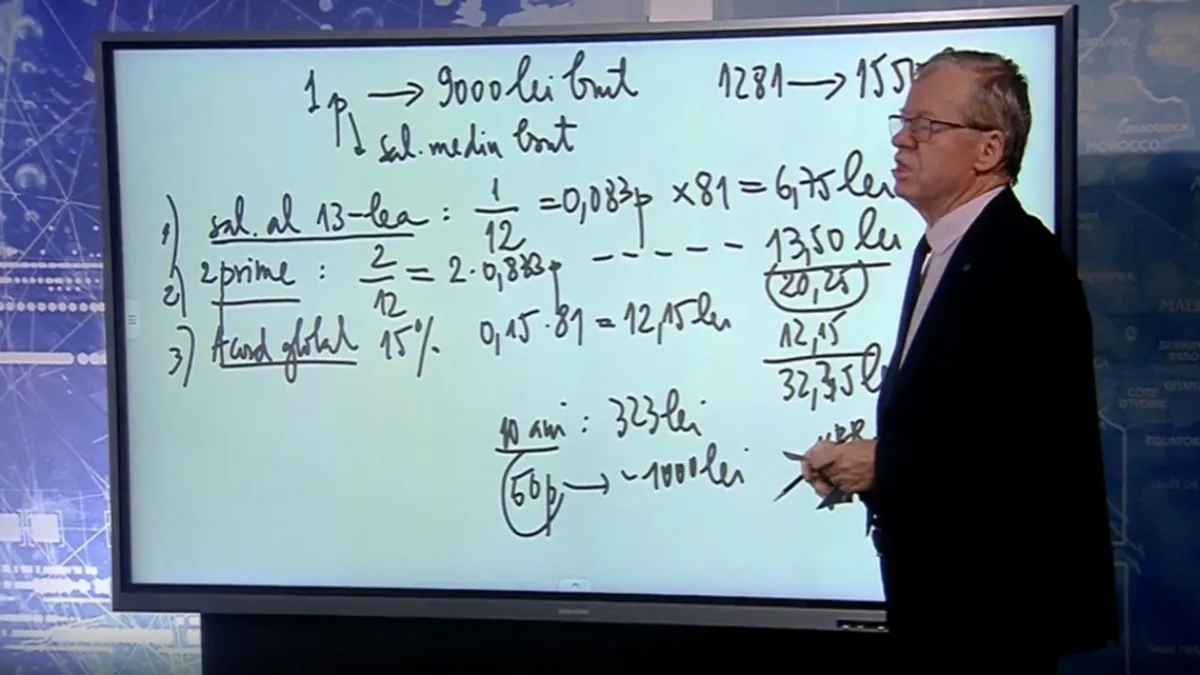
A pensions expert has offered detailed explanations as to why the pension increases resulting from the recalculation are far smaller than many Romanian pensioners had expected. The specialist demonstrated through concrete calculations how the recalculation system works and why the results have proved disappointing for the majority of beneficiaries.
According to the analysis presented, for a pensioner who had earned a steady average salary throughout their working life (equivalent to approximately 9,000 RON gross at present), any additional benefits received sporadically during their career — such as holiday bonuses or occasional one-off payments — translate into minimal pension increases. One concrete example shows that a holiday bonus received in a single year amounts to just 6.75 RON extra on the pension.
The impact of the calculations on middle and low-income pensioners
The situation becomes even more problematic for middle-income pensioners. A pensioner with approximately 50 pension points, currently receiving around 4,500 RON per month, could face an effective loss of roughly 1,000 RON compared to what they should have received under the increases originally scheduled. This discrepancy stems from the way in which calculation coefficients are applied during the recalculation process.
For pensioners on minimum incomes, the situation is no better. Rather than benefiting from successive 10% increases that would have raised the minimum pension from 1,281 RON to approximately 1,550–1,560 RON, they are instead confronted with far smaller rises. The current calculation system fails to bridge the gap between the expectations that were created and the mathematical reality of the calculation formulae.
The technical explanation of the problem
The fundamental problem lies in how the recalculation system evaluates contributions and benefits from the working period. Every additional benefit received during a career is divided by the total number of months worked, resulting in increases that are almost negligible at the level of the final pension. This calculation mechanism means that most pensioners feel the recalculation has brought no substantial improvement to their purchasing power.
The expert emphasises that the term 'minor recalculation' is entirely justified, as the concrete results demonstrate that increases are indeed minimal for the vast majority of pensioners. This situation raises serious questions about the efficiency of the current pensions system and about the measures needed to ensure a decent standard of living for Romania's senior citizens.
Content paraphrased and adapted by SeniorHelp from verified public sources.
Original source: Realitatea →Previous article
Fuel Price Rises: Significant Impact on Pensioners' Budgets
Next article
Extreme Cold in Romania: Emergency Energy Command Convenes Urgently to Protect the Population
Similar news
CNAS Opens Competition for 16 Director General Positions at Health Insurance Houses
14 October 2026

Health sector needs 8 billion RON by year's end, Rogobete warns
13 October 2026
Ministry of Health Requests 800 Million RON: Without Funding, Emergency Services and Ambulance Risk Disruption
13 October 2026

Senate passes law: cancer patients' companions will receive paid leave for medical investigations
13 October 2026

Negrescu warns: Romania risks receiving less European funding following EU budget cuts
11 October 2026

CASS on pensions: the 3,000 RON threshold could be reduced from 2027
9 October 2026