
Romania's Trade Deficit Falls by 890 Million Euros, but the Economy Shows Signs of Weakness
The trade deficit fell to €13.5 billion in the first 5 months, however the decline stems from stagnating imports rather than a stronger economy.
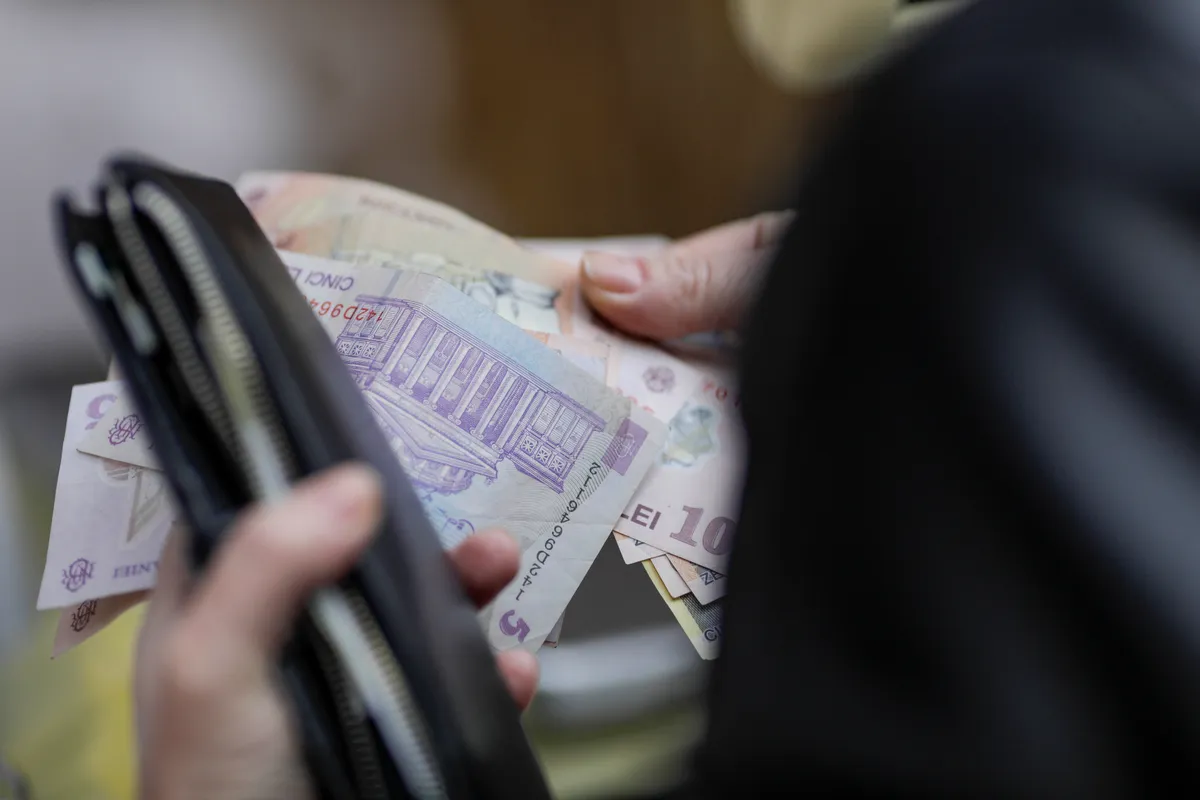
 Foto ilustrativă
Romania's trade balance showed a slight improvement in the first five months of the year: the trade deficit reached €13.5 billion, down by €890 million (minus 6%) compared to the same period last year. Although a reduction in a chronic deficit may appear, at first glance, to be good news, the data show that this correction does not stem from a healthier economy, but rather from a severe slowdown in domestic activity.
According to the National Institute of Statistics (INS), exports grew by 2.4% (plus €900 million), reaching €40.3 billion. Imports, by contrast, came to a near-complete standstill, edging up by just 0.1%.
Why stagnating imports are not a good sign
Export growth is viewed favourably by economists and industrialists, who regard it as the main pillar supporting the national economy. Nevertheless, the increase is considered too modest to shift the economy's overall trajectory.
The real problem lies in the stagnation of imports. In a healthy economy, a reduced dependence on foreign goods would signal that domestic production had replaced imports. In this case, the situation is the opposite, for two reasons:
- Exports depend on imported components and materials: almost 60% of what Romania imports is subsequently used for processing and re-export. A slowdown in imports in fact signals a reduction in industrial activity in the period ahead.
- Purchasing power has fallen sharply: Romanians are buying fewer foreign products because the domestic market has contracted. High inflation has eroded the population's disposable income.
Indicators that contradict optimism
The INS has confirmed a 1.2% decline in Gross Domestic Product (GDP) in the first quarter, and preliminary data for the second quarter show no sign of improvement.
Industry continues to contract, posting a 2.2% decline in the first four months. In April, the fall was more pronounced: minus 3% compared to the same month last year and minus 10% compared to March.
Household consumption fell by 5.5% in the first five months, as a direct consequence of high inflation. With real incomes squeezed by rising prices, the domestic market is buying less, which in turn reduces imports. Official forecasts point to near-zero economic growth for the full year, with the Government's and the European Commission's fragile estimate seen more as a boundary line separating Romania from an official recession than as a genuine projection.
What Romania sells and what it buys
The automotive and transport equipment sector remains the most significant in the country's foreign trade. In the first five months, this segment performed similarly on both sides: exports up 1.5% and imports up 1.4%.
Machinery and equipment account for 46.6% of Romania's total exports and 36.4% of total imports. However, the value of imports in this segment exceeds that of exports: €18.8 billion in exports compared with €19.6 billion in imports.
Performance by commodity category, first 5 months:
- Export increases: food +8%, mineral fuels +7.5%, manufactured goods +5%.
- Export declines: beverages and tobacco -12%, miscellaneous manufactured articles -6.3%.
Content paraphrased and adapted by SeniorHelp from verified public sources.
Original source: Realitatea →Previous article
PET-CT PSMA: the investigation that localises tumour cells in advanced prostate cancer
Next article
7,600 posts unblocked in hospitals: unions say it's only a quarter of the actual shortfall
Similar news
 Foto ilustrativă
The Senate has voted on the ROBOR credit recalculation law. Romanians could receive money back from banks
14 October 2026

Senate wants recalculation of loans affected by ROBOR, based on IRCC
14 October 2026

Bușoi: The Next Government Must Quickly Decide Whether to Extend the Gas Support Scheme
14 October 2026
Average net salary fell to 5,688 RON in August, below inflation
13 October 2026

Average net salary fell in August 2026, inflation wiped out wage increases
13 October 2026

Annual inflation rose to 6.61% in September, INS announces
13 October 2026