
Budget deficit reduced to 2.34% of GDP, but Nazare warns: "There is no reason for complacency"
The Finance Minister announces a reduction in the budget deficit to 2.34% of GDP in the first 7 months, but warns that interest payments have exceeded 40 billion RON.
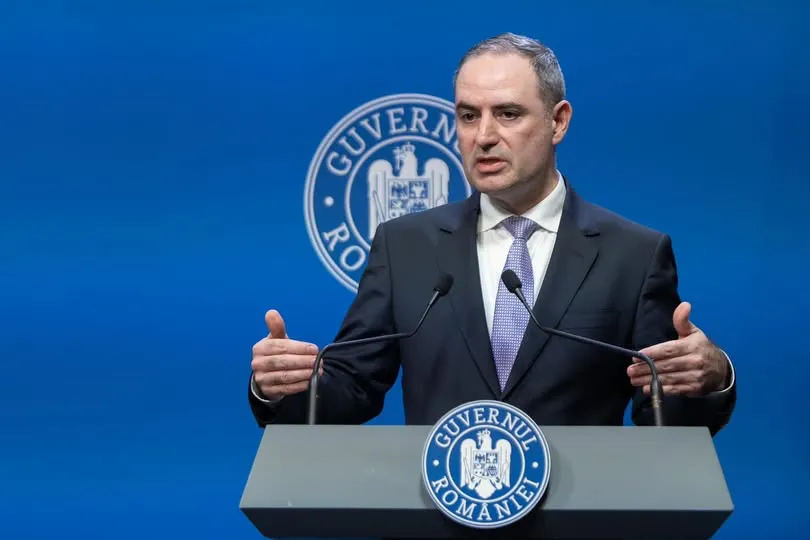
The Finance Minister, Alexandru Nazare, has announced that the budget deficit fell to 2.34% of GDP in the first seven months of the year, down from 3.99% in the same period of 2025. In concrete terms, this reduction amounts to 28.36 billion RON, representing a deficit that is 37% smaller in nominal terms compared to last year.
In a Facebook post, the Minister explained that this budgetary adjustment occurred alongside increased investment and accelerated absorption of European funds. According to Nazare, state revenues rose by 11.2%, whilst total expenditure grew at a far slower pace of just 2.9%. Personnel costs are 4.06 billion RON lower, and investments reached 76.51 billion RON — nearly 15 billion RON above last year's level. Over 71% of these investments are financed through European funds and the PNRR.
The Minister further noted that, in parallel, the state continued to reimburse VAT to companies, with amounts paid out in the first seven months exceeding 20.4 billion RON. "Reducing the deficit must not be achieved by blocking investment or undermining companies' liquidity. These results show that budgetary discipline and investment are not incompatible objectives," Nazare wrote.
Interest costs surpass 40 billion RON
Despite the deficit reduction, Nazare stressed that budgetary imbalances have not been eliminated. Interest costs have already exceeded 40 billion RON over seven months — a figure the Minister links to deficits accumulated in previous years.
"This is one of the bills left behind by the imbalances built up in recent years, and one of the reasons why we must continue the correction. The more we reduce the deficit and financing requirements, the more we can ease the pressure on financing costs over time," he explained.
Nazare cautioned that, from August onwards, year-on-year comparisons will show smaller differences, as the effects of measures adopted in the summer of 2025 become annualised. In his view, the real test is no longer comparison with 2025, but rather maintaining budgetary execution on the trajectory needed to meet the full-year deficit target. The Minister believes that the stabilisation achieved in the first seven months must be translated into a structural correction, through expenditure control, a predictable pay policy, faster absorption of European funds, and the prioritisation of investment.
The next test: S&P's rating review
Nazare emphasised that the budgetary execution results provide a useful argument in discussions with rating agencies, but do not justify any relaxation of fiscal discipline. Romania is set to face another significant test: its assessment by S&P.
"Markets and investors are closely scrutinising Romania's ability to maintain its course and build a credible budget for 2027. Fiscal credibility is hard-won and can be lost quickly. That is why responsibility remains non-negotiable. At a time when financing costs remain high, every step we take to reduce the deficit in a credible manner matters — for all of us, for businesses, and for the economy as a whole," the Finance Minister concluded.
Content paraphrased and adapted by SeniorHelp from verified public sources.
Original source: Digi24 →Previous article
PET-CT PSMA: the investigation that precisely locates prostate cancer
Next article
The 4 Stages of Death Explained by a Forensic Doctor from Romania
Similar news
 Foto ilustrativă
The Senate has voted on the ROBOR credit recalculation law. Romanians could receive money back from banks
14 October 2026

Senate wants recalculation of loans affected by ROBOR, based on IRCC
14 October 2026

Bușoi: The Next Government Must Quickly Decide Whether to Extend the Gas Support Scheme
14 October 2026
Average net salary fell to 5,688 RON in August, below inflation
13 October 2026

Annual inflation rose to 6.61% in September, INS announces
13 October 2026

Higher bills this winter: Hidroelectrica raises energy prices, gas prices are also on the rise
11 October 2026