
Why the multidisciplinary team matters in treating heart disease
For complex cardiovascular cases, treatment is determined by a multidisciplinary team of specialists — the Heart Team — who jointly assess the available medicinal, interventional, or surgical options.
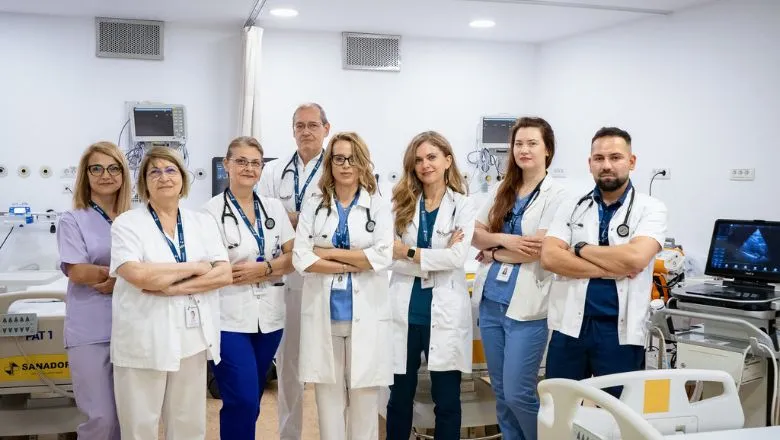
For cardiovascular diseases, doctors today have several treatment options available: medical therapy, interventional procedures, or surgery. The choice between these approaches depends on the severity of the disease, the anatomy of the lesion, the patient's overall condition, and the risks associated with each option.
When a cardiovascular case is complex, the decision regarding the treatment strategy does not rest with a single doctor, but with a multidisciplinary team — known as the Heart Team. This team comprises specialists from several fields: cardiology, interventional cardiology, cardiovascular surgery, cardiovascular anaesthesia and intensive care, imaging, emergency medicine, and rehabilitation.
The advantage of this team-based approach is that all treatment options can be compared and analysed together. For some patients, medical or interventional treatment is indicated; for others, surgery is the right course; and in certain situations, hybrid procedures combining several methods may be recommended. The final decision takes into account the specifics of each case and the balance of benefits and risks for that particular patient.
Available investigations and treatments
Depending on the clinical suspicion, doctors may recommend advanced investigations. Coronary angiography, for example, allows visualisation of the coronary arteries and detection of any narrowings. Where necessary, this investigation may be followed by an interventional treatment such as stent angioplasty. Through interventional cardiology, both diagnostic procedures and treatments for certain heart conditions can be carried out using a minimally invasive (percutaneous) approach.
For other problems — coronary, valvular, or aortic — cardiovascular surgery remains the solution, and may be either conventional or minimally invasive. In some cases, interventional and surgical treatment are combined in a single hybrid procedure. However, the availability of a minimally invasive option does not mean it is suitable for every patient — the choice is made on a case-by-case basis.
Cardiovascular emergencies
The need for an integrated team is even more apparent in emergency situations — myocardial infarction, aortic dissection, or severe arrhythmias — when assessment and intervention must be carried out swiftly. SANADOR Clinical Hospital maintains permanent on-call teams in cardiology, interventional cardiology, cardiovascular surgery, the Emergency Department (USTACC), and cardiovascular intensive care.
The hospital's Heart Team brings together specialists in cardiology, interventional cardiology, cardiovascular surgery, cardiovascular anaesthesia and intensive care, imaging, emergency medicine, and rehabilitation, in order to determine and implement the most appropriate strategy for each patient.
Interventional cardiology procedures are carried out in the Catheterisation Laboratory, whilst cardiovascular surgical interventions take place in a fully digitalised operating theatre, supported by the Category I Cardiovascular Anaesthesia and Intensive Care Unit — which has an extended level of competence and is likewise fully digitalised.
Rehabilitation as part of treatment
Following an intervention, where indicated, patients may undertake individualised rehabilitation programmes that include supervised physical exercise, periodic cardiovascular reassessments, and measures to keep risk factors under control. The aim is the gradual improvement of exercise capacity, functional recovery, and long-term medical monitoring.
In practical terms, the advantage of such an integrated system for the patient is continuity of care: assessment, selection of the appropriate treatment, the intervention itself, monitoring during the critical period, and subsequent rehabilitation all form part of a unified care pathway, tailored to each patient's individual situation.
Content paraphrased and adapted by SeniorHelp from verified public sources.
Original source: Digi24 →Previous article
ANSVSA: over 40% of food waste comes from households. How it can be reduced
Next article
Alexandru Nazare: pensions could be "prudently" indexed from 1 January 2027
Similar news

The biological age of the heart, estimated with AI, can indicate the risk of death in people over 50
14 November 2026

Harvard Study: for a longer life, variety of exercise matters, not just movement
14 November 2026

Diabetes: over 40% of sufferers don't know they are affected. The signs that must not be ignored
14 November 2026

Type 2 diabetes increases the risk of Alzheimer's by 53%, a new study shows
14 November 2026
 Foto ilustrativă
How Much Salt Is It Healthy to Eat Daily. What a Cardiologist Says About the Risks and Foods with Hidden Sodium
14 November 2026

Ministry of Health launches the 2027–2031 Digitalisation Strategy: a single electronic record for patients
13 November 2026