
How a Man Was Saved from a Massive Stroke in Just 48 Hours
A 51-year-old man suffered a massive stroke at home, but his wife's swift response and emergency treatment enabled a remarkable recovery.
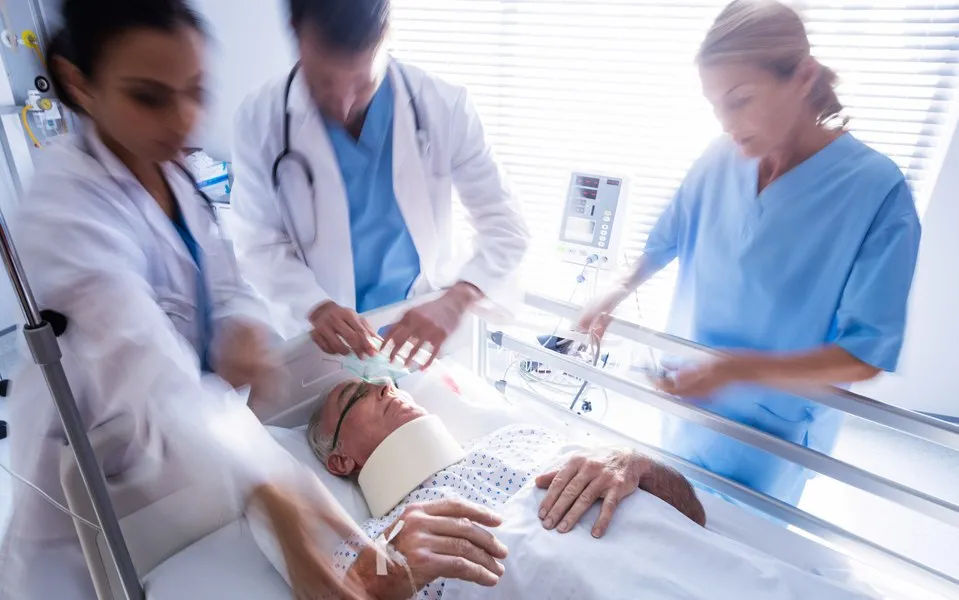
Todd Meiklejohn, a 51-year-old American teacher and keen cyclist accustomed to physical exertion, went through a harrowing ordeal on 8 August 2025. He had woken up at around 6 in the morning and was going about his usual routine, getting ready for a scheduled meeting, when he suddenly felt a sharp, crushing pain.
His condition deteriorated rapidly: he lost vision on his right side and lost control of the right half of his body. "I probably made it out of the bathroom. I ended up on the floor, against the wall, and I only remember the paralysis on my right side. I just kept falling. I didn't have enough strength left," he recalled, according to People magazine.
The man had not had any significant medical issues prior to that moment and considered himself to be a healthy person.
His wife's unexpected return – the pivotal moment
His wife, a nurse, had left home to go to the gym. Around 45 minutes after leaving, she turned back on her way to work and found him on the floor. She immediately called the emergency services.
Meiklejohn was taken to the Miami Neuroscience Institute, part of the Baptist Health network, where doctors confirmed he had suffered a massive stroke. Guilherme Dabus, the interventional neuroradiologist who treated him, explained the critical importance of acting swiftly: "Time is brain. The longer the blood supply is cut off, the greater the risk of permanent damage to brain tissue."
Doctors urgently performed a mechanical thrombectomy – a procedure in which a blood clot is removed using a catheter to restore blood flow to the brain. Just 38 minutes after his wife's call to the emergency services, the patient was already receiving treatment.
Discharged in under 48 hours
The outcome was, according to the doctors, remarkable: Meiklejohn was left with minimal damage and, shortly after the procedure, regained his speech and mobility on the right side of his body. He was able to leave hospital in less than 48 hours of suffering the stroke.
"I remember Dr Dabus coming to see me and saying, 'You're a miracle.' I'm one of the lucky patients who can say they were blessed to walk out of hospital on their own two feet and tell this story," he added.
His recovery continued apace: after approximately four weeks he returned to work, and two months after the event he managed to cycle around 100 miles once again.
A cardiac condition discovered afterwards
Doctors looked for an explanation as to why such a severe stroke had occurred in an active person with no medical history. They initially investigated the possibility of a clot having formed in the leg, but tests did not confirm this.
Attention then turned to the heart, where examinations revealed a patent foramen ovale (PFO) – a small opening between the upper chambers of the heart that normally closes shortly after birth. In most cases, a PFO causes no symptoms, but in rare instances it can allow a blood clot to enter the cerebral circulation and trigger a stroke.
Meiklejohn underwent a minimally invasive procedure to close the PFO. The intervention was successful, and his doctor confirmed that the risk of a further stroke is now very low.
Content paraphrased and adapted by SeniorHelp from verified public sources.
Original source: Adevărul →Previous article
Disability Benefits Possibly Suspended Due to DGASMB Debts
Next article
Medical equipment has tripled in 10 years, but waiting times remain at 2–3 months
Similar news

First influenza-related death of this season confirmed by INSP: unvaccinated man from Cluj
16 October 2026

Partial Nephrectomy: The Operation That Treats Kidney Tumours and Preserves the Kidney
16 October 2026

Time spent in nature could improve one's relationship with food, a British study suggests
16 October 2026

What a liver operation involves: preparation and recovery
15 October 2026
Cardiac MRI: the investigation that provides detailed images of the heart
15 October 2026
Chronic insomnia linked to higher risk of stroke, dementia and hospitalisation, shows study of 1.3 million people
14 October 2026