
Researchers have discovered how some aggressive cancers manage to survive
A study from the University of Sheffield explains the mechanism by which breast and pancreatic cancers survive without glucose, paving the way for more effective treatments.
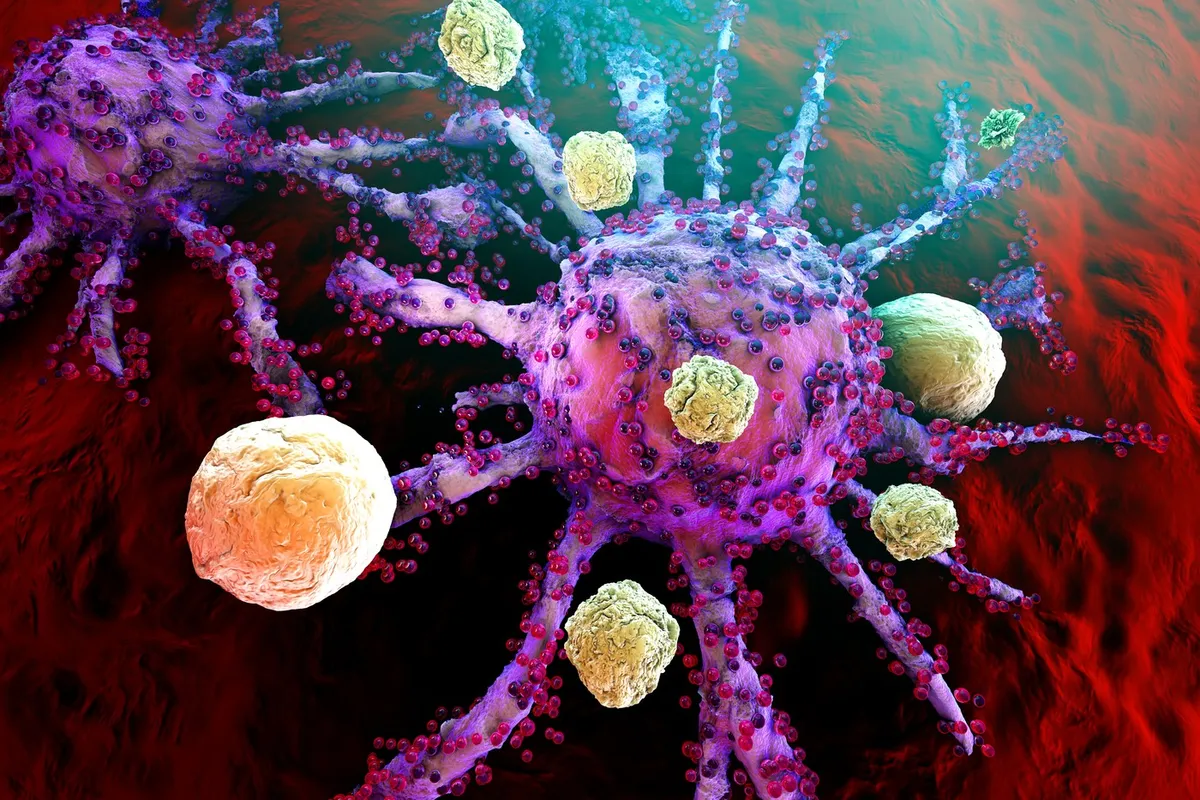
A team of researchers from the University of Sheffield has discovered the mechanism by which some aggressive forms of cancer manage to survive when their usual energy source is cut off. The discovery, published in the journal PLOS Biology and announced on Wednesday by the university, could pave the way for new methods of slowing tumour growth and increasing the effectiveness of existing treatments, according to the Xinhua news agency.
The research focused on aggressive forms of breast and pancreatic cancer — tumours surrounded by dense, scar-like tissue known as the extracellular matrix. According to specialists at Sheffield, this matrix can account for up to 90% of the total mass of certain breast and pancreatic tumours.
Although the dense tissue reduces blood supply and access to nutrients, cancer cells find a way to adapt: they use type I collagen, the main component of the matrix, to continue surviving.
How cancer cells "switch" their energy source
The researchers observed that when glucose levels — the cells' primary energy source — drop, collagen sends signals that allow cancer cells to change their mode of sustenance, switching to the absorption of essential amino acids needed for growth and survival.
This process depends on a protein called LAT1, which is responsible for transporting amino acids into cancer cells. In laboratory experiments using cell models, blocking LAT1 combined with disrupting the connection between cancer cells and collagen deprived these cells of the nutrients they needed to survive.
What the study's lead author says
Dr Elena Rainero, a senior lecturer at the University of Sheffield and lead author of the study, explained that cancer cells adapt rapidly, which is why a single type of treatment often fails to eliminate a tumour entirely.
"If we could block this collagen-mediated survival mechanism, we could slow the growth and spread of cancer cells, whilst simultaneously making them more sensitive to existing treatments such as chemotherapy," said Dr Rainero.
According to her, such a strategy could allow doctors to use lower doses of treatment, thereby reducing severe side effects whilst at the same time increasing the efficacy of therapy.
The researchers believe this discovery could represent a promising target for the development of future cancer therapies.
Content paraphrased and adapted by SeniorHelp from verified public sources.
Original source: Digi24 →Previous article
Food prices have risen 53% in Romania over 5 years, but the minimum wage has increased by more
Next article
Mediterranean diet linked to lower risk of cardiovascular disease
Similar news

Partial Nephrectomy: The Operation That Treats Kidney Tumours and Preserves the Kidney
16 October 2026

Time spent in nature could improve one's relationship with food, a British study suggests
16 October 2026

What a liver operation involves: preparation and recovery
15 October 2026

Cardiac MRI: the investigation that provides detailed images of the heart
15 October 2026

Chronic insomnia linked to higher risk of stroke, dementia and hospitalisation, shows study of 1.3 million people
14 October 2026
Irritable Bowel Syndrome: Abdominal Pain and Altered Bowel Habits
14 October 2026