
What Risks Arise from Sitting Too Long, Explained by an Orthopaedic Surgeon
Dr. Ioan Stan explains the effects of prolonged sitting on muscles, circulation, the spine and nerves, along with simple preventive solutions.
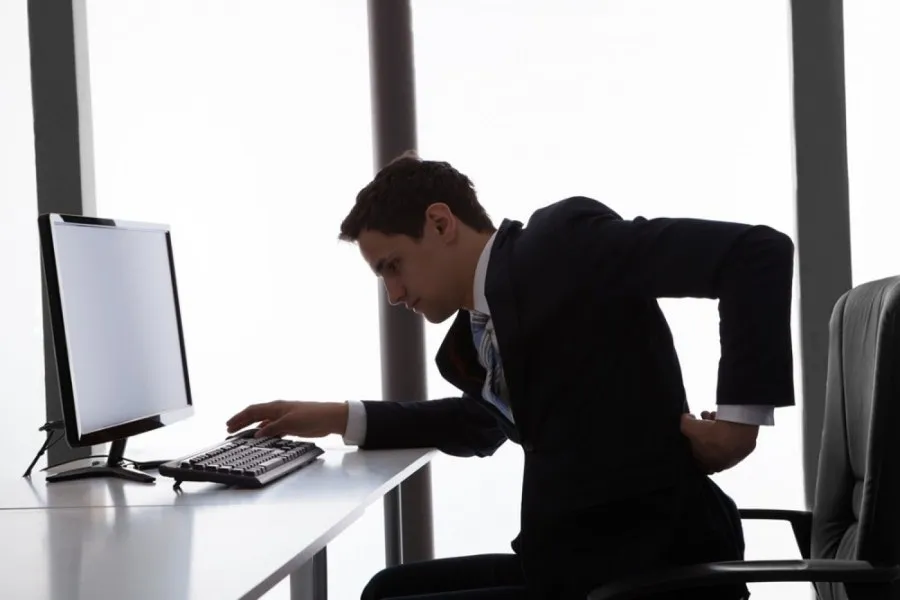
Many people spend hours on end sitting down — at a desk, in a car, or at home. Dr Ioan Stan, an orthopaedic and traumatology specialist with expertise in ankle and foot pathology, explained to Digi24 what happens in the body when prolonged inactivity goes uninterrupted, and how it can affect muscles, circulation, nerves, and metabolism.
Effects on the legs and circulation
According to the specialist, prolonged sitting reduces the engagement of key muscles such as the quadriceps, gluteals, and calves, whilst the hip flexors (iliopsoas and rectus femoris) remain in a shortened position for extended periods. Over time, this imbalance can contribute to back pain and postural problems.
Blood circulation also suffers: calf contractions diminish, and the "muscle pump" that helps blood return to the heart becomes less efficient. This can lead to a sensation of heavy legs, fatigue, and swelling — particularly towards the end of the day.
Long periods of immobility, such as during flights or car journeys, increase the risk of deep vein thrombosis, especially when other risk factors are present. A blood clot can cause pain and inflammation in the calf, and if it travels to the lungs, it can lead to serious complications.
Dr Stan also highlights that a sedentary lifestyle affects metabolism: underused muscles absorb less glucose and burn less energy, which can gradually alter blood sugar levels and blood fats, even in people of normal weight.
What happens to the spine and nerves
Maintaining a fixed position for long periods places additional pressure on the spine — both in the lumbar and cervical regions — particularly when posture is poor, such as a rounded back or a forward head position. The increased pressure on the intervertebral discs is significant because these discs are avascular and rely on diffusion for nutrients, a process sustained by alternating movement and rest.
In the cervical region, a forward head posture increases the mechanical load on the neck. Additionally, tightening of the hip muscles can alter pelvic position and accentuate lumbar lordosis, contributing to back pain.
Prolonged sitting can also lead to nerve compression: pressure in the gluteal area may irritate the sciatic nerve, whilst sitting with crossed legs can affect the peroneal nerve near the knee. This results in tingling or numbness, which is generally temporary and resolves upon changing position.
Inactivity also affects the ankle: extended immobility can shorten the Achilles tendon and place tension on the plantar fascia, sometimes causing pain in the sole or heel that is felt most acutely with the first steps in the morning.
Common symptoms
Among the most frequently reported signs associated with prolonged sitting are: pain or a sensation of joint stiffness upon standing, which eases after the first few steps; lower back pain in the evening or after a long day at the desk; a feeling of heaviness, fatigue, and leg swelling; numbness and tingling originating in the thigh and potentially radiating down towards the foot; sole pain with the first steps in the morning; and muscle contractures, including in the neck and shoulder blade area.
Dr Stan also warns of alarm signs that require medical assessment: persistent pain that does not ease or that wakes you from sleep, tingling and numbness below the knee, a feeling of muscle weakness, and the sudden onset of a swollen, red, and painful calf — a situation that may indicate thrombosis and must be investigated immediately. Furthermore, any pain or discomfort that persists for four to six weeks despite measures taken should be evaluated by a doctor.
Regular breaks matter more than intense exercise
For those who spend seven to eight hours a day at a desk, the doctor recommends breaking up sitting time every 30 to 45 minutes with a few minutes of movement — the regularity of breaks matters more than the intensity of the effort. Complex exercises are not necessary: a brief walk around the room, a trip to the bathroom, or simply changing position can be sufficient.
For those who wish to do additional exercises, the following are beneficial: lunges held for around 30 seconds, 5 to 20 calf raises, and wall stretches for the calf and Achilles tendon. When standing up is not possible — during meetings, for instance — approximately 20 ankle flexions and extensions can be performed to support circulation.
Dr Stan also recommends around ten chin-to-chest movements for the cervical area, gluteal contractions held for five seconds (in sets of approximately ten), shoulder rolls, and drawing the shoulder blades towards the spine. Hydration and sleep also contribute to the body's recovery, and those who work at a desk should avoid wearing heels throughout the day, opting for more comfortable footwear whenever possible.
Correct posture at the desk
The feet should rest flat on the floor, with the hips positioned slightly higher than the knees. It is advisable to avoid slouching in the chair or leaning the torso forward, keeping the back in as natural a position as possible — ideally supported by a lumbar cushion. The monitor should be positioned at eye level, so that the head and neck are not permanently tilted up or down.
Content paraphrased and adapted by SeniorHelp from verified public sources.
Original source: Adevărul →Previous article
Elevated PSA: what it means and when further investigation is needed
Next article
Ragweed Allergy: Peak Pollen Season and Symptoms to Watch Out For
Similar news

Artificial intelligence can estimate cancer survival chances from a selfie
20 October 2026
 Foto ilustrativă
Flu vaccines delayed: over 350,000 doses to reach pharmacies by the end of the week
19 October 2026
At 86, Two Serious Cardiovascular Conditions Discovered by Chance
19 October 2026

What is the ideal sleep duration? Researchers have calculated it precisely, in hours and minutes
19 October 2026
Late-night eating linked to increased risk of fatty liver disease and cirrhosis, study shows
19 October 2026
The heart has its own "mini-brain": what a recent study has discovered about its neuronal network
19 October 2026