
BNR has raised its inflation forecast: Isărescu says energy and fuel have pushed estimates higher
Mugur Isărescu announced an upward revision of the inflation forecast, due to energy and fuel prices. The NBR kept the key interest rate at 6.50%, even though inflation reached 6.94% in October.
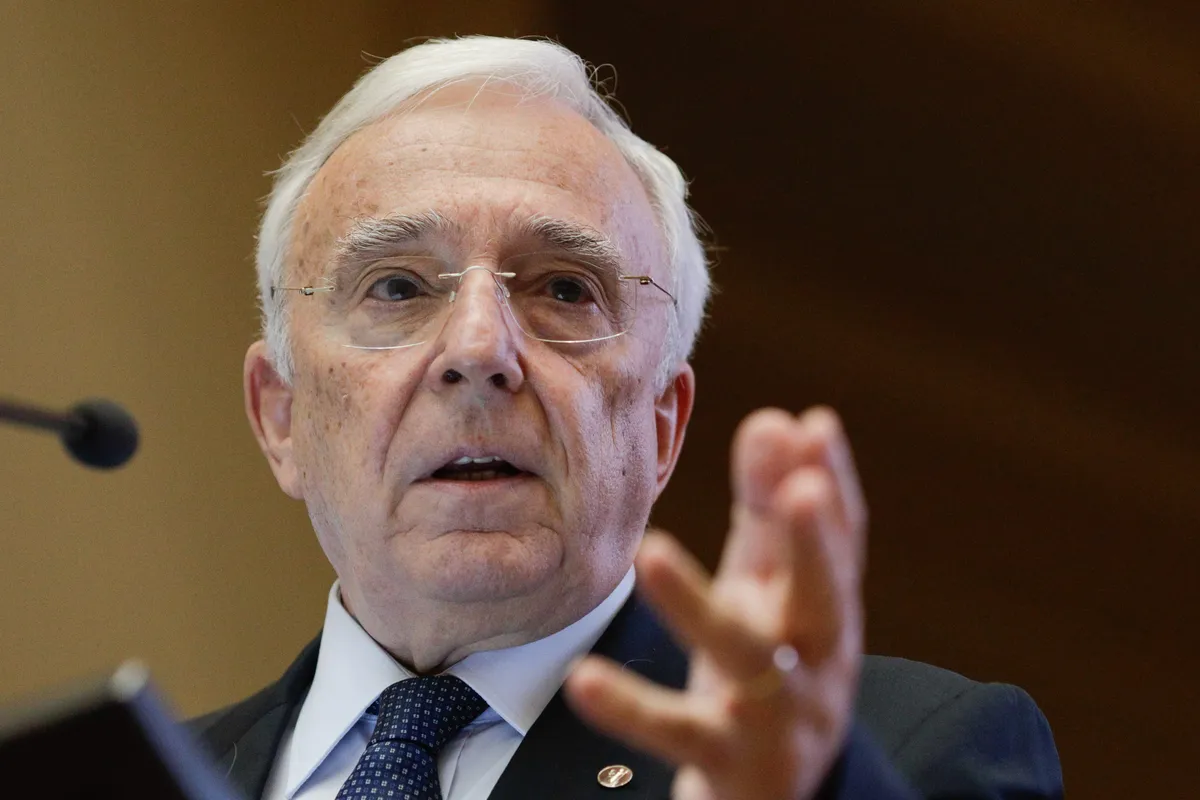
The Governor of the National Bank of Romania, Mugur Isărescu, announced on Monday that the central bank has revised its projected inflation trajectory upwards, citing rising energy and fuel prices as the primary cause. The announcement was made during the presentation of the Inflation Report, November 2026 edition, a document approved by the NBR Board of Directors at its Thursday meeting.
According to Isărescu, the annual inflation rate will continue to rise slightly until the end of the year, after which a near-continuous decline is expected, with a return to the NBR's target range in the first quarter of 2028. Regarding holiday-season prices, the Governor noted that they may remain relatively stable or rise moderately, as in previous years, without excessive increases.
Energy and fuel: the main driver of the revision
Isărescu explained that tensions on energy and natural gas markets are feeding through to production costs and, ultimately, to prices across the entire economy. "The upward revision to the projected trajectory compared with the previous exercise is driven by a broad upward reassessment of the energy price. Naturally, when the energy price goes up, it goes up everywhere," the NBR Governor stated.
The forecast was based on data available up to 1 November, at which point the oil price had exceeded 100 dollars per barrel. Since then, the price has fallen back towards 90 dollars; however, Isărescu cautioned that uncertainties surrounding the future trajectory of oil prices remain.
Core inflation — the component most directly influenced by monetary policy — is expected to decline, but will remain at a higher level than previously estimated, again due to energy and fuel costs. Among the components of core inflation, services continue to exhibit the most persistent price increases.
Consumption fell, whilst EU-funded investment supported the economy
The Governor indicated that, in the second quarter of 2026, household consumption was affected by a decline in purchasing power and reduced access to credit. "Private consumption deepened its contraction in the second quarter of 2026, against a backdrop of declining purchasing power and reduced recourse to borrowing," Isărescu said.
Investment partially offset this decline; however, the contribution came primarily from European funds rather than from foreign direct investment. "We relied on the positive effect of investment, and that effect is real. The trouble is that foreign direct investment has not come to our aid. It has mainly been investment from European funds that has helped us. We still have funds left to draw from there, so we can expect further positive effects," the NBR Governor explained.
Isărescu also noted that the current account deficit did not fall in line with the budget deficit, contrary to the central bank's expectations. NBR analyses indicate, however, that the economy has not experienced a deterioration in price competitiveness.
Why the NBR did not raise the key interest rate
Despite rising inflation, the NBR did not raise its key interest rate, and Isărescu explained that the decision reflects the significant demand deficit in the economy. "The economy already has a major demand deficit. It would have been difficult to justify reducing it further for a potentially marginal move, given that price developments depend so heavily on supply-side factors and, in particular, on the price of energy," the Governor stated.
The NBR accordingly kept its key interest rate on hold at 6.50% per annum, after the annual inflation rate climbed to 6.94% in October 2026.
Content paraphrased and adapted by SeniorHelp from verified public sources.
Original source: Digi24 →Previous article
Six Romanian high school students have created an AI application for people with speech disorders and won the grand prize
Next article
Over 50 and Unemployed: 27,000 RON Subsidies for Employers, but Poor Results
Similar news
 Foto ilustrativă
BNR: Inflation Has Risen to 6.94% and Will Continue to Increase. Warning Regarding Pensions and Salaries in 2027
16 November 2026
 Foto ilustrativă
Nazare: "Purchasing power is starting to recover". What the economic figures show
13 November 2026
The Government wants the 2027 budget voted in Parliament by the end of the year
12 November 2026
 Foto ilustrativă
INS: Average wage rose by 29 RON in September, but below the rate of inflation
12 November 2026
BNR decides today on the key interest rate level. Analysts forecast it will be kept at 6.5%
12 November 2026
Average net salary rises to 5,717 RON, but inflation "eats into" purchasing power
12 November 2026