
Recreational Activities for the Elderly: A Guide for Families
Discover how adapted recreational activities improve the quality of life for seniors and what criteria matter when choosing the right programmes for your loved one.
Contents
When Ioana noticed that her 78-year-old mother was spending more and more time in front of the television, with no enthusiasm for the things that had once captivated her, she realised something needed to change. A lack of recreational activities doesn't simply mean boredom – it means social isolation, accelerated cognitive decline, and the gradual loss of autonomy. For millions of families across Romania, finding the right activities for their elderly loved ones is a daily challenge that demands time, resources, and understanding.
Adapted recreational activities are not a luxury or a mere "time-filling programme". They are an essential component of holistic care, with a direct impact on physical, mental, and emotional wellbeing. Recent studies show that seniors who regularly engage in social and recreational activities have an approximately 30% lower risk of developing dementia, and experience significantly lower levels of depression and anxiety.
For families, the question is not "whether" to provide these opportunities, but "how" to choose and implement them effectively, taking into account the specific needs, physical limitations, and personal preferences of their loved one. This guide provides you with the tools needed to make informed decisions and create a recreational programme that brings joy and meaning to the life of the person in your care.
Contents
- The benefits of recreational activities for seniors
- Types of age-appropriate recreational activities
- How to choose the right activities for your loved one
- Adapting activities to physical and cognitive limitations
- Implementing a sustainable recreational routine
- The family's role in supporting activities
- When to seek professional programmes
- Frequently asked questions
The benefits of recreational activities for seniors
Recreational activities are not merely a pleasant way to pass the time – they constitute a therapeutic intervention with measurable effects on overall health. For seniors facing the loss of independence, withdrawal from professional life, or a shrinking social circle, these activities become the anchor that keeps them connected to the world and to their own identity.
The cognitive benefits are perhaps the most well-documented. Activities that stimulate the mind – strategic board games, foreign language courses, art workshops, or group reading – delay cognitive decline and can even improve certain executive functions. The brain, like any muscle, remains active through consistent exercise, and the diversity of stimuli is the key to neuroplasticity at any age.
Impact on physical and emotional health
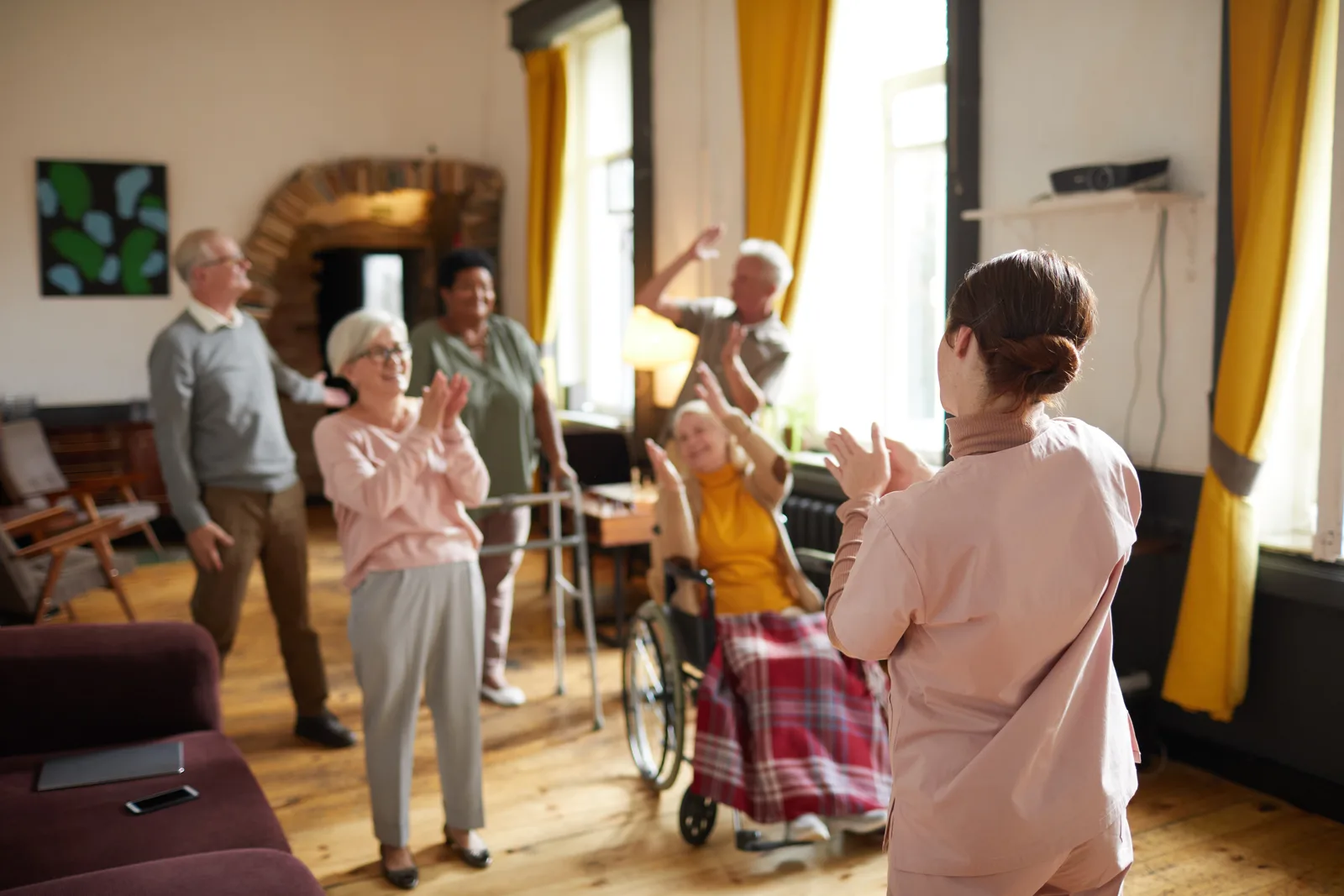
Beyond cognition, recreational activities directly influence physical health. Even gentle exercises incorporated into playful activities – dancing, adapted gardening, chair yoga – improve balance, flexibility, and muscle strength, dramatically reducing the risk of falls, which are the leading cause of hospitalisation among older adults.
The documented benefits include:
- Reduction of depressive symptoms by up to 40% through regular social activities
- Improved sleep quality through structured routines and moderate physical activity
- Increased appetite and interest in balanced nutrition
- A strengthened immune system through reduced stress and isolation
- Maintained functional independence over longer periods
- A greater sense of purpose and improved self-esteem
Types of age-appropriate recreational activities
The range of activities available to seniors today is impressive, going far beyond the stereotype of bingo and television. Each person has unique preferences shaped over a lifetime, and respecting those preferences is essential if activities are to be genuinely beneficial rather than merely social obligations.
Creative activities hold a special place in modern recreational programmes. Painting, drawing, crafts, ceramics, or textile art offer a channel for emotional expression and the opportunity to create something tangible, generating immediate satisfaction. Many seniors discover artistic talents they never had time to explore during their working years.
Social and cultural activities
The social component is vital for emotional wellbeing. Book clubs, discussion groups, communal meals, and cultural outings create opportunities for authentic interaction and the forming of friendships. At Centrul rezidențial pentru seniori Park Residence - Rețeaua Affinity, recreational programmes are built around precisely this need for human connection, combining a variety of cultural activities with opportunities for socialising in comfortable surroundings.
Main categories of recreational activities:
- Adapted physical activities: senior gymnastics, dancing, nature walks, yoga, tai chi, hydrotherapy
- Cognitive activities: board games, puzzles, various courses, themed reading, learning foreign languages
- Creative activities: painting, drawing, music, theatre, crafts, creative writing
- Social activities: themed events, celebrations, cultural visits, volunteering, interest clubs
- Therapeutic activities: gardening, animal-assisted therapy, music therapy, aromatherapy
How to choose the right activities for your loved one
Choosing activities should not be a guessing exercise or a decision made solely by the family. The older person must be an active partner in this process, and their preferences – even if they seem unusual or different from what you consider "useful" – must be respected and incorporated into the programme.
The starting point is the senior's personal history. What passions have they had throughout their life? What activities brought them joy before? Are there hobbies that were set aside due to a lack of time or resources? Often, revisiting an old passion, adapted to current capabilities, generates far more motivation than introducing entirely new activities.
Essential selection criteria
Carefully assess current physical and cognitive abilities. An activity that is too difficult will lead to frustration and withdrawal, whilst one that is too simple may feel patronising. Finding the perfect balance – challenging enough to be stimulating, yet achievable with reasonable effort – is essential.
- Assess mobility and physical stamina without underestimating or overestimating capabilities
- Consider social preferences: some seniors prefer group activities, others prefer individual pursuits
- Check accessibility: location, transport, costs, and scheduling must all be compatible
- Respect individual pace – not every senior wants a packed daily schedule
- Allow trial periods and maintain flexibility when adjusting the programme
Adapting activities to physical and cognitive limitations
Limitations need not mean giving up – they call for creativity in adaptation. Modern technology and innovative approaches now enable participation in a wide range of activities even for those with reduced mobility or early-stage cognitive conditions. The key lies in flexibility and in accepting that the form of an activity can be modified without losing its essence.
For seniors with mobility difficulties, almost any activity can be adapted: painting can be done at a table or even in bed, gardening can become tending to potted plants at an accessible height, and dancing can be replaced with rhythmic movements from a chair. The essential thing is to preserve the element of enjoyment and personal achievement.
Strategies for people with cognitive decline
For those living with dementia or cognitive conditions, recreational activities become even more important, serving as an anchor in the present and as a stimulus for maintaining residual functions. However, they must be adapted with extra care, avoiding situations that cause confusion or anxiety.
Principles for effective adaptation:
- Simplify complex steps and provide clear instructions, repeated calmly
- Use visual cues and practical demonstrations rather than lengthy verbal explanations
- Create predictable routines that foster a sense of safety and comfort
- Draw on procedural and emotional memory, which are more resilient than factual memory
- Focus on the process itself, not on achieving a perfect end result
- Allow frequent breaks and monitor for signs of fatigue or frustration
Implementing a sustainable recreational routine
Initial enthusiasm for a new activity programme can be deceptive. The real challenge lies in sustaining that programme over the long term, transforming it from an interesting novelty into a routine that is looked forward to with genuine pleasure. This requires realistic planning and ongoing flexibility.
Begin gradually, with two or three activities per week, and slowly increase the frequency as you observe enthusiasm and energy. An overloaded programme quickly becomes a source of stress rather than relaxation. Variety is important: alternate physical activities with cognitive ones, social moments with time for reflection, and structured programmes with free time.
Monitoring and adjusting the programme
Monitor the older person's reactions and feedback, not just their attendance. Someone may regularly attend an activity out of a sense of duty without truly enjoying it. Speak openly about preferences, about what has been enjoyable and what has not, and be prepared to modify the programme accordingly.
- Establish a consistent but not rigid schedule – the same days and times create positive anticipation
- Keep track of progress and mood changes to identify patterns and preferences
- Involve the person in planning future activities, giving them a sense of control and autonomy
- Review the programme quarterly and adjust it in line with any changes in abilities or interests
The family's role in supporting activities
The family plays a complex role in the recreational activities equation: provider of logistical support, source of motivation, and sometimes a direct participant – but never a controller or critical evaluator. The balance between being present and allowing independence is a delicate one, yet it is essential for long-term success.
For many seniors, the occasional participation of a family member in an activity completely transforms the experience. A cultural outing becomes more special when shared with a grandchild; a cookery class becomes an opportunity to pass family recipes on to a younger generation. These moments of shared activity strengthen relationships and create precious memories for everyone involved.
Healthy boundaries for family involvement
At the same time, families must recognise when their own involvement becomes counterproductive. Overprotectiveness or excessive monitoring can turn recreational activities into supervised tasks, stripping away their very essence of freedom and enjoyment. Seniors need spaces in which to simply be themselves, free from the pressure of family expectations.
- Handle logistics (transport, initial accompaniment) without becoming a permanent fixture
- Show genuine interest in activities by asking open questions, not conducting interrogations
- Celebrate participation and effort, not just visible results
- Respect the desire for privacy and social relationships that exist independently of the family
- Be alert to signs of exhaustion and offer support without criticising limitations
When to seek professional programmes
There are times when a family's resources and time are simply not sufficient to provide a senior with a varied and consistent recreational programme. Recognising this is not a failure – it is a mature decision made in the best interests of your loved one. Professional programmes offer structure, diversity, and socialisation that families, however devoted, cannot always provide.
Specialist day centres and modern residential care facilities have developed sophisticated recreational programmes grounded in scientific evidence and continuously adapted to seniors' evolving needs. These benefit from specifically trained staff, appropriately equipped spaces, and a consistent community of participants – all elements that facilitate sustained engagement.
Criteria for evaluating professional programmes
Centrul rezidențial pentru seniori Park Residence - Rețeaua Affinity in Bucharest exemplifies the modern approach to recreational activities integrated within quality care. Here, programmes are not optional extras or "time-fillers", but essential components of personalised care, planned by a multidisciplinary team according to each resident's individual needs and preferences. This integrated approach ensures that recreational activities work in synergy with medical care and emotional support.
When evaluating a professional programme, check:
- The genuine variety of activities on offer and their actual weekly frequency
- The staff-to-resident ratio and the qualifications of the activities coordinators and occupational therapists
- The possibility of personalising the programme and whether individual preferences are respected
- The quality of the spaces dedicated to activities and the available facilities
- The genuine involvement of residents and the atmosphere observed during visits
- Feedback from other families and the satisfaction levels of current participants
Frequently asked questions
How much time should a senior dedicate to recreational activities each day?
There is no universal answer, as it depends on individual energy levels and interests. As a general rule, one to two hours of structured activities per day, supplemented by informal moments of socialising or personal hobbies, represents a healthy balance. The important thing is that it should be a pleasurable routine rather than an exhausting one, with room for rest and personal time.
What should I do if my loved one refuses to take part in activities?
Resistance may point to several underlying issues: the activities proposed may not align with their interests, there may be social anxiety or a fear of failure, or their physical or emotional state may not be conducive to participation at that time. Speak openly about the reasons for their refusal, offer a range of options, and start with individual activities or small groups, which tend to be less daunting. Having a family member participate in the first few sessions can help ease initial anxiety.
Can recreational activities slow the progression of dementia?
Studies show that regular cognitive and social activities can slow cognitive decline and help maintain quality of life for longer in people with early or moderate-stage dementia. Whilst they do not halt the progression of the condition, they significantly improve daily wellbeing, reduce anxiety and agitation, and help maintain social connections. Activities must be adapted to the stage of the condition in order to avoid frustration.
How can I tell whether a recreational programme is effective?
Observe changes in general mood, sleep quality, appetite, and willingness to engage socially. Seniors involved in well-suited activities tend to show greater enthusiasm, talk about their experiences, and look forward to scheduled sessions. A reduction in vague physical complaints and an overall increase in energy are positive indicators. Direct feedback from the person themselves remains the most important criterion of all.
What is the average cost of professional recreational programmes?
Costs vary considerably depending on the type of service. Day centres may charge between 500–1,500 RON per month for a few days per week, depending on the programmes included. In residential care facilities, recreational activities are usually included in the monthly care fee. Free or subsidised options are also available through local councils, community centres, or non-profit organisations, though these often have more limited variety.
Can recreational activities be adapted for seniors who are confined to bed?
Absolutely. Listening to music, audio therapy, aromatherapy, watching performances, structured conversation, verbal cognitive exercises, adapted art (drawing or painting with an adjustable easel), and even miniature gardening are all possible. Modern technology enables virtual visits to museums, participation in online courses, and video calls with groups of friends. Creativity and personalisation are the keys to success.
Recreational activities are not a luxury or a secondary element of senior care – they are the component that transforms mere survival into a life filled with meaning and joy. For your family, the investment of time in finding and sustaining the right programme will be rewarded with more frequent smiles, more animated conversations, and the longer preservation of the person you know and love. If family resources are limited or you would like a comprehensive professional programme, explore the options available in your community and don't hesitate to seek specialist support.
This article is for informational purposes only and does not replace medical advice. Please consult a specialist for specific situations.
Previous
Frailty Syndrome in the Elderly: How to Recognise It at Home
Next
Malnutrition in the Elderly: Signs That Families Need to Recognise
Similar articles
Sarcopenia in the Elderly: How to Recognise It and What Families Can Do
12 November 2026
The Rights of the Elderly Patient in Romania — What the Family Needs to Know
9 November 2026
Training courses for carers: what every family needs to know
7 November 2026
Frequently Asked Questions About Alzheimer's Disease: Answers for Families
6 November 2026

Hearing Loss in the Elderly: A Practical Guide to Hearing Aids
5 November 2026
Immobility Syndrome in the Elderly: Risks and Home-Based Solutions
4 November 2026