
How to Get Help from DGASPC for a Dependent Elderly Person
Concrete steps, required documents and what services you can request from DGASPC for the care of a dependent senior. A complete guide for families in need of support.
Contents
When a parent or grandparent becomes dependent due to age, illness, or disability, many carers face the same dilemma: how to provide the necessary care without exhausting the family's resources? High costs of private services, physical and emotional burnout, lack of time — all of these make caring for a dependent elderly person an overwhelming challenge for the entire family.
The good news is that the Romanian state offers support through the General Directorate for Social Assistance and Child Protection (DGASPC), an institution that can provide free or subsidised services for dependent elderly people. However, many families are unaware of these services or fear that the process is too complicated. In reality, with the right information and necessary documents, you can obtain real, tangible help.
This article explains step by step how to initiate a request with DGASPC, what services you can apply for, how the assessment process works, and what mistakes to avoid so as not to delay your application. Whether you need home care, placement in a specialist centre, or financial allowances to support caregiving, the information below will help you navigate this process more easily.
Contents
- What DGASPC is and what services it offers to families with dependent elderly people
- How to initiate a request: where to apply and what documents are required
- The social investigation and dependency assessment
- Free and subsidised services after assessment
- Eligibility criteria and access conditions
- Common mistakes and how to avoid delays to your application
- Frequently asked questions
What DGASPC is and what services it offers to families with dependent elderly people
DGASPC is the public institution at county or local level that manages and coordinates social services for vulnerable people, including dependent elderly individuals. Each county and sector of the Bucharest Municipality has its own DGASPC, which operates autonomously in terms of organisation but adheres to the national legal framework.
For families caring for a dependent elderly person, DGASPC can offer three main categories of services:
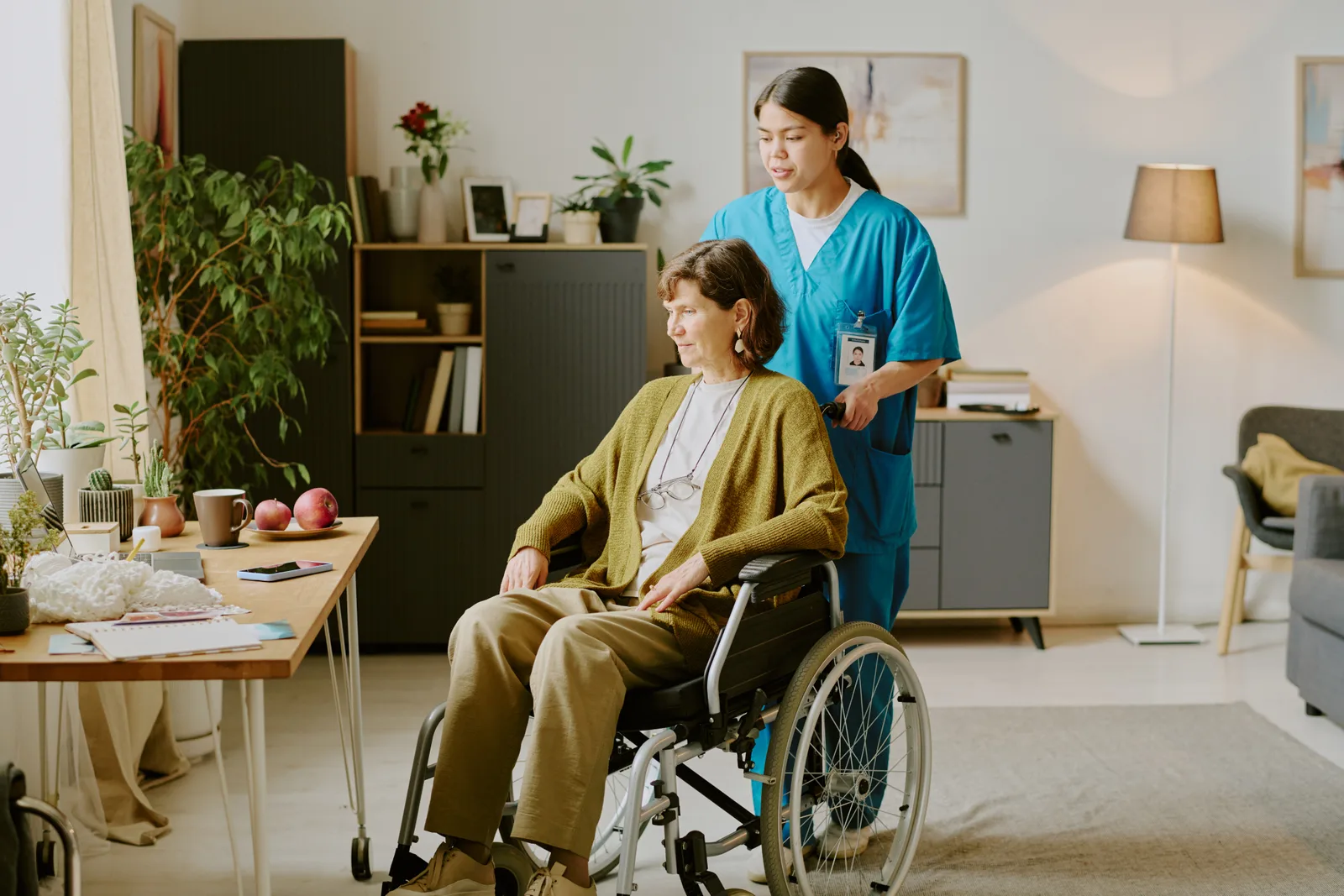
- Home care — personal assistants or carers who come to the home to help with personal hygiene, medication administration, meal preparation, and socialisation
- Placement in residential centres — care homes for elderly people, day centres, or rehabilitation centres for those requiring continuous supervision
- Allowances and benefits — monthly financial support for a personal assistant for a person with a disability, or for a designated carer, depending on the social and medical situation
- Respite services — temporary support for carers, offering a few hours or days of rest by taking over the care of the elderly person
These services are either completely free or subsidised, depending on the family's income and the assessed level of dependency. The aim is to ensure a decent quality of life for the elderly person and to prevent burnout amongst family carers.
Why it is important to contact DGASPC
Many carers put off seeking help from DGASPC out of fear of bureaucracy or feelings of guilt about not being able to manage alone. However, accessing social services is not a sign of weakness — it is a responsible decision that protects both the elderly person and the family. Statistics show that families who receive institutional support report a significant reduction in stress and an improvement in the quality of life for all family members.
How to initiate a request: where to apply and what documents are required
The first step to obtaining help from DGASPC is to submit a written request to the DGASPC office in the county or sector where the dependent elderly person is registered or residing. The request can be submitted in person, by post, or, in some counties, online through the available digital platforms.
Who is entitled to submit the request? In principle, a request may be initiated by:
- The elderly person themselves, if they are still capable of making decisions
- A family member (child, spouse, brother or sister)
- A legal guardian or curator, if the elderly person has been placed under legal guardianship
- The GP or a social worker who is familiar with the situation
Required documents
Each DGASPC may have slightly different requirements, but in general you will need the following documents:
- Standard application form (usually available on the DGASPC website or at the office)
- Copy of identity document for both the elderly person and the applicant
- Birth certificate of the elderly person
- Medical documents — a referral letter from the GP, hospital discharge summary, updated diagnosis, certificate of disability classification (if applicable)
- Income documents — pension statement, bank statement, statutory declaration of family income
- Property documents — to assess the financial situation (land registry extract, rental agreement, etc.)
- Other documents — death certificate of spouse (if applicable), proof of legal representative status
It is advisable to call DGASPC in advance to verify the exact list of documents required, as complex situations may require additional paperwork. If the elderly person does not have their documents in order or has severe disabilities, consider consulting a solicitor or an independent social worker to ensure the application is prepared correctly from the outset.
The social investigation and dependency assessment
Once the application has been submitted, DGASPC will assign a social worker who will conduct a social investigation at the elderly person's home. The purpose of this visit is to directly assess the living conditions, the level of dependency of the elderly person, and the resources available within the family.
What will the social worker assess during the visit?
- Health status — the ability to carry out basic activities (eating, dressing, personal hygiene, mobility)
- Living conditions — cleanliness, heating, access to running water, safety within the home
- Family resources — how many members live together, who can provide care, how many hours per day are available
- Financial situation — monthly income, expenditure on medication and treatment, debts
- Social isolation — whether the elderly person still has friends or neighbours who visit, and whether they participate in any activities
Medical and psychosocial assessment
In addition to the social investigation, a comprehensive medical assessment is required in most cases, carried out by a specialist doctor or an assessment panel. This assessment establishes the level of dependency — mild, moderate, or severe — and recommends the type of services needed.
The entire assessment process may take between two and six weeks, depending on the complexity of the case and the workload of the DGASPC. During this period, it is important to be cooperative, provide all requested information, and not conceal any relevant details. The social worker is not there to judge, but to identify the best solution for both the elderly person and your family.
Free and subsidised services after assessment
Once the assessment is complete, DGASPC will issue an assessment report and propose an individualised care plan. Depending on the results of the assessment, you may be entitled to the following services:
Home care
This service is ideal for elderly people who can remain at home but need assistance with daily activities. The carer visits the home daily or several times a week and provides:
- Personal hygiene (bathing, nappy changes, haircuts, shaving)
- Meal preparation and assisted feeding
- Medication administration in accordance with prescriptions
- Socialisation and recreational activities
- Accompaniment to medical appointments and other outings
The service may be free for families on low incomes or may require a nominal monthly contribution, depending on local regulations.
Placement in residential centres
For elderly people with severe dependency or who have no family to care for them, DGASPC may recommend and facilitate admission to a care home for elderly people. These centres provide accommodation, meals, medical care, and continuous support.
The cost may be covered entirely by the state for people with no income or very low income, or partially, with the family contributing a proportion of the elderly person's pension. Day centres are a good alternative for those who can remain at home at night but require supervision and activities during the day.
Personal assistant allowance
If the elderly person holds a certificate of disability classification (severe or pronounced), a family member may be employed as a personal assistant, receiving a monthly allowance and social insurance contributions. This option is frequently chosen by adult children who give up other employment to care for their parent.
Eligibility criteria and access conditions
Not everyone is eligible for all DGASPC services. Access criteria are based on:
- Age — generally 65 years of age or over (in some cases, people with disabilities below this age may also qualify)
- Level of dependency — confirmed through medical and social assessment
- Monthly income — below a certain threshold (for example, below the average national wage or the minimum subsistence level)
- Lack of adequate family support — confirmed through the social investigation
- Domicile or residence in the relevant county — to justify funding from the local budget
Even if you do not meet all the criteria for free services, you may still be eligible for subsidised services or free advice from social workers. Do not give up simply because your income is above the threshold — each case is assessed individually.
How the financial contribution is calculated
If the family's income exceeds the established threshold, DGASPC will calculate a monthly contribution using a formula that takes into account the elderly person's pension, the income of those legally obliged to provide maintenance (children, spouse), and documented medical expenses. This contribution is generally significantly lower than the market rate for comparable private services.
Common mistakes and how to avoid delays to your application
Many families experience delays or lose access to services due to avoidable mistakes. Here are the most common pitfalls and how to avoid them:
- Submitting an incomplete application — Check the list of documents at least twice and confirm the requirements by phone before visiting the office. An incomplete application means delays of several weeks.
- Concealing information — Some applicants hide income or assets for fear of being deemed ineligible. Social investigations cross-reference other sources, and the discovery of false information leads to the automatic rejection of the application.
- Failing to cooperate with the social worker — Be available for the home visit, answer phone calls, and provide any additional documents promptly. A defensive or unresponsive attitude delays the process.
- Waiting until the situation becomes critical — Do not wait until the situation reaches crisis point. The assessment process takes weeks, and services do not begin immediately after approval. Submit your request as soon as possible.
- Failing to update medical documents — A referral letter from two years ago no longer reflects the current situation. Ask your GP for a recent report.
When to consult a specialist
For complex situations — for example, when the elderly person has property in multiple counties, when there are family disputes regarding care, when they have been placed under legal guardianship, or when an application has been rejected — it is advisable to consult a solicitor specialising in civil law and social assistance or an independent social worker. The cost of a consultation is far less than the loss of precious time and access to services.
Additionally, non-governmental organisations working with elderly people can offer free advice and guide you step by step through the preparation of your application. Do not hesitate to ask for help — your rights and those of your parent matter.
Frequently asked questions
How long does the process take from submitting the request to receiving services?
On average, the process takes between four and eight weeks, depending on the complexity of the case and the availability of social workers. In urgent situations, DGASPC can expedite the assessment, but it is important to submit your request well in advance.
Can I apply for DGASPC services if my parent has a large pension?
Yes, you can apply, but you may be required to pay a higher monthly contribution or may not be eligible for completely free services. The final assessment takes into account not only the elderly person's income, but also the overall family situation and medical expenses.
What happens if my application is rejected?
You have the right to request a written explanation of the rejection and to lodge an appeal within 30 days. You may also submit a new application if the situation changes (for example, if the health condition deteriorates or if the family's income decreases).
Can I choose the residential centre or the home carer?
DGASPC will present the options available within its own network or through centres with which it has contracts. You may express preferences, but the final choice depends on the availability of places and the allocated budget. For private services, you will have greater freedom of choice, but will bear the full cost yourself.
Are DGASPC services permanent, or do they need to be renewed?
As a rule, services are reassessed annually or whenever the social or medical situation changes. You will be notified when documents need to be updated. Maintaining communication with your assigned social worker is essential for continuity of services.
If I live in a different city from my parent, can I submit the request on their behalf?
Yes, you can submit the request to the DGASPC in the county where your parent is registered or residing. You will need to provide a notarised power of attorney or a statutory declaration, depending on local requirements. Check by phone before making the journey.
Obtaining help from DGASPC may seem like a complicated process, but with the right information and documents prepared in advance, you can access valuable services that will significantly ease the burden of caring for a dependent elderly person. You are not alone in this journey — state institutions and social care professionals are there to support you. If you need personalised advice or encounter difficulties preparing your application, do not hesitate to contact an independent social worker or a specialist solicitor. Your elderly person's rights and your own peace of mind matter.
This article is for informational purposes only and does not replace medical advice. For specific situations, please consult a specialist.
Previous
What You Need to Know About Arthrosis and Joint Pain in Old Age
Next
What You Need to Know About Memory and Attention Training in Old Age
Similar articles

Foot Care for the Elderly: Warning Signs and Prevention
14 October 2026

Sleep Disorders in Seniors: When and How to Seek Help
13 October 2026

Osteoporosis and Bone Health — An Essential Guide for Carers
13 October 2026

Validation Therapy for Elderly People with Dementia: A Guide for Families
13 October 2026
Secondary effects of medication in the elderly: warning signs
12 October 2026

Occupational Therapy at Home for the Elderly: A Complete Guide
11 October 2026