
Home Visit Consultation with Your GP: Rights and How to Prepare
Find out when and how you can request a home visit from a GP for a dependent elderly person, what documents to prepare, and what specific medical services you can request during the consultation.
Contents
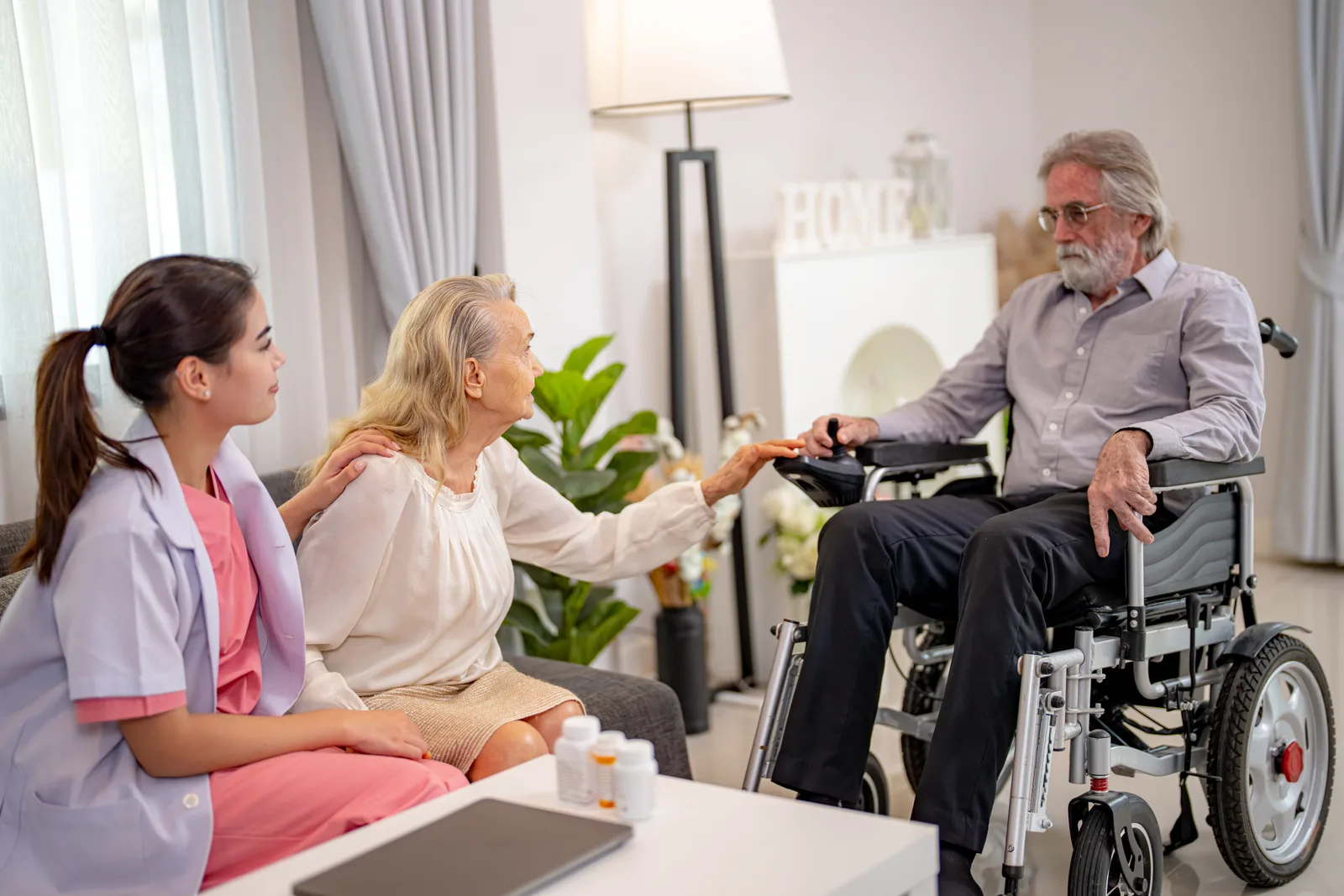
When your elderly parent can no longer make it to the GP surgery due to limited mobility, a chronic illness, or functional dependency, the healthcare system can suddenly feel out of reach. You may wonder whether it's possible for the GP to come to the house, how to formally request a visit, and whether you're asking too much. The reality is that a home consultation is a legal right for certain categories of patients, yet many families don't know how to use it effectively.
In the sections below, we'll walk you through step by step how to manage a GP home visit for a dependent elderly person: from the legal aspects and how to make a request, to practically preparing for the consultation and communicating effectively with the doctor for long-term monitoring. Because when you know what to ask for and how to prepare, a home consultation becomes a valuable tool in caring for your loved one.
Contents
- The legal right to home consultations: who it applies to
- How to formally request a GP home visit
- Preparing for the consultation: essential documents and information
- What services you can specifically request during the visit
- When it's an emergency and when a home consultation is needed
- Common mistakes and effective communication with your doctor
- Long-term monitoring and medical coordination
- Frequently asked questions
The legal right to home consultations: who it applies to
Under the Framework Contract with GPs, a home consultation is a free medical service available to certain categories of insured patients. It is not a personal favour — it is a clear legal provision that ensures access to medical care for vulnerable individuals.
Home consultations are available to patients who meet at least one of the following conditions:
- Bedridden or unable to travel due to acute or chronic illness
- Dependent elderly individuals with a severe degree of functional dependency
- Disabling chronic conditions that prevent travel (advanced Parkinson's disease, multiple sclerosis, severe dementia)
- Palliative patients or those in the terminal stages of illness
- People with severe disabilities that make transport impossible
Who determines the need for a home consultation
The decision regarding the medical indication for a home consultation rests with the GP. They assess the patient's condition based on medical records, history, and information provided by the family. In practice, the GP will likely request an initial assessment or documentation confirming the degree of dependency or immobility.
It's important to understand that a GP is not obliged to carry out home consultations simply for convenience, or because the family doesn't have time to accompany the elderly person. There must be a genuine, documented, and verifiable medical justification.
How to formally request a GP home visit
A home consultation must be requested officially through the GP surgery, either by telephone or in person. Here are the concrete steps for formalising the request:
- Contact the surgery by phone or in person and explain the elderly person's medical situation
- Provide clear details about why the patient is unable to travel
- Schedule the visit at a time that works for both the doctor and the family
- Confirm the exact address and a phone number where you can be reached if there are any changes
Frequency of visits and scheduling
The frequency of home consultations depends on the progression of the illness and the doctor's recommendation. For stable chronic patients, visits may be monthly or as needed. For acute situations or cases of deterioration, the doctor may arrange weekly or even more frequent visits. In practice, GPs can carry out a limited number of home visits per day, so flexibility and understanding from the family are essential.
Most surgeries set specific days and time slots for home consultations. Ask at the surgery what their schedule is, and try to request visits well in advance rather than at the last minute, so you can secure a convenient appointment.
Preparing for the consultation: essential documents and information
An effective home consultation begins with thorough preparation on the family's part. The doctor arrives with limited time and needs clear, organised, and complete information in order to make sound decisions. Here is what you should prepare before the visit:
Required medical documents
- The patient's national health insurance card
- National identity document
- Up-to-date medical record (if you have a copy at home)
- All current prescriptions and any recently expired ones
- Recent test results (from the past 3–6 months)
- Medical letters and referrals from other specialists
- Discharge summaries if the elderly person has been recently hospitalised
Complete list of medications
Prepare a written and comprehensive list of all medications the elderly person is taking, including exact doses and when they are administered. Include dietary supplements, vitamins, and any herbal remedies. Make the medication boxes available for the doctor to check — there are sometimes mix-ups between brand names and active substances.
Symptom diary and observations
Keep a brief diary in the days leading up to the visit, noting:
- New or worsening symptoms (when they appeared, how long they last, their severity)
- Changes in appetite, sleep, or bowel habits
- Episodes of confusion, dizziness, falls, or pain
- Blood pressure and blood sugar readings (if you monitor these at home)
- Any changes in behaviour or general wellbeing
This diary helps the doctor quickly understand how things have been progressing and identify worrying patterns that families often relay in a fragmented and disjointed way.
What services you can specifically request during the visit
A home consultation is not merely a brief check-up. The GP can carry out and prescribe a range of medical services that families should be aware of and explicitly request when needed:
Medical services provided at home
- Full physical examination: chest and heart auscultation, abdominal palpation, basic neurological assessment
- Measurement of vital signs: blood pressure, pulse, oxygen saturation (if the doctor has a pulse oximeter), temperature
- Functional and cognitive assessment: simple testing of mobility, balance, and cognitive function
- Wound inspection or assessment of skin issues (pressure sores, ulcers, dermatitis)
Prescriptions and medical referrals
At the end of the consultation, the GP may issue:
- Subsidised and free prescriptions for necessary chronic and acute medications
- Referral letters to specialists (geriatrics, neurology, cardiology, etc.)
- Referrals for laboratory tests at home or at a laboratory, depending on the situation
- Recommendations for imaging investigations (X-rays, ultrasounds, CT scans) where accessible with adapted transport
- Medical certificates for various purposes (disability grading, carer status, other social benefits)
Assessment for palliative or home care
If the elderly person's condition requires complex care, the GP can assess and recommend:
- Enrolment in home palliative care programmes
- Requesting home medical services through the Health Insurance Fund
- Referral to community healthcare services or mobile teams
Don't hesitate to ask directly about these options if you feel the family situation is becoming difficult to manage without additional professional support.
When it's an emergency and when a home consultation is needed
One of the most common dilemmas for families is distinguishing between a genuine emergency requiring a call to 112 and situations that warrant a scheduled or same-day urgent home consultation.
Clear signs of a medical emergency – call 112
Call 112 immediately if the elderly person shows any of the following:
- Severe chest pain or pressure in the chest
- Severe breathing difficulties, choking, or blue lips
- Loss of consciousness or sudden severe confusion
- Signs of stroke: drooping mouth, sudden paralysis of a limb, incoherent speech
- Heavy bleeding that won't stop
- Seizures or epileptic episodes
- Serious trauma following a fall (suspected hip or head fracture)
Situations that warrant an urgent home consultation
Contact the GP urgently (on the same day) if you notice:
- Persistent fever above 38°C in an elderly person, especially if accompanied by chills
- Dehydration with refusal to drink fluids, very dark or absent urine
- Intense abdominal pain without an obvious cause
- Urinary tract infections with severe symptoms (burning, pain, cloudy urine, blood)
- Moderate breathing difficulties without acute choking
- Sudden worsening of a chronic condition (decompensated diabetes, uncontrolled hypertension)
- Infected wounds or pressure sores showing signs of infection (redness, pus, odour)
Scheduled consultations for monitoring
For monitoring stable chronic conditions, reviewing treatment, or renewing prescriptions, arrange regular home consultations — ideally monthly or as recommended by the doctor. Consistency and predictability help both the family and the doctor manage the elderly person's condition more effectively.
Common mistakes and effective communication with your doctor
Even when a home consultation is well-intentioned, families often make certain mistakes that can reduce the effectiveness of the visit or complicate the relationship with the GP. Here are the most common pitfalls and how to avoid them:
Common family mistakes
- Lack of preparation: the doctor arrives and the family is rummaging through drawers looking for prescriptions and test results, wasting precious time
- Downplaying symptoms: "She does have pain sometimes, but she manages" — provide precise information rather than minimising things
- Disorganised reporting: long, rambling accounts delay the consultation; use clear lists and bullet points instead
- Pressure for prescriptions: "You need to give her something stronger" — allow the doctor to decide on treatment based on medical grounds
- Ignoring recommendations: the family requests the consultation, receives advice, fails to follow it, and then complains that nothing has improved
- Unrealistic expectations: a home consultation cannot replace complex investigations or hospitalisation when these are necessary
How to communicate effectively with your GP
For a productive long-term collaboration:
- Be concise and organised: state the main concern in the first 2–3 sentences, then provide further detail
- Write down your questions before the visit so you don't forget to ask them
- Clarify any doubts: if you don't understand a recommendation or diagnosis, ask there and then
- Ask for written explanations: for complex treatment regimens or significant changes
- Respect medical expertise: even if you've read something online, the doctor knows the patient and their medical context
- Give feedback: at follow-up visits, report how things developed after the last consultation
The relationship with a GP is a long-term partnership. Mutual respect, open communication, and honesty build trust and lead to better care for your elderly loved one.
Long-term monitoring and medical coordination
A home consultation should not be an isolated event, but part of a coherent care plan for the dependent senior. Long-term monitoring and coordination with other specialists are essential for the elderly person's quality of life.
Establishing a personalised care plan
Discuss with the GP the possibility of creating a structured care plan that includes:
- Frequency of home visits and the criteria for requesting additional ones
- Parameters to monitor at home: blood pressure, blood sugar, weight, specific symptoms
- Clear therapeutic goals: pain management, blood pressure stabilisation, prevention of complications
- Warning signs that require prompt intervention
- An emergency plan: when to call the doctor, when to dial 112
Coordination with specialists and medical services
The GP plays the role of coordinator of medical care. Make sure you:
- Inform the GP about all specialist consultations and any changes to treatment
- Bring to each visit medical letters and recommendations from other doctors
- Ask for help with arranging investigations at home or with adapted transport
- Discuss complementary services: physiotherapy, palliative care, social assistance
Documentation and medical journal
Keep a complete medical file at home with all documents organised chronologically. Use a notebook or an app to record:
- The dates and key conclusions of each consultation
- Changes to treatment and the reasons for them
- How symptoms have progressed and the response to treatments
- Any incidents or significant changes in condition
This documentation helps the doctor identify long-term trends and adjust the therapeutic strategy more effectively.
Frequently asked questions
Is a home consultation free of charge?
Yes. For insured patients who meet the medical criteria for immobility or severe dependency, a GP home consultation is free and covered by the National Health Insurance Fund. There is nothing additional to pay.
Can a GP refuse to come to the home?
A GP may decline a home consultation if they judge that the patient is able to travel to the surgery, or if there is no valid medical justification. In cases of genuine emergency that cannot be managed at home, the doctor will recommend going to an emergency unit. Discuss the situation openly so that solutions can be found.
How often can I request home consultations?
The frequency depends on the patient's medical condition and the doctor's recommendation. For stable chronic conditions, visits may be monthly or at longer intervals. During periods of deterioration or intensive monitoring, weekly visits may be arranged. Do avoid unjustified requests, however, as these place an unnecessary burden on the doctor.
What should I do if my GP doesn't offer home consultations?
Not all GPs offer this service, even though it is provided for in their contract. You can speak with the county Health Insurance Fund to be directed to surgeries that do offer home consultations, or you can transfer to a GP who provides this service in your area.
Can a nurse accompany the doctor on a home visit?
Yes. In many cases, the GP comes accompanied by the surgery nurse, particularly when nursing procedures, specimen collection, or other assistance is required. This is beneficial for the patient and improves the quality of the consultation.
What should I do if the elderly person refuses the doctor's visit?
Older people, particularly those with dementia, may refuse medical care out of fear, confusion, or a lack of insight into their illness. Try communicating calmly, involve the doctor in offering gentle explanations, and create a peaceful environment for the consultation. In serious cases of refusal that put the person's life at risk, speak with the doctor and, if necessary, with social services about the legal options available.
A GP home consultation is a valuable right and an essential tool in caring for a dependent senior. When you know what is available to you, how to prepare, and how to communicate effectively, this visit becomes a genuine bridge to quality medical care — even when attending a surgery is no longer possible. If you want to ensure the best possible conditions for your elderly loved one, start by documenting their medical situation, organising all relevant information, and having an open conversation with the GP about a long-term care plan tailored to their specific needs.
This article is for informational purposes only and does not replace medical advice. For specific situations, please consult a specialist.
Previous
COPD in the Elderly: Warning Signs and Daily Care
Next
How to Manage a Hypoglycaemic Crisis in an Elderly Person: Signs and Solutions
Similar articles
How to Prepare a Care Plan for an Elderly Person with Multiple Conditions
30 October 2026
Alzheimer's Disease — An Overview for Carers
27 October 2026
Carer's Allowance: How to Obtain It and What Your Obligations Are
27 October 2026
Functional Decline After Hospitalisation: What the Family Can Do
26 October 2026
Repeated Falling Episodes in the Elderly: What to Do Immediately and How to Prevent Them
25 October 2026
Nail Care for the Elderly: Why It Matters and When to Seek Help
24 October 2026