
Stroke in the Elderly: What Families Need to Know in the First Few Days
Complete guide for families: from recognising the warning signs to choosing the best stroke recovery plan for your loved one.
Contents
When a loved one suffers a stroke, the entire family's world is turned upside down in an instant. Questions multiply, fear becomes overwhelming, and decisions must be made quickly, often without fully understanding what is happening. Whether you are in this situation now or wish to be prepared for a possible future scenario, this guide will help you navigate through the first critical days and make informed decisions for your loved one's recovery.
Stroke remains one of the leading causes of disability in adults, with older people being the most vulnerable group. We know that the immediate period following a stroke can largely determine the quality of long-term recovery. That is why every minute, every decision, and every question asked at the right time matters enormously. Let us walk through what you need to know, step by step.
Contents
- FAST warning signs and what to do immediately
- What happens in hospital during the first 72 hours
- Common disabilities after stroke and their impact
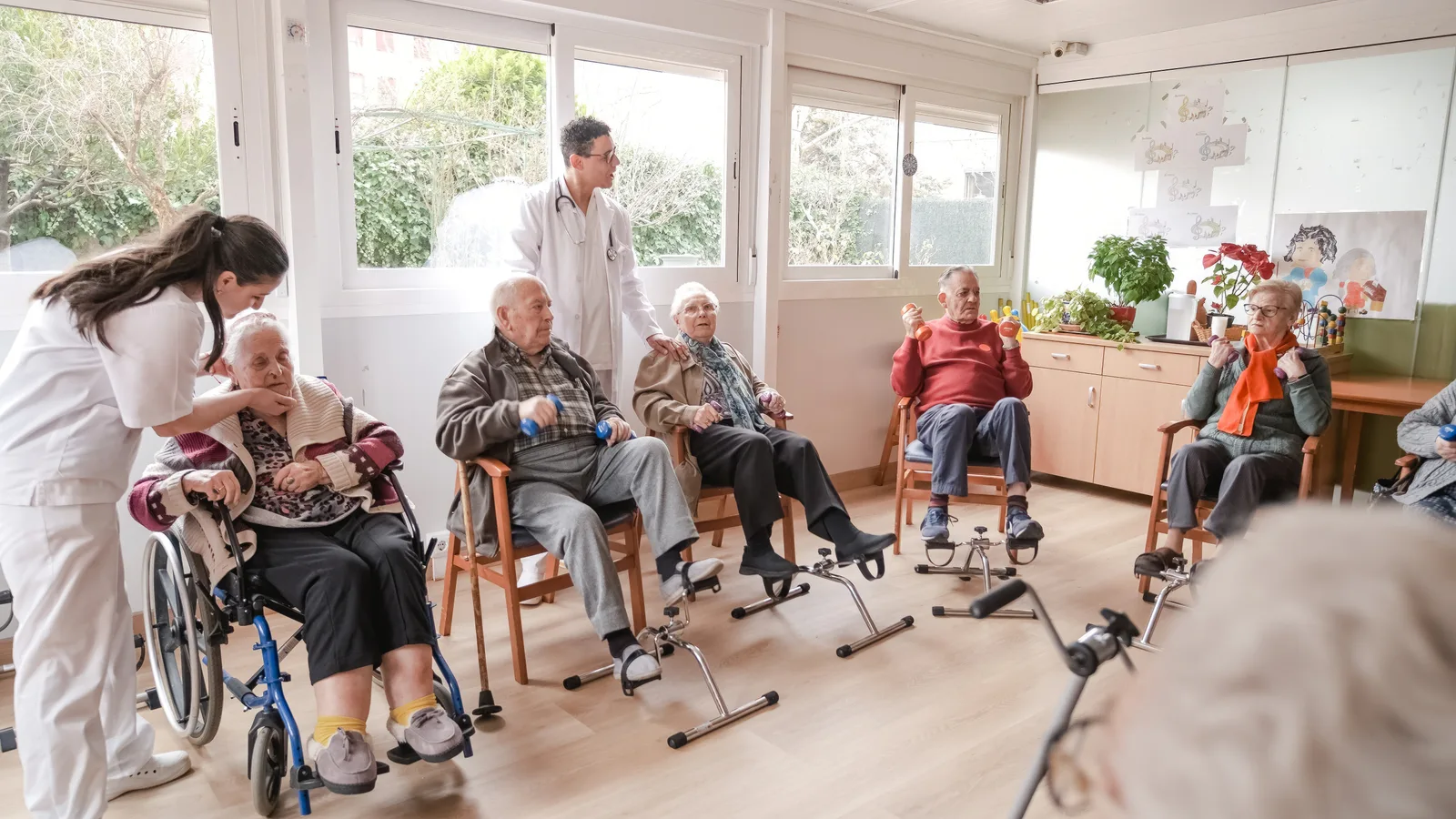
- Stages of recovery: physiotherapy, speech therapy, and occupational therapy
- How to choose ongoing care after discharge
- The family's role in the recovery process
- Frequently asked questions
FAST warning signs and what to do immediately
Quickly recognising the signs of a stroke can save a life and significantly reduce the degree of disability. The FAST method is a simple tool that every family member should know and remember.
What FAST means
- F (Face): Ask the person to smile. Is one corner of the mouth drooping or does the face look asymmetrical?
- A (Arms): Ask the person to raise both arms. Does one arm fall or cannot be raised?
- S (Speech): Ask the person to repeat a simple sentence. Is their speech slurred or confused?
- T (Time): If you notice any of these signs, call 112 immediately. Note the time when the first symptoms appeared.
In addition to these main signs, watch out for other symptoms: sudden severe headache, loss of vision in one or both eyes, difficulty walking, dizziness, or loss of balance. Do not wait for symptoms to disappear on their own and do not attempt to transport the person in a private car – an ambulance provides specialist care on the way to hospital and alerts the medical team in advance, gaining precious time.
What you must NOT do
Avoid giving the person water, medication, or food – there is a risk of choking if the ability to swallow is affected. Do not leave the person alone and do not delay calling emergency services in the hope that it will pass. Every minute the brain is deprived of oxygen, millions of nerve cells are lost.
What happens in hospital during the first 72 hours
Once at hospital, the patient will be urgently assessed by the neurology team. The first 4–6 hours are considered the "therapeutic window" during which certain treatments can dissolve the blood clot and dramatically reduce brain damage. Doctors will quickly determine whether the stroke is ischaemic (caused by a clot) or haemorrhagic (caused by bleeding), using a CT scan or MRI.
Essential questions for the medical team
In the first few days, family members are often in a state of shock and may forget to ask important questions. Here is what you should find out from the doctor:
- What type of stroke was it and which area of the brain was affected?
- What neurological deficits have been identified so far?
- What treatments have been administered and what is the short-term treatment plan?
- What is the patient's prognosis and what are the risks of complications?
- When can rehabilitation begin and what rehabilitation services are available in hospital?
- How long does the hospital stay typically last and what needs to be prepared for discharge?
Do not be afraid to ask the doctor to explain medical terms or to repeat information – it is your right to fully understand the situation. Write down the answers and, if possible, bring someone with you to discussions with doctors, as two people will retain more details than one.
Monitoring during the first few days
During the first 72 hours, the patient will be closely monitored to prevent complications such as further strokes, cerebral oedema, aspiration pneumonia, or venous thrombosis. It is normal for the patient's condition to fluctuate during this period, and neurological deficits may become more apparent as the acute effects of the stroke stabilise.
Common disabilities after stroke and their impact
The consequences of a stroke vary enormously from person to person, depending on the area of the brain affected, the extent of the damage, and how quickly treatment was given. Understanding these possible disabilities will help you prepare for the challenges of daily care.
Aphasia – language disorders
Aphasia is difficulty speaking, understanding, reading, or writing. Some patients can understand everything but cannot articulate words (expressive aphasia), whilst others speak fluently but use the wrong words or cannot understand what is said to them (receptive aphasia). This disability is extremely frustrating for both the patient and the family, as communication becomes a constant challenge. A speech and language therapist will be your main partner in recovering these functions.
Paresis and plegia – muscle weakness
Many patients develop paresis (weakness) or plegia (complete paralysis) on one side of the body, most commonly the side opposite to the affected cerebral hemisphere. This means difficulty or inability to walk, to use the arm or hand, or to maintain balance. Daily care thus becomes far more complex:
- Transfers from bed to chair require special techniques to prevent falls and to protect the carer's back
- Dressing, washing, and using the toilet require adaptations and assistive devices
- The risk of pressure sores increases if the person remains immobile for long periods
- Mobility may require a wheelchair, walking frame, or walking stick
Dysphagia – swallowing disorders
Dysphagia is one of the most dangerous consequences of stroke, as it can lead to aspiration pneumonia, a potentially fatal complication. If your loved one has difficulty swallowing, you will receive precise guidance on food consistency (ranging from pureed textures to thickened liquids) and correct positioning during meals. Speech and language therapy includes work on dysphagia, not only on speech.
Other common consequences
It would be remiss not to mention other difficulties that may arise: cognitive impairment and memory problems, emotional changes and post-stroke depression, problems with bladder and bowel control, chronic pain or abnormal sensations, and visual disturbances. Each patient has a unique combination of symptoms, and the medical team will individually assess their rehabilitation needs.
Stages of recovery: physiotherapy, speech therapy, and occupational therapy
Recovery after stroke is a long process that begins within the first days of hospitalisation and may continue for months or even years. It is important to have realistic expectations: progress will be fastest in the first 3–6 months, but improvements can continue beyond this period with consistent effort.
Physiotherapy – restoring movement
Physiotherapy is the cornerstone of motor recovery. Physiotherapists will work with the patient to:
- Prevent joint stiffness and muscle contractures
- Gradually regain muscle strength and movement control
- Train balance and coordination
- Relearn how to walk, using compensatory techniques where necessary
- Use adaptive devices such as orthoses or walking aids
Exercises will be adapted daily according to the patient's progress. It is crucial that family members learn these exercises to continue them at home between sessions with the specialist. Consistency makes all the difference in recovery.
Speech and language therapy – communication and swallowing
Speech and language therapists do not only work on recovering speech; they also address swallowing and communication in the broader sense. For a patient with severe aphasia, they can teach both the family and patient to communicate through gestures, picture boards, or specialist applications. For dysphagia, they will test different consistencies and positions to find the safest method of feeding.
Occupational therapy – independence in daily activities
Occupational therapy is often underestimated, yet it has an enormous impact on quality of life. Occupational therapists teach the patient how to regain independence in activities such as dressing, washing, preparing meals, and using the toilet. They will also recommend home adaptations: grab rails, shower seats, specialist cutlery, and easy-to-manage clothing.
Realistic expectations about recovery
It is important to understand that complete recovery is not always possible, but improving quality of life almost always is. Some patients will regain near-complete independence, whilst others will require long-term assistance. The pace of recovery varies – some make rapid progress, whilst others have a slower but steady improvement. Celebrate every small victory and do not compare your loved one's recovery with that of others.
How to choose ongoing care after discharge
The moment of discharge from hospital often comes sooner than families expect, and the decision about ongoing care must be made quickly. There are several options, each with its own advantages and disadvantages.
Home care with a specialist carer
If you choose to bring your loved one home, you will likely need specialist support. A carer experienced in post-stroke recovery can make the difference between an effective recovery and one that stagnates.
The advantages of home care include:
- The comfort of a familiar environment, which can accelerate psychological recovery
- Personalised attention and a flexible schedule
- Maintaining connections with family and friends
- The ability to adapt the home precisely to the patient's needs
The challenges are real, however: costs can be high for 24/7 care, the home must be adapted (ramps, bathroom modifications, a medical bed), the family must coordinate all services (physiotherapy, speech therapy, medical visits), and social isolation is a risk if regular activities and outings are not planned.
Neuromotor rehabilitation centres
These specialist centres offer intensive rehabilitation programmes, with multidisciplinary teams and specialist equipment. They are ideal for the first 3–6 months after stroke, when the potential for recovery is at its greatest. The stay may last from several weeks to several months, depending on progress and financial capacity – costs are significant, and the National Health Insurance House only partially covers these for limited periods.
Medico-social care homes and long-term care centres
For patients with severe disabilities who cannot be managed at home, medico-social care homes provide continuous medical and rehabilitation care. Choosing such a facility is emotionally difficult for many families, but it is sometimes the most responsible decision for the patient's safety and quality of life.
When choosing a care home, verify:
- The availability of qualified medical staff 24/7
- Physiotherapy and rehabilitation therapy programmes
- The carer-to-patient ratio and the degree of personalised attention
- Accommodation conditions, cleanliness, and safety
- Social and cognitive stimulation activities on offer
- The visiting policy and family involvement
Mixed and flexible solutions
Many families opt for combined solutions: for example, the first few months in an intensive rehabilitation centre, followed by home care with a carer and outpatient therapies, or home care during the week combined with day centres for social and therapeutic activities.
The family's role in the recovery process
The family is not merely a witness to recovery – it is an active partner in the process. Your involvement can significantly accelerate progress and prevent complications. But it is equally important to recognise that caring for a stroke survivor can be overwhelming, both physically and emotionally.
How you can support recovery
- Learn and practise the physiotherapy exercises between sessions with the specialist
- Encourage communication, even when it is difficult – your patience is essential
- Maintain regular routines for sleep, meals, and activities
- Provide social and cognitive stimulation – conversation, visits, simple games, music
- Monitor for signs of depression and seek psychological help when needed
- Follow medical guidance regarding medication, diet, and precautions
Look after yourselves too
Carer burnout is real and common. You cannot provide quality care if you yourself are physically and emotionally exhausted. Accept help offered by other family members, take regular breaks, seek support groups for families of stroke survivors, and do not hesitate to call upon professional services when needed. Your wellbeing matters just as much.
Frequently asked questions
How long does recovery after a stroke take?
Recovery varies enormously from person to person. The most rapid progress is typically seen in the first 3–6 months, but improvements can continue beyond a year or even longer with consistent therapy. Some patients recover almost completely, whilst others are left with permanent disabilities.
Can my loved one have another stroke?
Unfortunately, stroke survivors face an increased risk of having another one. This is why it is essential to manage risk factors: blood pressure, diabetes, cholesterol, atrial fibrillation, and smoking. Preventive medication and regular monitoring are crucial for preventing a further event.
Is it normal for the person to be depressed or to have personality changes?
Yes, post-stroke depression affects approximately one third of survivors. Changes in mood, irritability, frequent crying, or apathy are common and treatable. Speak with the neurologist or psychiatrist about therapeutic options – depression can significantly slow physical recovery if left untreated.
How much does long-term care after a stroke cost?
Costs vary considerably depending on the severity of the disabilities and the option chosen. Full-time home care with a carer can cost between 2,000–4,000 RON per month, whilst medico-social care homes charge between 1,500–5,000 RON per month. Private physiotherapy and speech therapy sessions cost between 100–200 RON per session.
Does the Health Insurance Fund cover rehabilitation?
CNAS covers a limited number of physiotherapy sessions and treatment in rehabilitation centres, but with waiting lists and for limited periods. It is important to check which services are available to you and to supplement these with private services where necessary to ensure continuity of recovery.
How can I adapt the home for a person with disabilities after a stroke?
The main adaptations include: removing thresholds and rugs that may cause falls, installing grab rails in the bathroom and toilet, fitting a shower seat, adding ramps for wheelchair access, widening doorways if necessary, and moving the bedroom to the ground floor if you live in a house with stairs. An occupational therapist can assess the home and recommend specific adaptations.
The road after a stroke is long and sometimes difficult, but you are not alone. With the right information, appropriate medical support, and a solid network of care, many families find new ways to adapt and discover inner resources they did not know they had. Each day can bring small steps forward which, taken together, make the difference between suffering and a life lived with dignity and meaning.
If you are now facing the consequences of a stroke within your family and need specialist care, speak with a care adviser or the hospital's social services about all available options. Do not make hasty decisions under pressure – ask for time to evaluate each option and find the solution that best suits your loved one's needs and your family's resources.
This article is for informational purposes only and does not replace medical advice. For specific situations, please consult a specialist.
Previous
Evaluating a Care Home Visit: What to Check Before Making a Decision
Next
Home Care vs. Care Home: Which Option Is Right for You?
Similar articles
Polypharmacy in the Elderly: What Families Need to Know
16 October 2026

Caregiver Burnout: Signs to Recognise and How to Ask for Help
15 October 2026
Foot Care for the Elderly: Warning Signs and Prevention
14 October 2026
Sleep Disorders in Seniors: When and How to Seek Help
13 October 2026
Osteoporosis and Bone Health — An Essential Guide for Carers
13 October 2026
Validation Therapy for Elderly People with Dementia: A Guide for Families
13 October 2026