
Vaccines without refrigeration: first patient trial successful in the United Kingdom
British scientists have tested an anti-tetanus and diphtheria vaccine on 60 volunteers that requires no refrigeration, inspired by a drought-resistant plant.
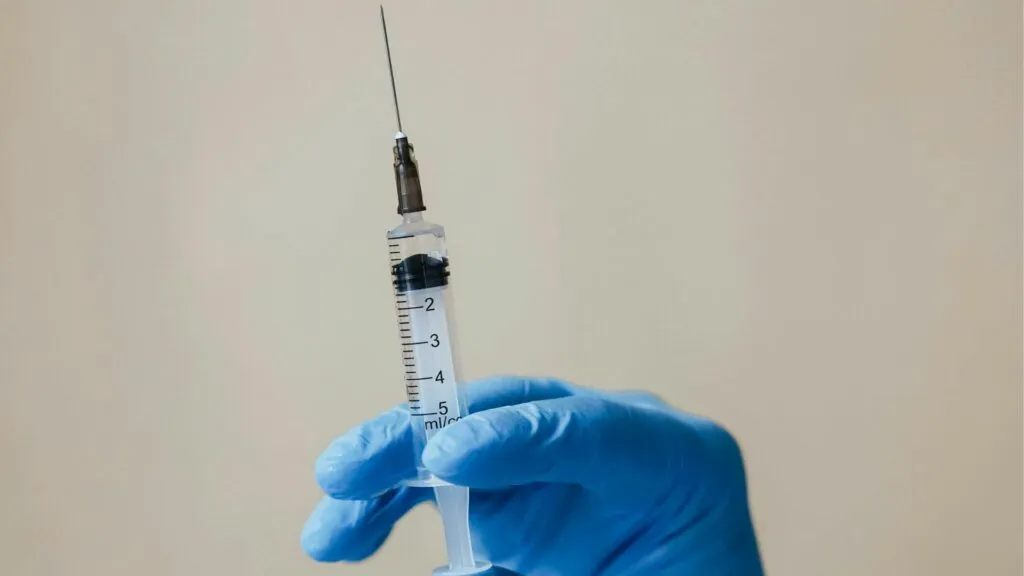
Researchers in the United Kingdom have, for the first time, tested on patients a version of a vaccine that does not need to be kept refrigerated. The clinical study, involving 60 volunteers, converted a liquid tetanus-diphtheria vaccine into a form that remains stable without refrigeration, according to the BBC.
Currently, most vaccines must be kept refrigerated or frozen, and approximately half of them are wasted each year because they become unusable when exposed to excessive heat or cold.
An idea inspired by a desert plant
The trials were conducted by the National Institute for Health and Care Research (NIHR) in the United Kingdom. The technology is based on the plant Selaginella lepidophylla, known as the "resurrection plant", which dries out and appears dead during periods of drought, but comes back to life when it rains.
This plant produces large quantities of a sugar called trehalose, which stabilises its cells during drought. In the study, the tetanus-diphtheria vaccine was dehydrated using trehalose in order to protect its essential components.
Promising results in early phases
Saul Faust, director of the NIHR Clinical Research Centre in Southampton, stated that the dehydrated vaccine produced immune responses "equivalent" to those of the conventional vaccine, whilst being "safe and well tolerated" in the early stages of the research.
"Clearly, this has the potential to eliminate dependence on the cold chain, reduce waste, and improve access," Faust added.
A larger study, involving 160 participants, is set to begin in the coming months and would represent the final stage of the research. As the original vaccine is already approved and licensed, the extensive clinical trials required for an entirely new vaccine are not necessary.
The WHO's goal: resistance to high temperatures
The research responds to a target set by the World Health Organization (WHO) to develop a vaccine capable of withstanding 30°C at a relative humidity of 75%. The research team maintains that separate data show the components of their vaccine also withstand temperature cycles ranging from -20°C to +40°C.
Ephrem Tekle Lemango, Associate Director for Immunisation at UNICEF, described immunisation as a "life-saving service that depends on refrigerators" and said that this innovation "could help us vaccinate more children", whilst also paving the way towards "a future of refrigerator-free vaccines".
Content paraphrased and adapted by SeniorHelp from verified public sources.
Original source: Mediafax →Previous article
US Approves First mRNA Flu Vaccine, 27% More Effective, for Ages 50+
Next article
Pensioners increasingly affected by rising prices: money barely covers bills and medication
Similar news
 Foto ilustrativă
West Nile Virus: 95 cases in Romania in 2026, the majority amongst people aged 60–69
18 September 2026
 Foto ilustrativă
Cluster headache: intense one-sided head pain
18 September 2026
 Foto ilustrativă
Deep Vein Thrombosis: What Minimally Invasive Clot Aspiration Treatment Involves
17 September 2026
 Foto ilustrativă
Why gastroesophageal reflux worsens at night when lying down
17 September 2026
Hernia Surgery: Faster Recovery Through Minimally Invasive Methods, More Common in Private Clinics Than in Public Hospitals
16 September 2026
 Foto ilustrativă
Canned tuna and mercury: what a nutritionist says about the risks and serving sizes
16 September 2026