
Study: memory begins to deteriorate around the age of 50, not in old age
Researchers from Binghamton University show that hippocampus-related memory decline can begin as early as between the ages of 20 and 50, rather than only in old age.
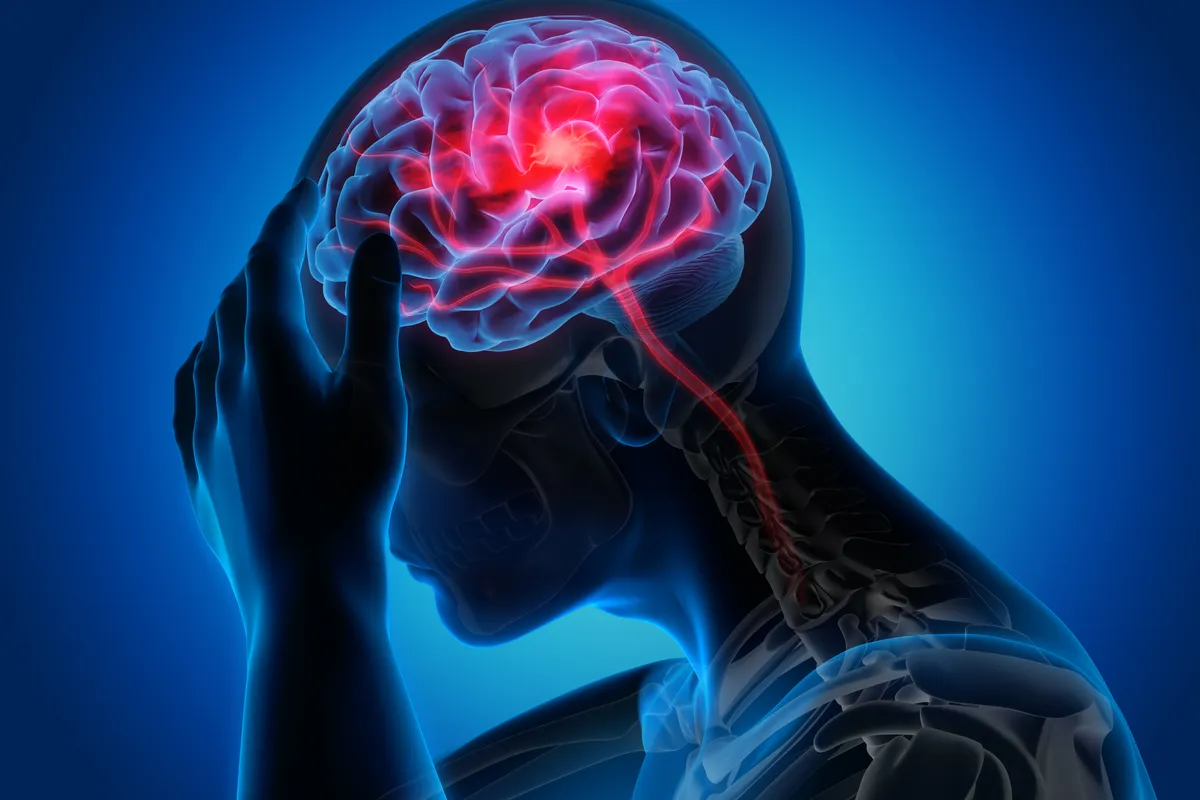
Forgetting names or being unable to place a familiar face are typically associated with old age. However, a new study by researchers at Binghamton University suggests that memory changes begin earlier than previously thought — possibly as early as middle age, according to eurekalert.org.
"This is one of a growing number of studies highlighting that middle age is truly important for memory function and should not be overlooked. For a long time, most research has focused on comparing young adults with older adults," said Ian McDonough, associate professor of psychology at Binghamton University and co-author of the study published in the journal Cerebral Cortex.
How the test was conducted
McDonough and Destaw Mekbib, a postdoctoral researcher, tested approximately 60 adults aged between 18 and 74. Participants were shown faces paired with various objects and scenes. After a five-minute break, they were asked to select the object or scene corresponding to each face, while an MRI scanner recorded their hippocampal activity.
McDonough explained that this test reflects how memories are formed: the brain first encodes a new memory, then the hippocampus "replays" it within a short time window to stabilise it, before the brain retrieves it when needed. The researchers wanted to understand how ageing affects the continuity of this process.
Middle age as a turning point
"We observe a significant decline in memory accuracy from the 20–30 age group through to people in their 50s. Some of these hippocampal processes are already beginning to deteriorate in middle age," said McDonough. "This suggests that middle age is indeed a transitional point."
Middle-aged participants frequently associated a face with the wrong object or scene. They recalled having seen the image before, but could not remember the correct pairing. "It becomes difficult because all the images on the screen during the test now seem familiar," McDonough explained. "They know they've seen all of them before, but what they now need to remember is that specific association. And this is where, as people age, they really start to make these errors."
An unexpected finding
The researchers expected that older adults who made memory errors would show weaker hippocampal activity. The results, however, revealed something different: when young adults made mistakes in the test, their brains failed to reactivate the original memory patterns — which was to be expected. By contrast, when older adults made mistakes, their brains showed strong reactivation of those memory patterns.
"The more consistently the hippocampus reactivates in line with encoding, the more likely they are to make these memory errors," said McDonough. "So rather than that reactivation pattern being associated with better memory, it is associated with those errors."
McDonough noted that it remains unclear why older adults show strong hippocampal reactivation precisely when they make mistakes. Future research could examine encoding, consolidation, and memory retrieval separately at an individual level, as well as how brain stimulation following learning influences memory.
He emphasised the need for studies that follow middle-aged individuals over a number of years, given that memory changes may occur earlier than previously believed. "We don't really have a solid scientific understanding of what happens in middle age, because the brain does not deteriorate uniformly during this period — some regions decline faster than others," said McDonough. "It will be important to identify the moments at which these critical changes take place."
Content paraphrased and adapted by SeniorHelp from verified public sources.
Original source: Digi24 →Previous article
WHO: 1 in 10 patients suffers medical harm, half could be prevented
Next article
Study: the genetic link between gut health and depression
Similar news

Study on 340,000 people: which type of alcohol increases the risk of death the most
28 October 2026
One isometric exercise, once a week, helps maintain low blood pressure
28 October 2026
370,000 Doses of Flu Vaccine Available in Pharmacies. Who Is Eligible for Reimbursement
27 October 2026
370,000 doses of flu vaccine available in warehouses for pharmacy orders
27 October 2026

PET-CT PSMA: the investigation that precisely locates prostate cancer
27 October 2026
Ultra-processed foods linked to hidden damage to blood vessels in the brain
25 October 2026